Camp Hwange
Camp Hwange is a comfortable tented lodge built in a wide arc along a treeline overlooking an open plain and waterhole in the north-west region of Hwange National Park.
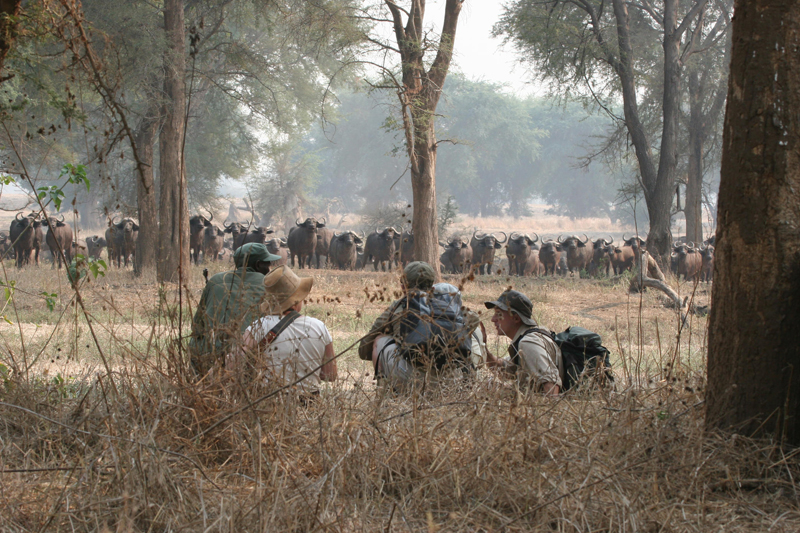
Camp Hwange is a superb property, situated in a private concession in the Sinamatella area of Hwange National Park. The accommodation is very comfortable, food excellent and the camp has a pleasant communal atmosphere with hosted meals and well-trained staff. However, what makes this camp so enjoyable is the focus on in depth professional guiding. You do not need to walk to enjoy Camp Hwange as there is plenty of ground to cover on game drives, but the experienced guides are often keen to get out on foot with guests, even if it is only for a short walk to break up a game drive or investigate something away from the roads.


Rooms
Camp Hwange accommodates around 16 guests in eight canvas and thatch chalets which stretch out either side of the open plan lounge and dining area. The chalets are spaced far apart to afford maximum privacy and all face out across the plains to a nearby waterhole. One of the chalets is suitable for families and comprises two adjoining en suite rooms connected by an internal passage way. Each chalet is set onto a solid base with canvas walls and a thatch roof. They are comfortably furnished with twin or double beds and have en suite bathrooms consisting of a plumbed shower, vanity and separate flush toilet. Double doors lead on to a private verandah with safari chairs.
Central Areas
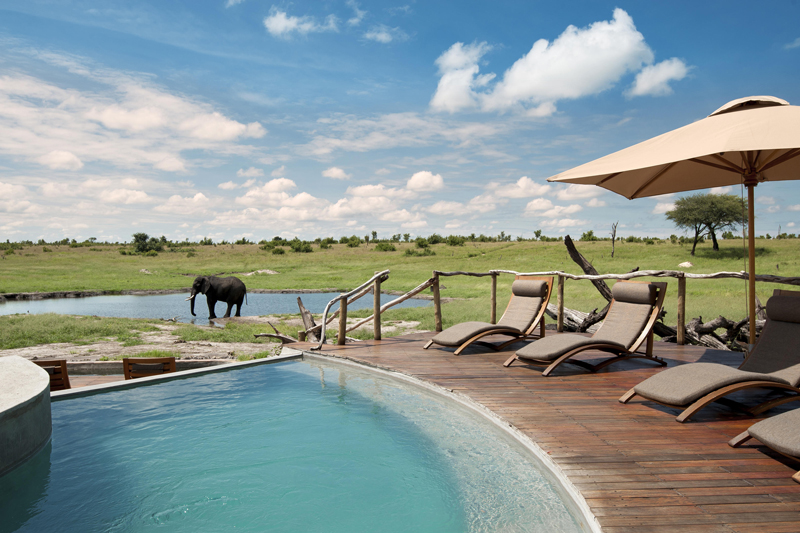
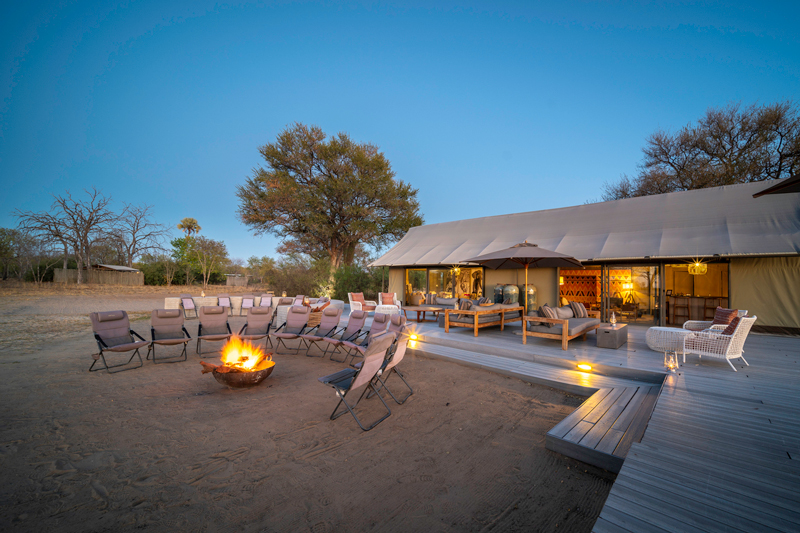
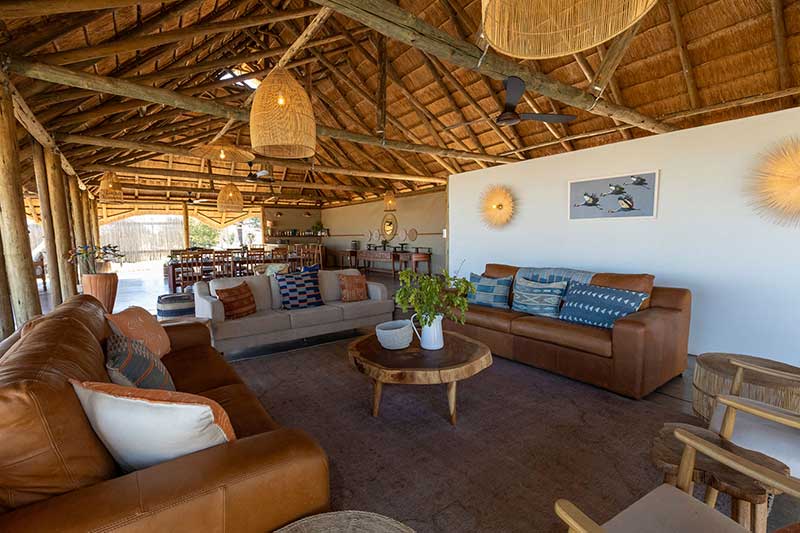
The large open fronted, thatched main area includes a dining room, lounge and drinks station where coffee and tea are available throughout the day. This leads down to the campfire area where breakfast and predinner drinks are served under the stars. There is also a small swimming pool near the main area with deck and sun loungers.
Facilities
Wi-Fi – Yes
Power for Charging – Yes
Swimming Pool – Yes
Habitat & Wildlife
Hwange is the largest of Zimbabwe’s wildlife areas. Situated in the south-western corner of the country at an average altitude of around 3,000ft, it covers an area of about 1.5 million hectares, along the border with Botswana.
The Park covers the transition zone between the Kalahari sands and the moist savannah woodland. The poor soil and harsh climate have not stunted or limited the variety of habitat: over 230 trees and shrubs and 138 grass species make up some of the more than 1,000 flora species found here. This diversity allows for more than 50 mammal species to co-exist.
Lacking permanent rivers, Hwange is managed with numerous man-made waterholes which are pumped to provide water for most of the animal species and which form the magnate around which most game viewing takes place (many of the waterholes have hides). The park has a very sizeable and healthy elephant population (it is not uncommon to see over 150 at a time around the waterholes during the dry season), and other larger mammals to be seen include giraffe, impala, zebra, wildebeest, tsessebe, kudu, duiker, roan antelope, waterbuck, eland, gemsbok (along the drier western border), reedbuck, lion, leopard, cheetah, wild dog and hippo. Unfortunately, rhino are now seldom seen.
The area is also excellent for bird life, most represented by bush country species: babblers, starlings, bustards, ostrich, cranes, hornbills, francolins, guineafowl, shrikes, etc., although raptors are plentiful and storks, geese and ibis can be seen at the waterholes.
Game viewing is excellent with good general game, big herds of buffalo and several different lion prides present year round. Leopard, cheetah and wild dog can also be seen. Night drives offer the chance to see nocturnal species such as genet, serval, honey badger, aardwolf and aardvark. However Hwange is perhaps best known for its huge elephant populations, and from June through to early November huge numbers can be seen visiting the various waterholes throughout the park, including the pan in front of Camp Hwange.
Activities
Activities at Camp Hwange are based around game drives (day and early night drives), guided walks and use of their hides (one of which is a log pile hide overlooking the waterhole in front of camp). Most game viewing takes place within their private concession area, though longer drives will also explore public areas of the park. It is not essential to walk, as big game is plentiful and there many miles of game drive roads to explore. However, exploring on foot is often a key activity here, either directly from camp or on walks incorporated within a game drive. An integral part of all activities is the super guiding provided.
Seasons
Camp Hwange is open throughout the year, though game viewing is best from July through to October.
Children over the age of 8 are welcome, but are not allowed to walk until they are at least 12 (at the discretion of the guides). There is an excellent dedicated two bedroom family tent and triples can be arranged by setting up a sofa bed in each tent for children under 14 years. We feel the camp makes a good choice for more adventurous families.
Camp Hwange uses ecotourism to effect positive conservation and community outcomes, focusing on National Park funding, support for a local school and environmental education, and the training and mentoring of upcoming guides.
The camp generates revenue for the conservation of Hwange National Park through the payment of their annual lease for the conservancy and through entry and conservation fees paid for each guest. Approximately 3% of every bednight is paid to the Zimbabwe Parks and Wildlife Management Authority.
The camp has also partnered with the inspirational Lesedi Schools and Clinic which serves struggling rural communities in the Victoria Falls area. Around 1.5% of every bednight is dedicated to this partnership. A visit to this wonderful community project is highly recommended and can be incorporated during a stay in Victoria Falls. The camp host two ‘adventure & learning camps’ each year where groups of school children learn about the positive impacts of conservation and tourism and career opportunities, and learn how living with wildlife in rural areas can be beneficial.
A core part of Camp Hwange’s founding principles is the training and mentoring of a new generation of Zimbabwean guides, vital ambassadors for conservation. They employ between three and four learner guides every year and dedicate considerable resources towards their training and mentorship and attempt to guide them to their eventual professional guide’s licence.