San Camp
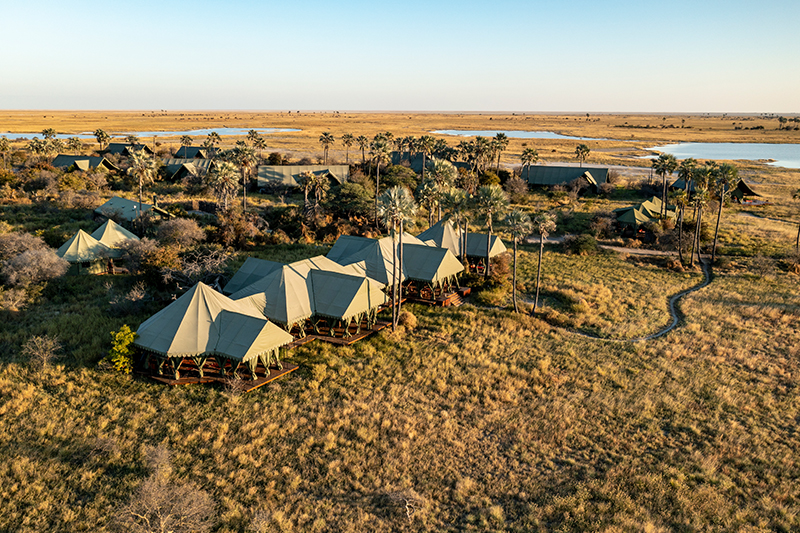
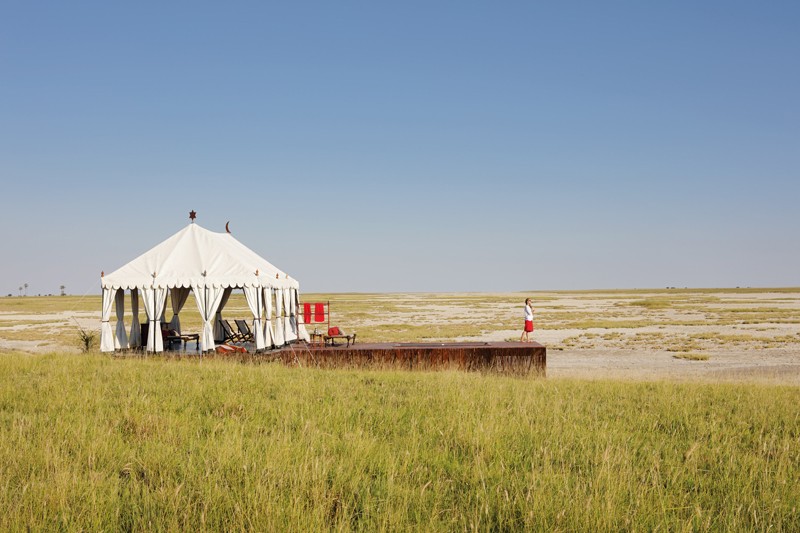
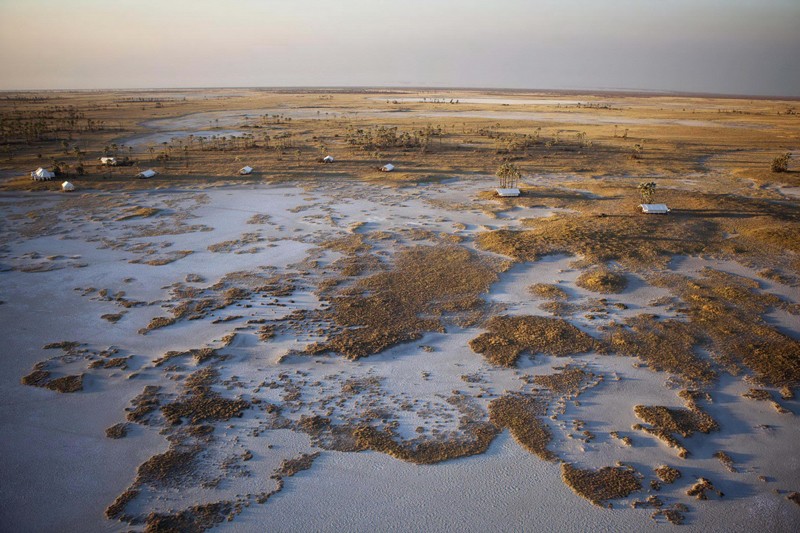
San Camp is a beautiful boutique camp located on the very edge of Ntwetwe Pan, bordering the Makgadikgadi Pans National Park.
San Camp is one of the most individual, escapist and tranquil camps in Africa. This is due mainly to its stunning location on the edge of Ntwetwe Pan – few camps can ever offer the feeling of space and solitude that the San Camp evokes. The camp is small and upmarket, with excellent service, good food and a warm welcome, and the varied activities are excellently guided. The only negative is the price, which will put off many travellers, but if this isn’t an issue then San Camp can cater for outdoor enthusiasts and luxury travellers alike. Compared to its better known sister camp, Jack’s Camp, San Camp is smaller and has a more stunning, out there location next to the pans.
The Makgadikgadi Pans are well worth a visit for anyone who enjoys exploring different habitats and landscapes, and is prepared to compromise a little on the big game experience in favour of geographical diversity and more specialist wildlife viewing. The specialist wildlife is worth a particular mention as it is sometimes the key reason for visiting the area – brown hyaena, aardvark, aardwolf and habituated meerkats.


Rooms
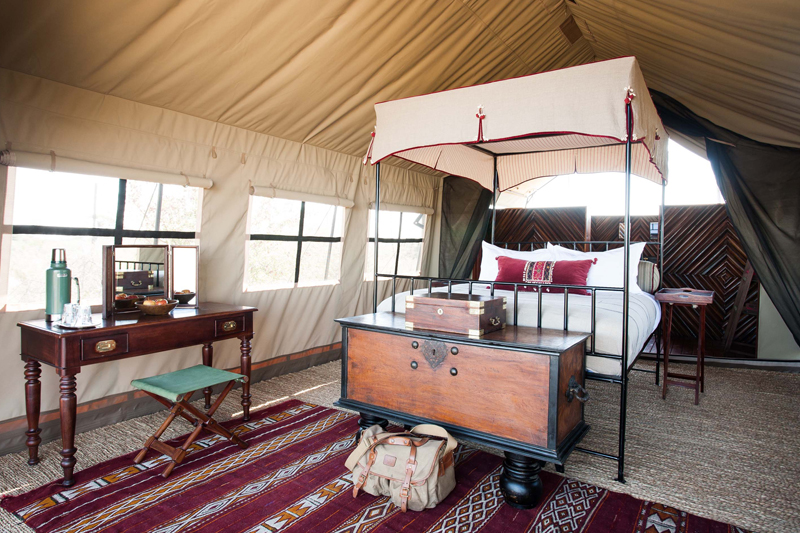
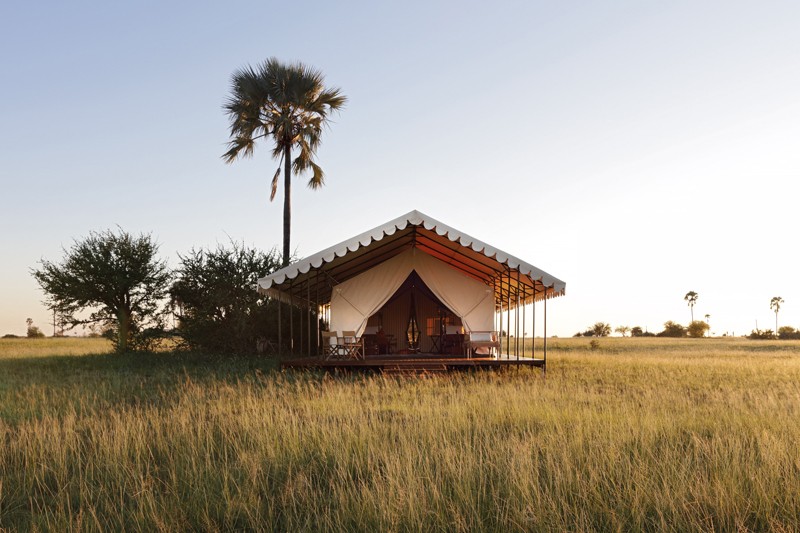
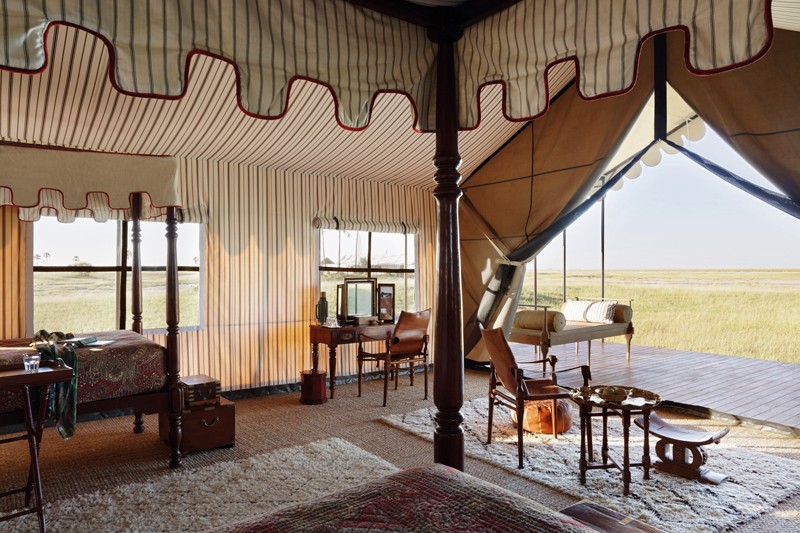
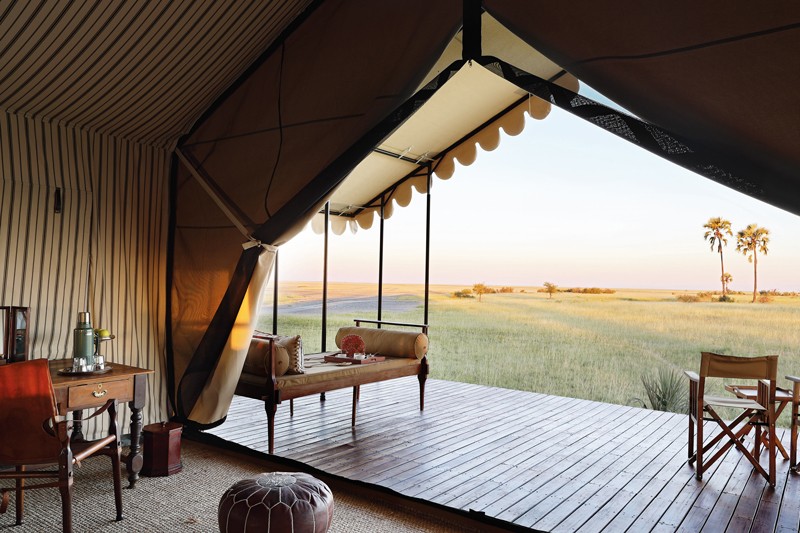
San Camp caters for up to 14 guests in six luxurious white canvas ‘old-style’ safari tents, each containing four-poster iron beds (5 doubles and 2 twins), bedside tables and luggage racks. To the front of each tent is a small verandah with views out across the pan, whilst at the rear is an en-suite plumbed bathroom. The tents have all been cleverly positioned beneath towering Molokwane palms that provide welcome shade during the heat of the day.
Central Areas
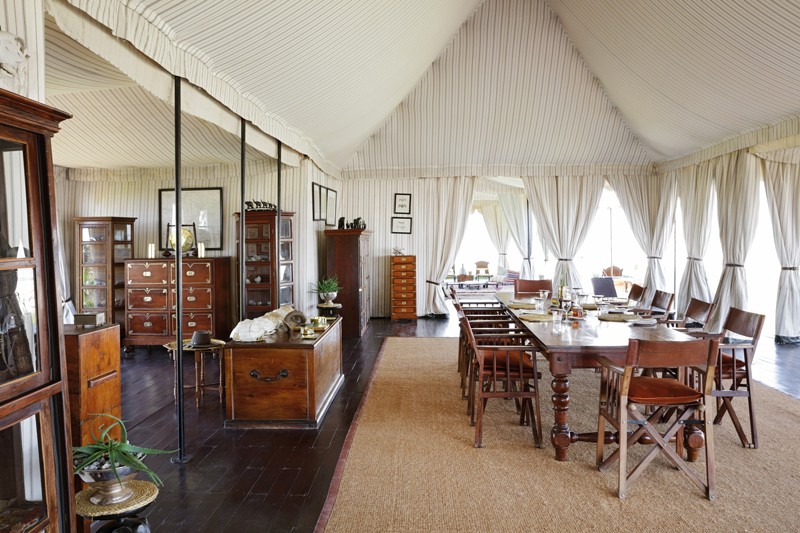
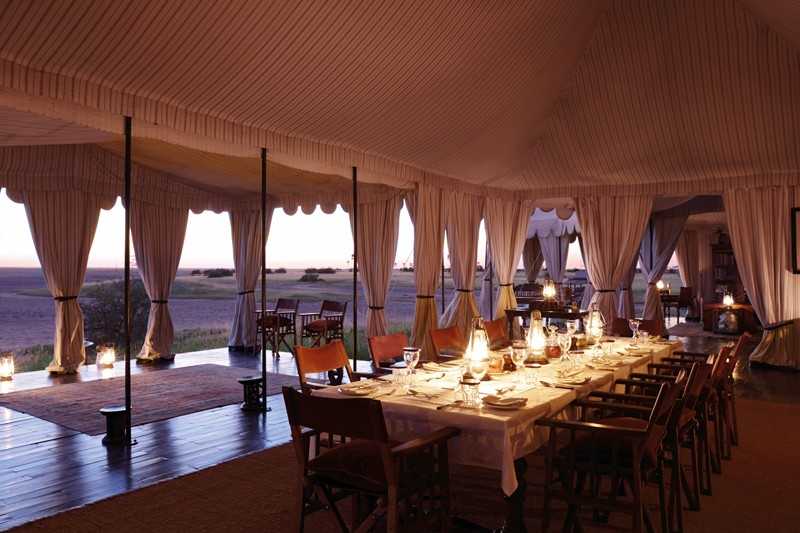
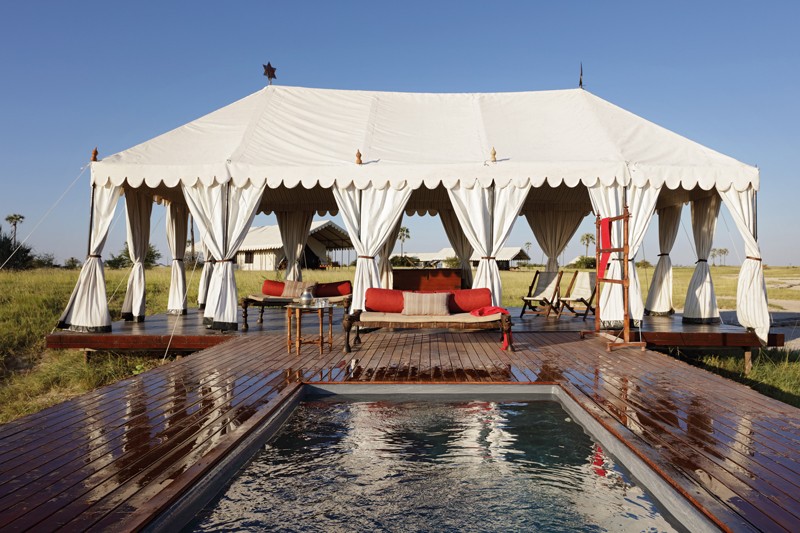
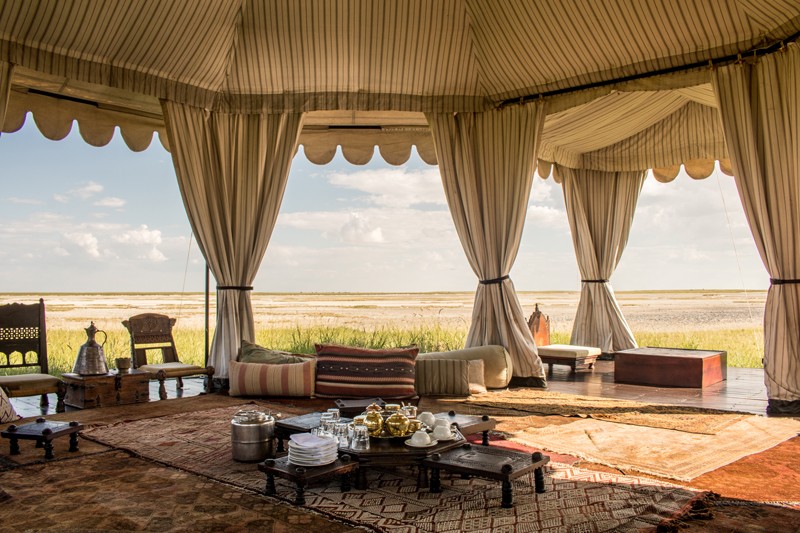
There is a central dining and lounge tent, stylishly furnished and offering views out across the edge of the pan, as well as a small swimming pool.
Facilities
Wi-Fi – Yes
Power for charging – Yes
Swimming pool – Yes
Habitat & Wildlife
The Makgadikgadi Pans are not a mainstream safari destination. Together with the adjacent Nxai Pan, the Makgadikgadi Pans cover an area of nearly 5500 sq. miles. The pans, remnants of a huge inland sea, are largely void of vegetation except for a few areas of open grassland and isolated baobab islands. During the rains, from December to March, the pans fill up and attract large numbers of water birds including flamingos and pelicans. Great herds of wildebeest, gemsbok, springbok and zebra also gather, as do predators such as lion and cheetah who move in during this time of plenty. This is also the time that the zebra migration traverses the plains of the concession and is the second largest migration in African. Even the occasional elephant is seen passing through! However, once the dry season sets in, the water reliant species migrate to leave an empty wilderness with an eerie silence and only specialist species remain in the grassland and scrub bush that fringe the pans. Brown hyaena and meerkats are two of the key species of interest found within the Kalahari ecosystem, whilst others include ostrich, aardvark, aardwolf, spring hare, black-backed jackal, African wild cat and porcupine.
The recent introduction of pumped water holes on the local concession is supporting the resident wildlife and encouraging more game to remain in the area during the long dry season. In particular, elephants are being seen more regularly. However, it is a delicate balance and it will take a few years to discover what the carrying capacity of the area is during the dry season.
Activities
There are a wide range of activities available to explore the ancient landscape and culture of the Makgadikgadi. These include a visit to a habituated meerkat colony, game drives by day and night into the pans around camp (with night game drives being very successful for spotting specialist species such as brown hyaena and aardvark). Game drives into the Makgadikgadi National Park are also offered.
There are also opportunities for authentic interaction with the Bushmen. The ‘Wisdom Academy Village’ is the name given to the place where a community of Ju/‘hoansi Bushmen are now residing traditionally in the area. The aim of the village is to empower Bushmen to continue their traditions and pass on their knowledge to younger generations whilst at the same time earning a living in their rapidly changing world – sustainable conservation for a culture under threat. The length of your stay will largely dictate how immersive your time with the Bushmen can be, from short and insightful Bushman-guided walks, to more in depth half or full days spent at the village learning about daily life. Beading, wood carving, rope making, preparing bush medicine, getting ready for a tracking mission or elders holding knowledge circles are just some of the activities that may be encountered during a visit.
Quad bikes can be used (depending on the ground conditions) to explore the salt-crusted pans and it’s possible to hunt for stone tools in the salt flats of the Sowa Pan.
A two hour horse-ride and scenic helicopter flights over the Makgadikgadi Pans can also be arranged at an extra cost.
For adventurous guests who would like to explore deeper into the Kalahari, it is possible to combine three nights at camp with a two night quad bike expedition journeying to Kubu Island in the south west of Sua Pan where you will stay in a fly camp. Expeditions can cover anything from 400 to 600 kilometres and are only available between June and September. This is an off the grid experience, sleeping under the stars on comfortable bed rolls with shared bucket shower, bush loo and a tented changing area. This needs to be prebooked and additional costs apply.
San Camp is managed by the Natural Selection group of safari camps and by staying here, guests automatically contribute to the Natural Selection Foundation which is part of the Botswana Community and Conservation Initiative. This initiative provides for regional conservation and supports rural communities to develop sustainable land-use practices that promote conservation-based economic opportunities, resilient to climate change. In the Makgadikgadi region Natural Selection has partnered with Round River Conservation to support and expand large mammal migration routes between Northern Botswana and Makgadikgadi National Park and the Kalahari Desert through informed land use planning and supporting human-wildlife coexistence.
Seasons
San Camp is open during the dry season only from mid-April to mid-October.
San Camp does accept children of all ages, though with limited central areas, no family tents and relatively cosy standard tents it is arguably not the best option with younger children. However, for families with older children who can sleep in their own tent it can be a fantastic family option. The variety of activities and quality of hosting and guiding make it a very upmarket and interesting family adventure. The swimming pool is a welcome attraction during the heat of the day, but the water is a bit cold! Families with children under 12 years of age need to book a private vehicle.
San Camp is managed by the Natural Selection group of safari camps and by staying here, guests automatically contribute to the Natural Selection Foundation which is part of the Botswana Community and Conservation Initiative. This initiative provides for regional conservation and supports rural communities to develop sustainable land-use practices that promote conservation-based economic opportunities, resilient to climate change.
San Camp supports the Makgadikgadi-Nxai Pans Conservation Initiative which promotes the expansion of large mammal migration routes between northern Botswana (Chobe and the Okavango) and the Kalahari Desert (specifically the Makgadikgadi National Park) which have been cut short by the implementation of mass fencing. The aim is to stop the restriction of this movement by working alongside local communities to develop land use that benefits everyone and yet allows the migrating animals, mostly zebra and wildebeest but also elephants and other plains game, to move freely.
Another initiative they support is leopard population dynamics and conservation in the Khwai area of Botswana (eastern Okavango) through the Botswana Predator Conservation Trust. The Trust aims to establish territory locations, sizes and threats to leopards which reside inside the private reserve compared to those whose territories are closer to villages. This information enables them to learn about the survival strategies and intra-species interactions of leopards so they can therefore focus on the areas in need of human-predator conflict alleviation.
Coaching for Conservation’s programme Connecting Conservation Classrooms is all about educating Botswana’s children on the value of wildlife and respect of their environment and uses Natural Selection lodges as visitor classrooms.
Natural Selection also works closely with the Wild Shots Outreach initiative. Every year they run workshops at some of their camps, including sister camp Jack’s Camp. The initiative is aimed at young adults from disadvantaged communities, particularly unemployed youth, and teaches them about conservation and nature through photography. Apart from a better understanding and appreciation of wildlife and conservation, the objective of this initiative is to develop self-confidence, self-esteem, life skills and, of course, photographic skills.