The Palms
The Palms is an intimate luxury hotel located near the village of Bwejuu on the south-east coaSt of Zanzibar.
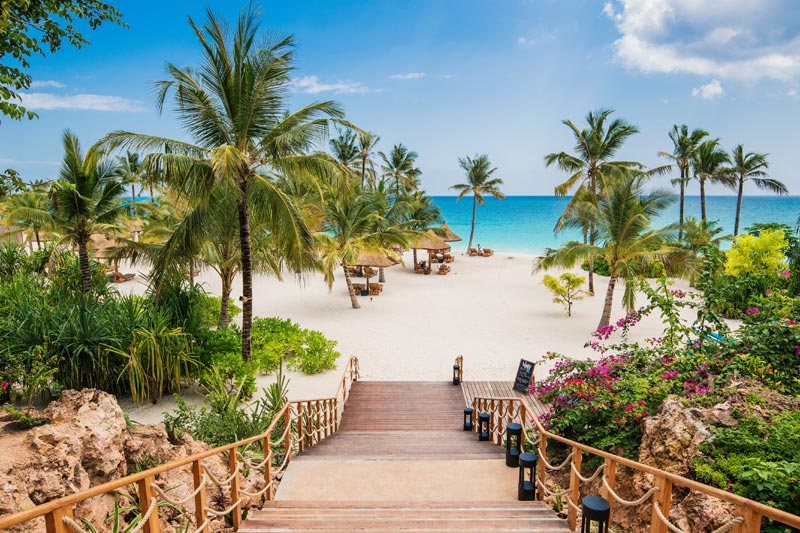
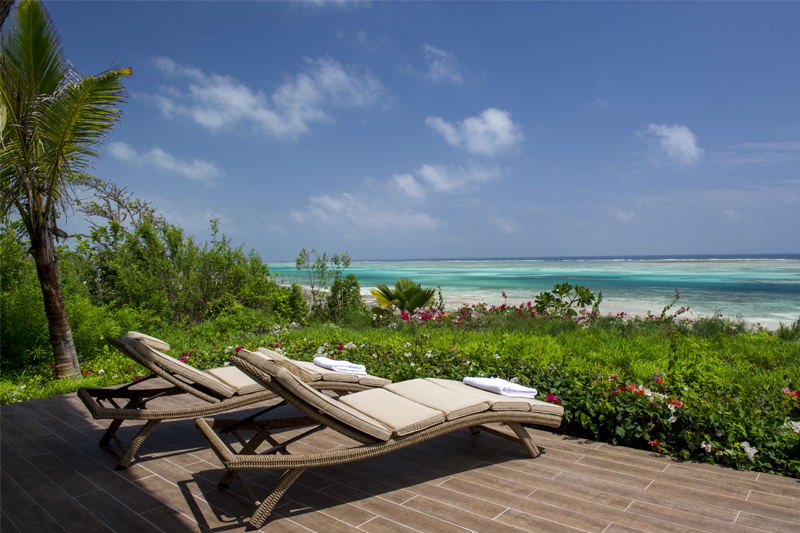
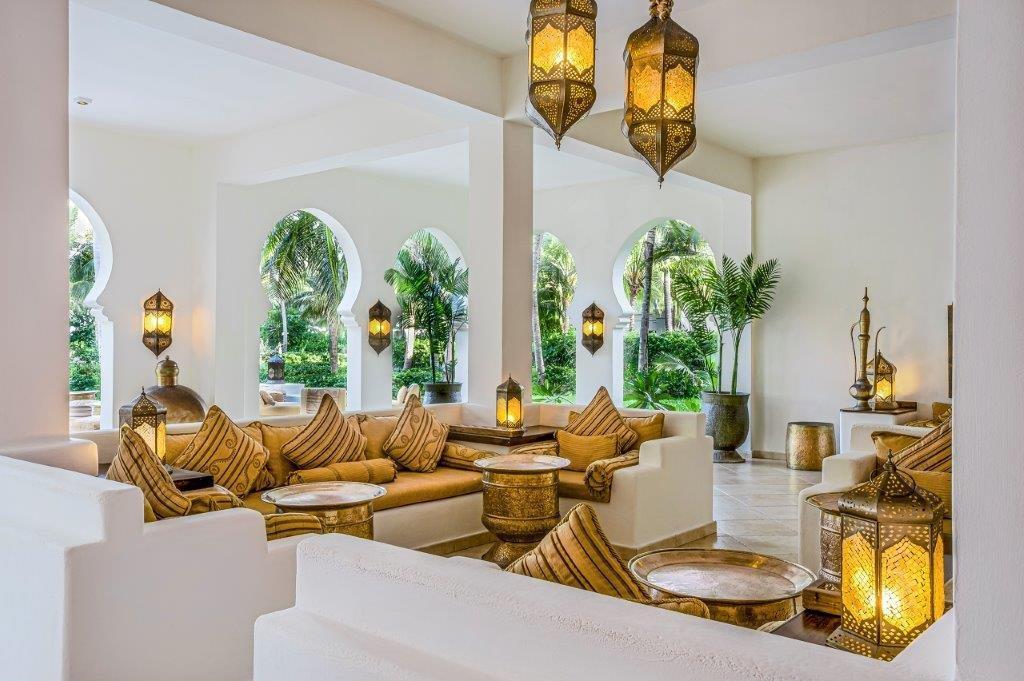
The Palms is the smaller sister of the excellent Baraza Resort & Spa and Breezes Beach Club and sits in between the two resorts on a beautiful stretch of white sandy beach. With just seven villas, each with a polished Swahili-inspired design and private plunge pool, the resort offers a highly personalized and exclusive experience. Service from this collection of resorts is always reliable and slick and at The Palms service is also appropriately discreet. The plot size on which The Palms sits is quite small and so the central areas are not extensive or spacious. Guests can, however, use the facilities of both Baraza Resort & Spa and Breezes Beach Club. The Palms is an ideal destination for couples seeking privacy and relaxation in a small hotel with polished style and service, in a beautiful beach location.


Rooms
The property accommodates just 14 guests in seven spacious and luxurious villas set back from the beach and surrounded by tropical gardens. Each villa is air-conditioned with en suite bathroom, a smaller second bedroom with en suite, dressing room, small lounge area, private covered verandah with small plunge pool, and a private allocated sala on the beach.
Central Areas
To the side of the property is the restaurant, lounge and main bar, whilst the swimming pool with pool bar is centrally located within the gardens. Guests can use the facilities of adjacent Baraza Resort & Spa and Breezes Beach Club where there is an extensive spa, fitness centre and outdoor tennis court. Guests also have access to the dining options at both sister hotels.
Facilities
Wi-Fi – Yes
Power for Charging – Yes
Swimming Pool – Yes
Habitat and Wildlife
Zanzibar’s, or more correctly Unguja’s (Zanzibar is the name of the archipelago which includes both Pemba and Unguja islands), history dates back more than 2000 years when the islands traded with ships from Persia, Arabia and India. From about the 10th century, groups of immigrants from Shiraz (Persia) settled on the island and mixed with the local people. In the 16th century, the Portuguese established a trading station before being ousted by Omani Arabs a couple of centuries later. In 1840, the Sultan Said moved his capital from Muscat to Zanzibar with the Omani Arabs forming an elite group of landlords and rulers. Indian settlers formed a merchant class and the island became an important centre of regional politics and the focus of the slave trade.
In 1890, Zanzibar became a British protectorate before gaining independence in 1963. In 1964, the Sultan was overthrown and nearly all Arabs and Indians expelled. Later that year, Zanzibar and Tanganyika combined to form Tanzania. Since then, many of the expelled peoples have returned.
In Zanzibar’s Stone Town (the old quarter and a UNESCO World Heritage site), a fascinating maze of narrow streets and alleyways lead past numerous old houses, mosques, ornate palaces, shops and bazaars reflecting the various influences through the ages – Arab, Persian, Indian and European. Many of the buildings date back to the 19th century and depict the wealth of its builder. Arab houses have plain outer walls with large doors leading to an inner courtyard. Conversely, Indian houses have a more open facade and large balconies with railings and balustrades. Take the chance to savour the atmosphere by dining at one of the rooftop restaurants.
The area outside the Stone Town is called Michenzani (New City), a failed attempt at becoming a modern city.
Depending on where you are staying on the island, there are a number of interesting excursions to consider. Visit a Spice Plantation, take a trip to the Jozani Forest (southern part of the island) where the rare red colobus monkey is found or visit Chumbe Island Coral Park (either as a day trip from Stone Town or overnight). Sundowner trips by traditional sailing dhow are available out of Stone Town. Due to environmental concerns, we no longer recommend swimming with dolphins.
Please remember that Zanzibar, like much of the East African coastline, has a strong Islamic culture, and that you should dress appropriately when in public areas and the Stone Town. During the month of Ramadan, further courtesy should be shown to those observing their faith, particularly in respect to service which you may find slower than usual.
The best beaches on the island are those found on the north and east coasts. However, please note that there are large tidal movements and sea swimming from most beaches during low tide is difficult. The best snorkelling is found around the Mnemba and Chumbe islands, but snorkelling is available along the length of the east coast where it is usually necessary to go out by boat to enjoy the best locations.
Like most of East Africa, the islands are affected by the monsoon winds – the Kuzi (or sometimes Kisi) which blows from April to September/October is a south-easterly which brings choppy sea conditions and seaweed to the shorelines, whereas the Kaskasi blows from the north-east from October/November to March producing calmer seas and slightly higher temperatures.
Activities
Guests can make use of the facilities at adjacent Baraza Beach Resort & Spa where there is a watersports centre (snorkelling equipment, kayaks and reef shoes rental are complimentary; whereas kitesurfing, sailing and windsurfing, and snorkelling boat trips can be arranged at an extra cost) and, adjacent to Breezes Beach Club, a PADI 5 Star dive centre (diving at an extra cost).
Seasons
The Palms is open all year round, though Zanzibar is best avoided during the main rainy season in April and May.
The Palms does not accept children below the age of 16 years.
The Zanzibar Collection, owners of The Palms, gives employment and training to those within the local communities. Around 90% of the staff are graduates of the local hotel school and have been taught life skills that they can carry with them throughout their future in tourism. They also employ a marine biologist specialising in conservation and run a programme for all staff members to educate them on manging the ocean and understanding its resources.
The Collection supports a maternity and children’s clinic in the village of Bwejuu and run the Baraza for Bwejuu charity which works to uplift the lives of those from the village through such means as supplying fresh water and medicine, donating school supplies and assisting in the building of a mosque. Each year staff from Baraza, along with another charity, clean the beaches and villages and repaint the clinic. They also organise football matches between local villages, donate balls and present prize money to both the winning and runner up teams which then goes back into their communities.
All of the villas at The Palms are powered by solar energy. They do not take their water from the source at the village, leaving that for the community, but instead use a local desalination plant. They obtain as many supplies as possible locally and fisherman bring their fresh fish to the resort. They also have a garden to grow local vegetables.
To minimise the usage of single use plastic bottles at Baraza, drinking water is served in carafes refilled from recyclable water containers. The plastic bottles which are still used in the mini bars are recycled as flower pots in the nursery garden and used as construction material back of house.
Much of the interior items at The Palms have been made by local craftsmen and women using traditional skills, supporting the communities through income and also using recycled materials instead of creating waste.