Sayari Camp
Sayari Camp Is A Permanent tented Lodge Located In The Mara River Region Of The Northern Serengeti.
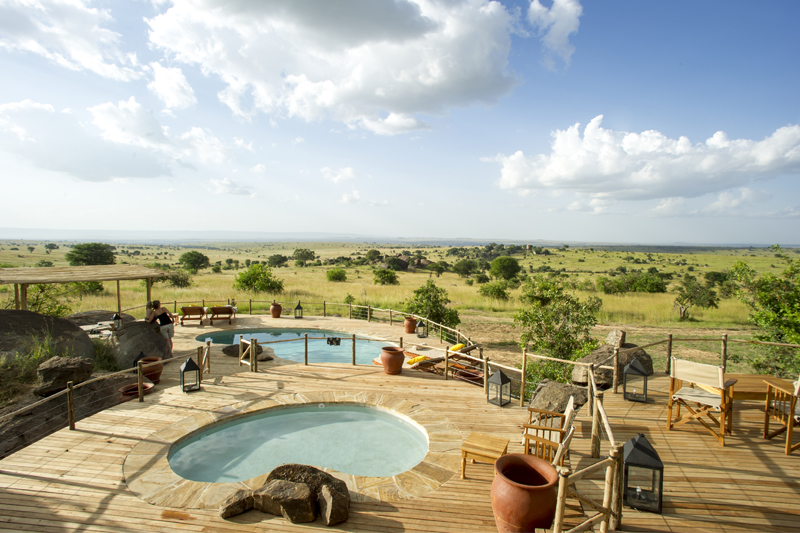
Sayari Camp is a luxury tented lodge located close to the Mara River – a prime location in peak migration viewing season, which can get very busy, and with superb resident predators year round. The lodge is large at 15 rooms, but the fact that it’s split into two wings, each with their own dining area, helps it to feel more intimate. That being said, Sayari definitely has a buzz to it and is perfect for those who like to socialise with a bustling main area and communal dining. Being owned and run by Asilia Africa, there is an element of corporate consistency, but this does help to ensure that standards of hospitality and service are high. Sayari is a good option for families, with a large swimming pool and family accommodation, whilst the two ‘Retreats’ offer an expansive private hideaway for groups of friends and families looking for an exclusive safari.


Rooms
The camp is split into two sections, with one “wing” accommodating 18 guests in nine spacious tented rooms and a smaller wing accommodating just 12 guests in six tents. The larger section has one family tent with a smaller second en suite room attached to it via an enclosed walkway. All tents are raised on low wooden decks with high canvas roofs and canvas walls which are clad with timber on the interior. Each tent has glass doors to the front, opening out on to a wide verandah with comfortable seating. Tents have 24 hour lighting, ceiling fans and en suite plumbed facilities (toilet, double vanity, indoor and outdoor shower and free-standing bath – the second bedroom in the family tent only has a shower). Children five years and above are welcome. At the far end of the camp there is a honeymoon tent which has the addition of a large outdoor bath.
The latest addition to Sayari is two ‘Retreats’ which are self-contained, private units each comprising two en suite master bedrooms which can be doubles or twins and each bedroom can take an extra bed for children, meaning a maximum capacity of four adults and two children. En suite facilities include double vanity, flush loo, indoor shower and an outdoor shower. The two bedrooms lead off a central living and dining area and a deck runs the full width of each Retreat. The two Retreat units share a private pool and can be combined to make a self-contained camp for one group of up to 12 guests. Otherwise, each Retreat has its own team including a host, chef and private safari guide and vehicle.
Central Areas
Both sections of the main camp offer in room massages and have their own central reception and mess tent, which consist of a dining room and open-plan lounge area, whilst they share the main swimming pool which is the perfect place to relax during the heat of the day. There is also a solar-powered micro-brewery bar.
Facilities
Wi-Fi – Yes
Power for Charging – Yes
Swimming Pool – Yes
Habitat and Wildlife
With an area of some 14,000 sq. km, Serengeti is probably the best-known wildlife sanctuary in the world. The ecosystem includes the National Park itself, the Ngorongoro Conservation Area, Maswa Game Reserve and Kenya’s Masai Mara National Reserve, together forming one of the most complex and least disturbed ecosystems on earth. The landscape was originally formed by volcanic activity in the Ngorongoro highlands and it varies from the open short grass plains in the south, to savannah and scattered acacia woodlands in the centre, to extensive woodland and black clay plains in the west, to hilly wooded grassland in the north. Most of the permanent water is found towards the northern and western areas, the lack of permanent water and food in the south being the main reason for the annual migration.
The park is home to approaching 2,000,000 wildebeest, 500,000 Thomson’s gazelle and 250,000 zebra: the largest concentration of plains game in Africa. More than 30 species of herbivores are found here, as well as all the major predators and nearly 500 species of birds.
The northern part of Serengeti is a huge area of open plains, rolling hills and acacia woodland, intersected by numerous small streams which flow into the Mara River. The Mara River is a natural focal point, and most camps are located in the Kogatende region to the south of the river. To the north of the river is a section of the park known as Lamai, whilst to the south of Kogatende are the Wogakuria Hills where the rolling hills are interspersed with rocky granite outcrops. The plains stretch east and west to the boundaries of the park, and in the east continue into the Loliondo Game Controlled Area.
The northern Serengeti is exceptional for lion, cheetah and leopard sightings, whilst hyaena, serval, African wild cat, elephant, buffalo, hippo, crocodile, giraffe, eland, topi, jackal, ostrich and impala can also be seen. Wild dogs are making a comeback in the region and are very occasionally encountered, whilst black rhino can sometimes be seen in the north-eastern region around the Sand River.
Although this region offers a wonderful all year round safari experience, it is busiest from July to October when hundreds of thousands of wildebeest, gazelles and zebra congregate on these northern plains. The herds usually arrive in late June or early July, travelling up from the southern and western Serengeti on their annual migration. Many of the herbivores will cross into Kenya’s Masai Mara, but large numbers remain in the northern reaches of the Serengeti, where the Mara River provides permanent water. This movement of so many animals can be dramatic, especially when they cross the Mara River, which can happen at any time between July and early November. ‘River Crossings’ are a favoured highlight for wildlife enthusiasts and photographers, as hundreds of wildebeest stampede into the river whilst crocodiles lie in wait. Around October/November, as the rain clouds gather, the herds head south once more to calve on those nutritious short grass plains before starting the cycle again.
Activities
Sayari can be visited either on a drive-in basis (with your own vehicle and guide) or on a fly-in game package basis (hosted and guided by Sayari guides on shared game drives, or a private Sayari guide and vehicle if staying in a Retreat). Game viewing is mainly by vehicle, though guided walks are also possible (seasonal). Full day cultural visits to learn about the local Kuria tribe living outside the park are also possible to arrange at an extra cost (should be pre-booked; donation fee, park re-entry and transfer costs apply).
Seasons
Sayari Camp is open from June to March each year, with the migration season running from July to early November.
Sayari Camp accepts children from five years and is very suitable for families with dedicated family accommodation with internally connected bedrooms and a lovely big swimming pool area. The Retreats offer plenty of space for families who want an exclusive safari experience.
Staying at any of Asilia properties, owners of Olakira, sees guests automatically contributing to community and conservation projects through their guest conservation charge. By staying at Sayari guests are also supporting their in-house training schemes and responsible tourism efforts.
Asilia’s vision in East Africa is for both the local people and nature to benefit from crucial wilderness areas thriving. They work with local communities and offer primary, secondary and tertiary educational scholarships. Twende Porini, meaning ‘let’s go to the bush’, is a project which takes a group of children from their villages close to the areas in which Asilia operates, to one of their camps for several days. Whilst at the camp the children are mentored by Asilia guides and staff as well as local school teachers and engage in a range of activities from lectures to game drives in order to assist their understanding for the need for conservation in the wild areas close to their communities.
Sustainability efforts in Asilia’s camps include banning the use of cling film in their kitchens, using biodegradable lunch packs and providing guests with reusable bottles to reduce plastic water bottle waste.
AsiliaGiving is an online donation platform for their UK and US charities with total annual donations increasing significantly. The projects which AsiliaGiving support are both human and wildlife focussed.