Next Paradise Boutique Resort
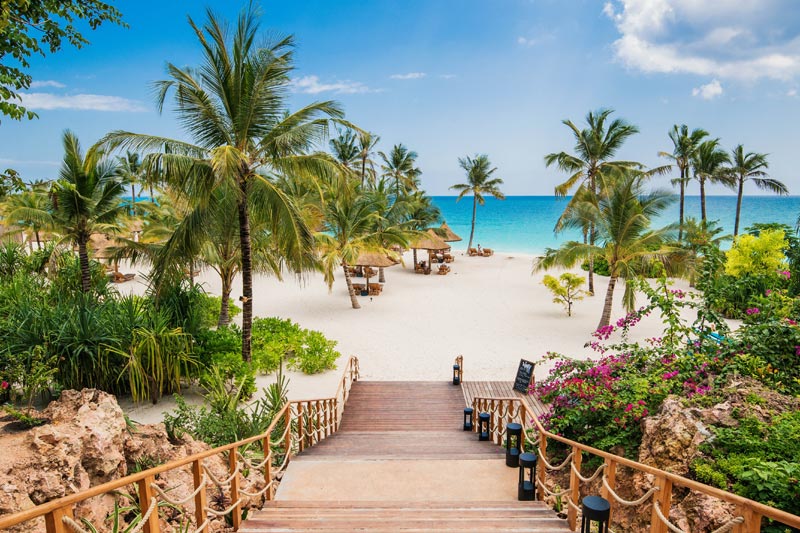
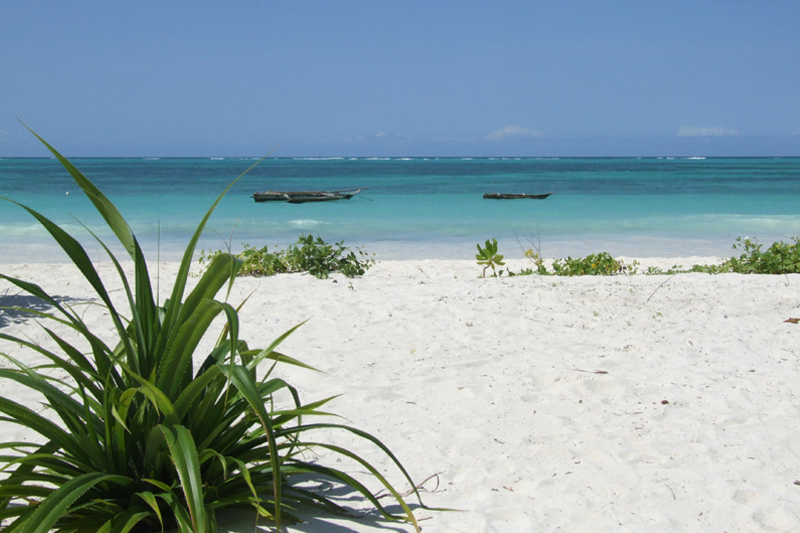
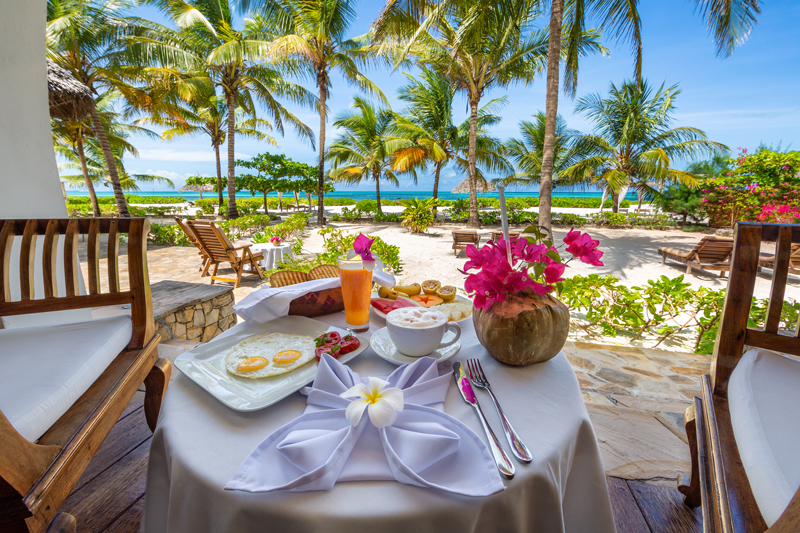
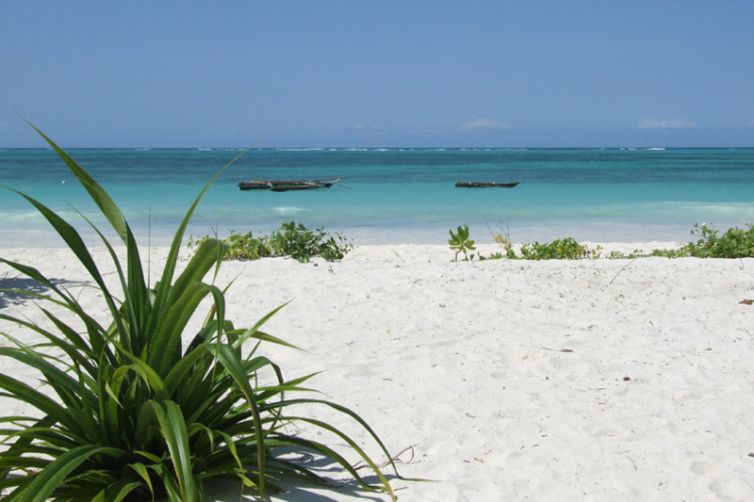
Next Paradise is a boutique beach hotel located in the village of Pwani Machangani on the north-east coast of Zanzibar.
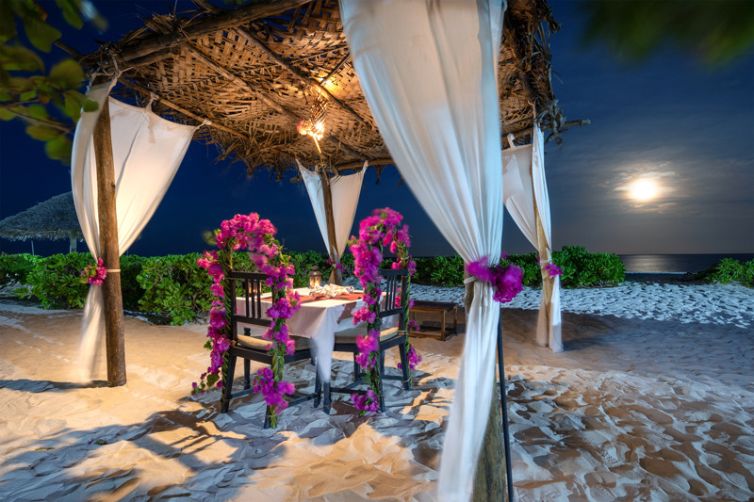
Next Paradise is a lovely, small hotel set on a wide sandy beach and is very suitable for visitors to Zanzibar who are looking for a quieter, more boutique hotel experience. Accommodation is very comfortable, without being overly luxurious, and there are various room styles to choose from. Food is very good, whilst management and service is warm and friendly. The hotel offers an all-round 4 star standard, and is priced accordingly offering good value for money. As well as offering a very relaxed, quiet stay, the intimate nature of the property will suit people who prefer smaller guest environments and more personal service.
Rooms
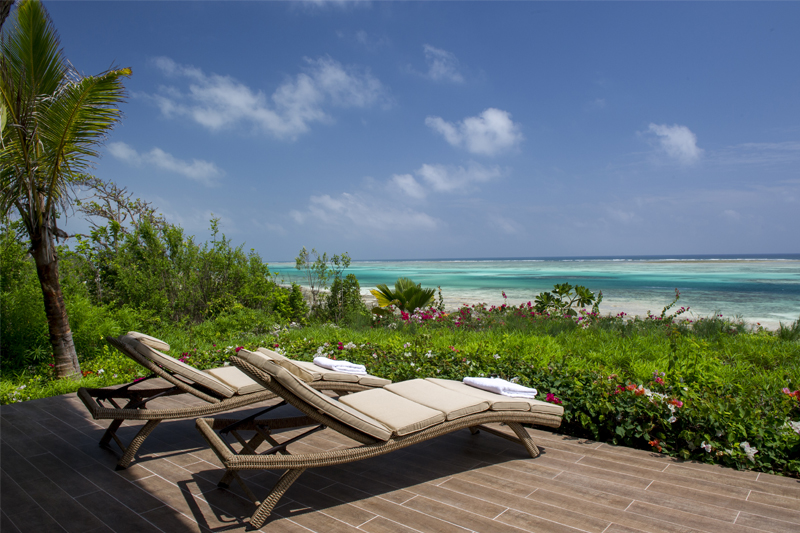
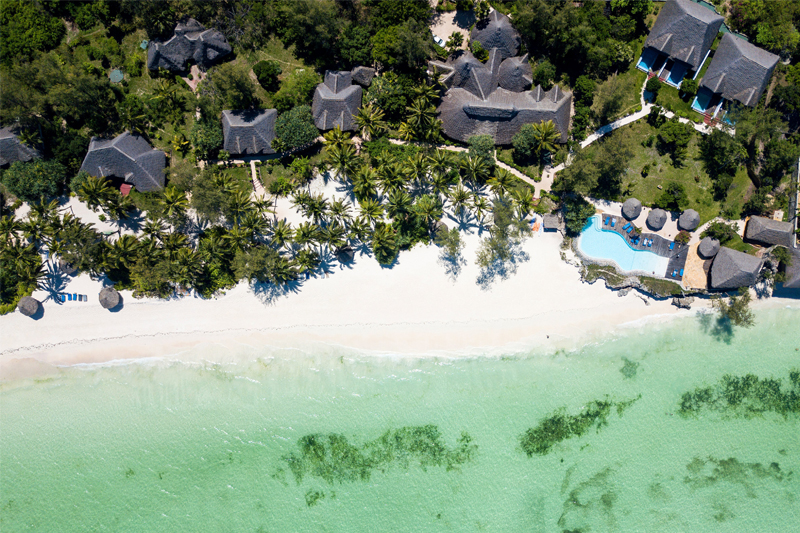
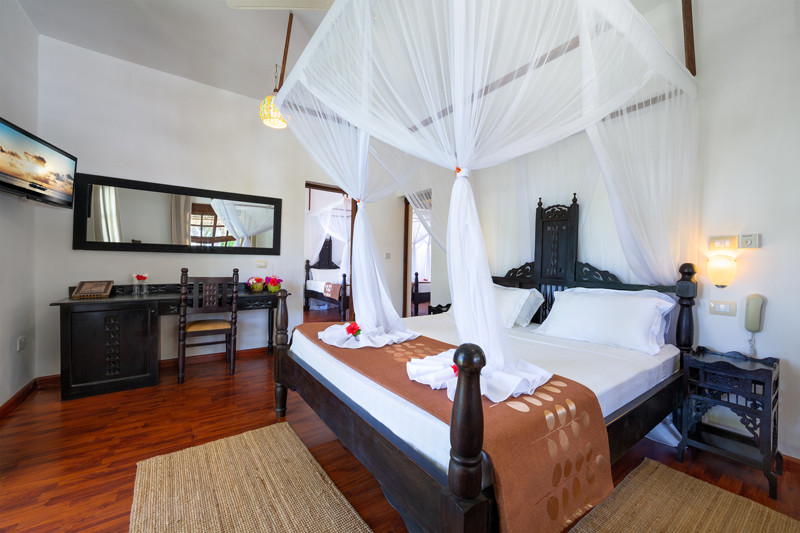
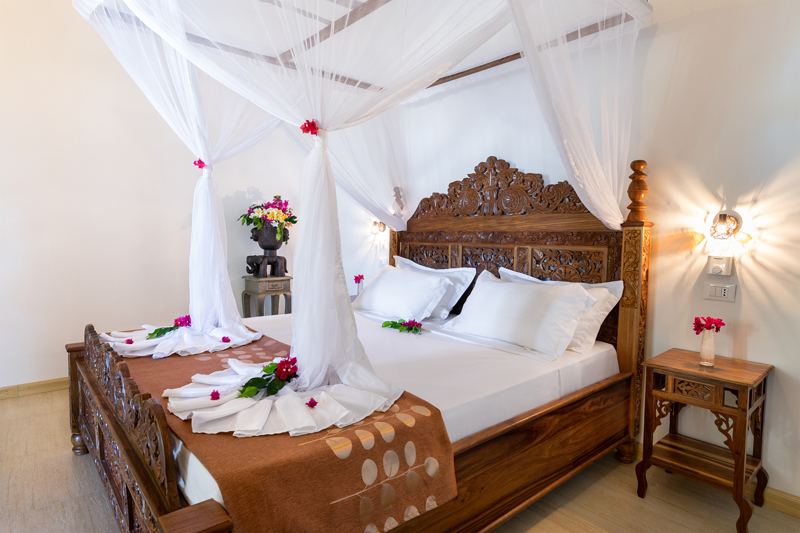
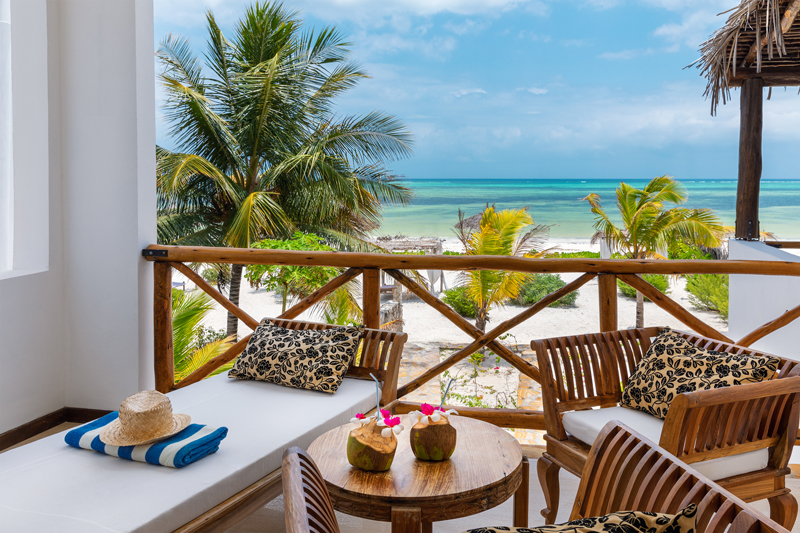
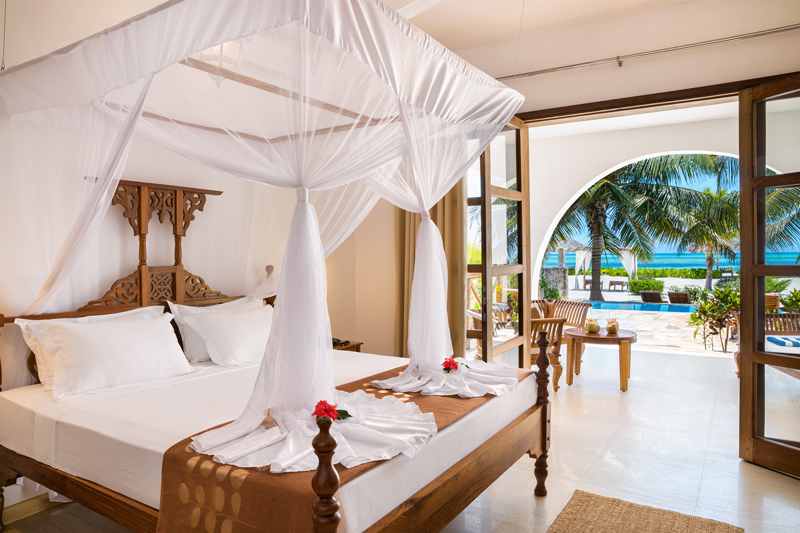
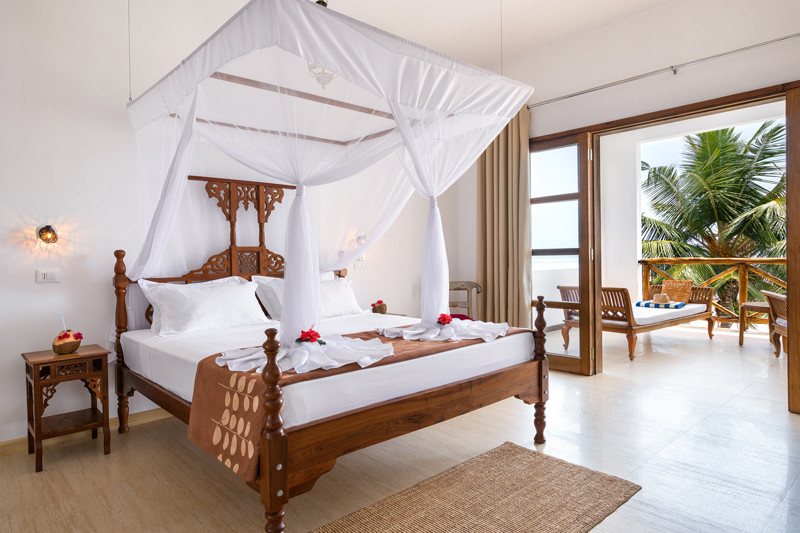
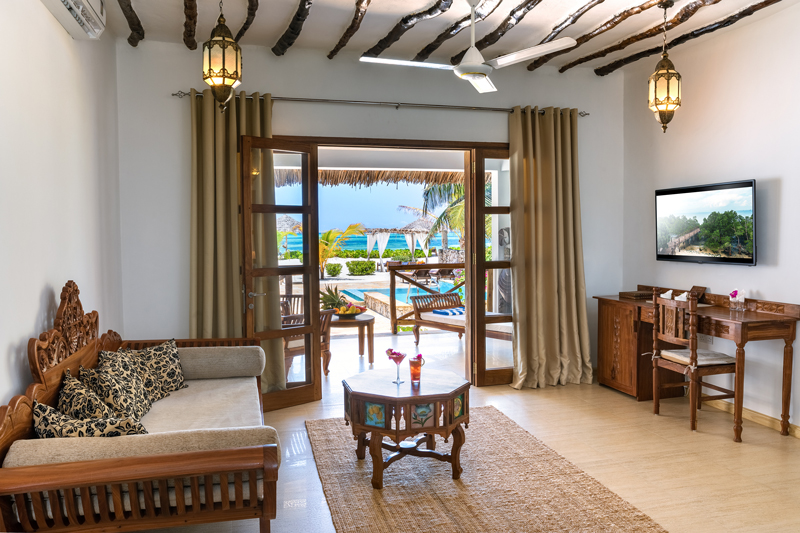
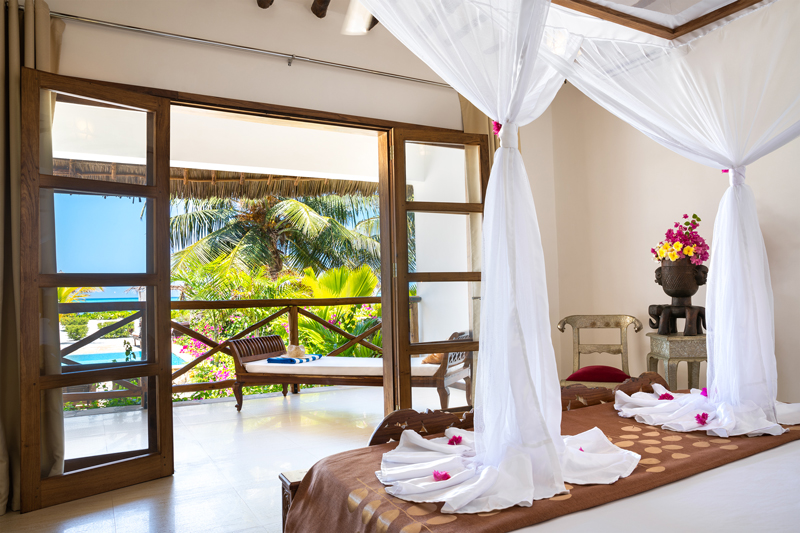
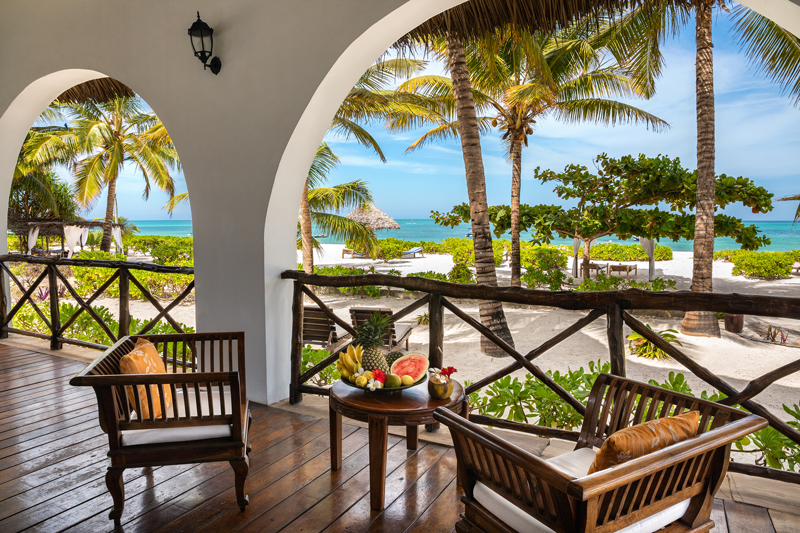
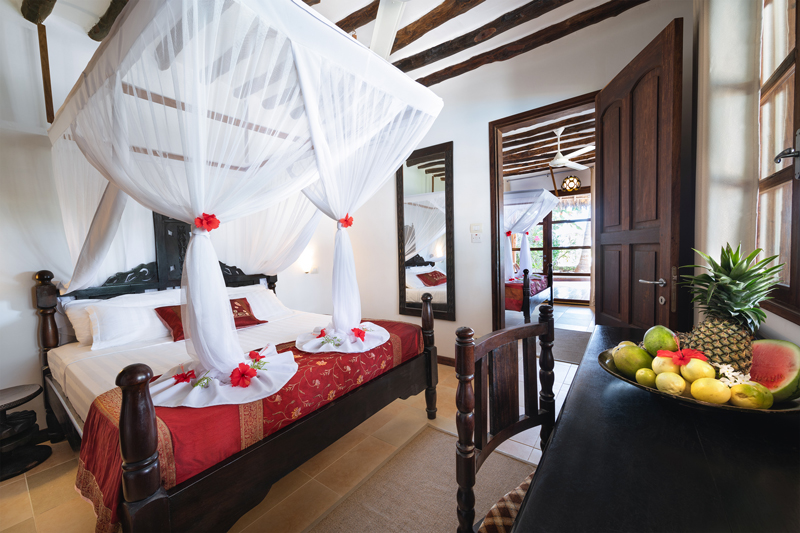
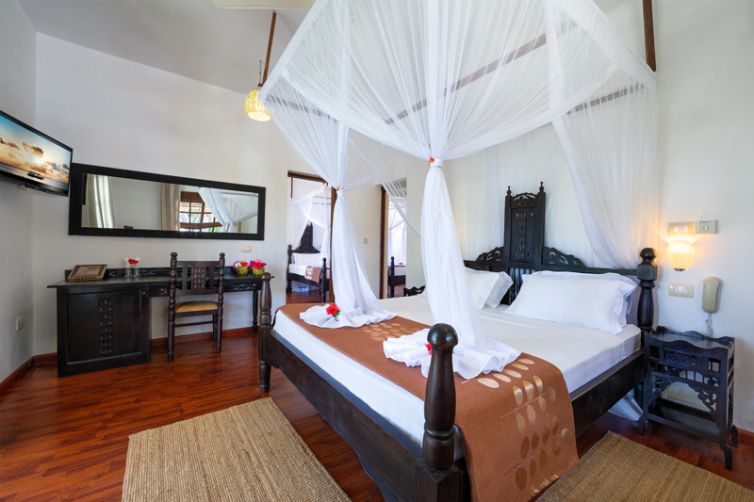
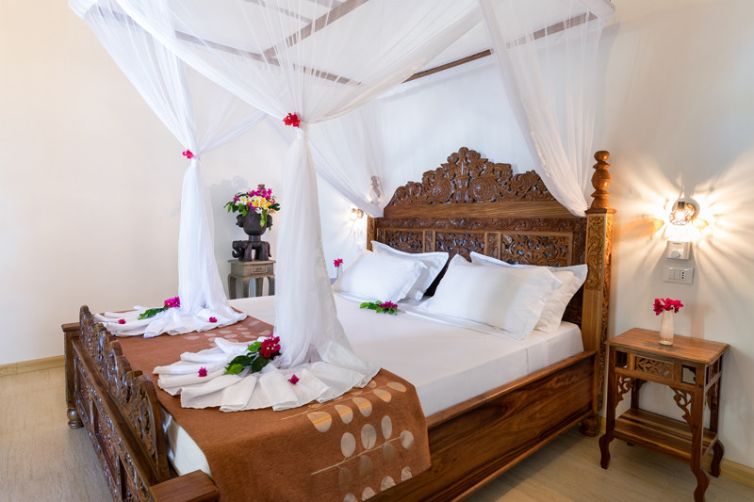
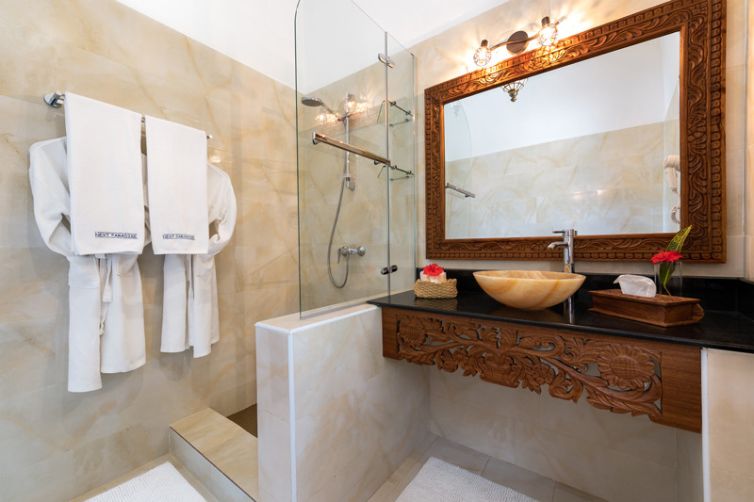
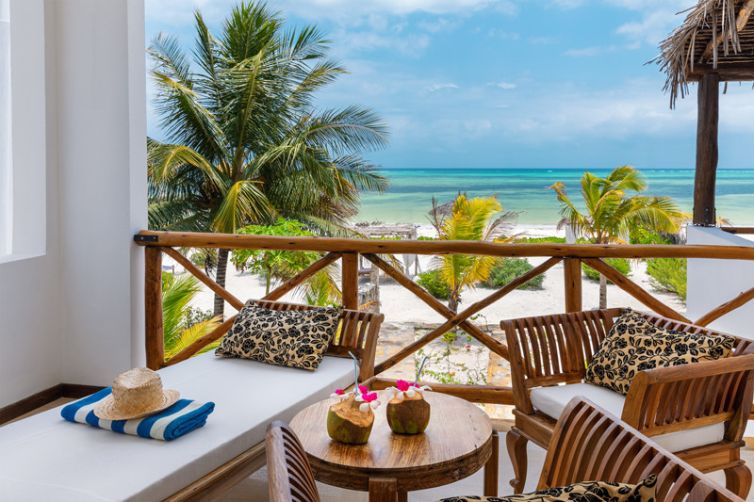
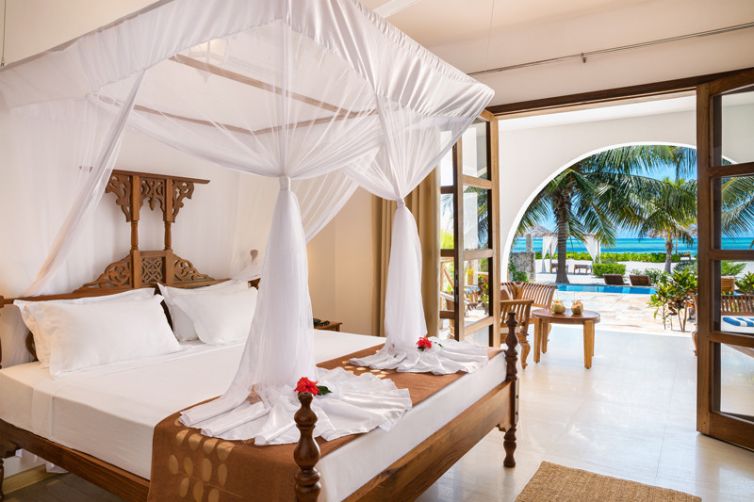
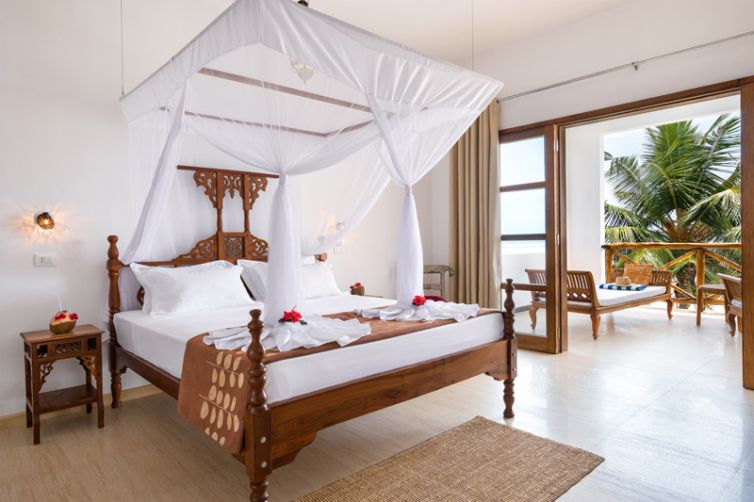
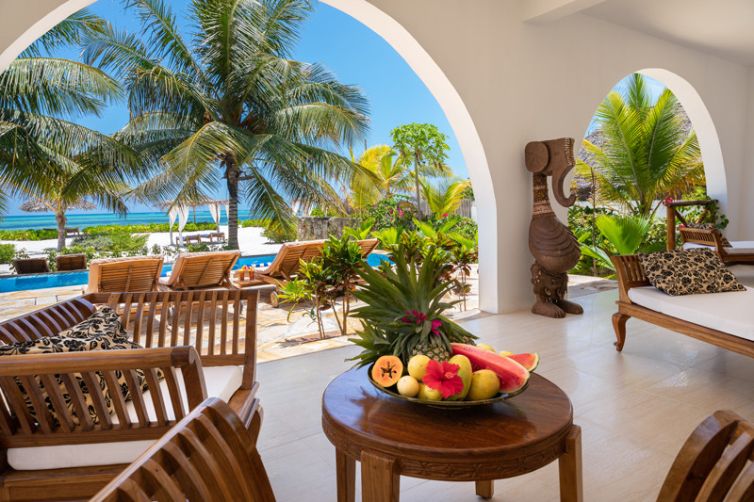
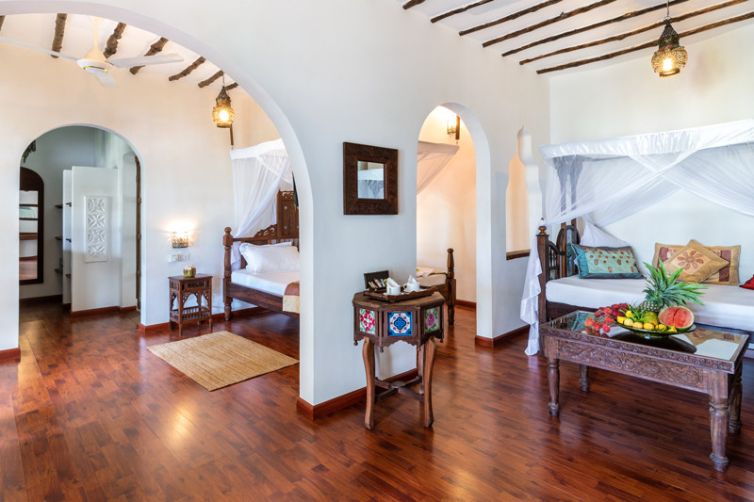
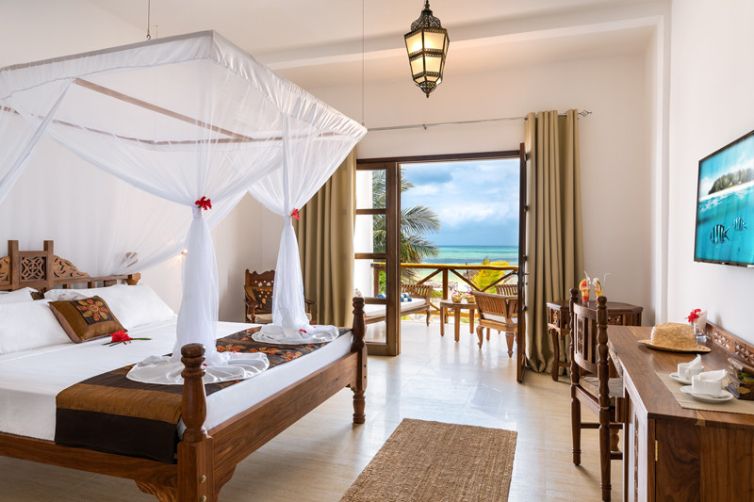
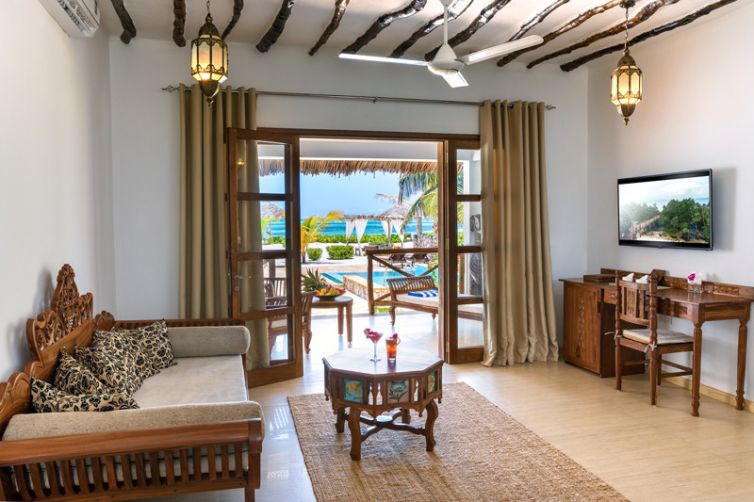
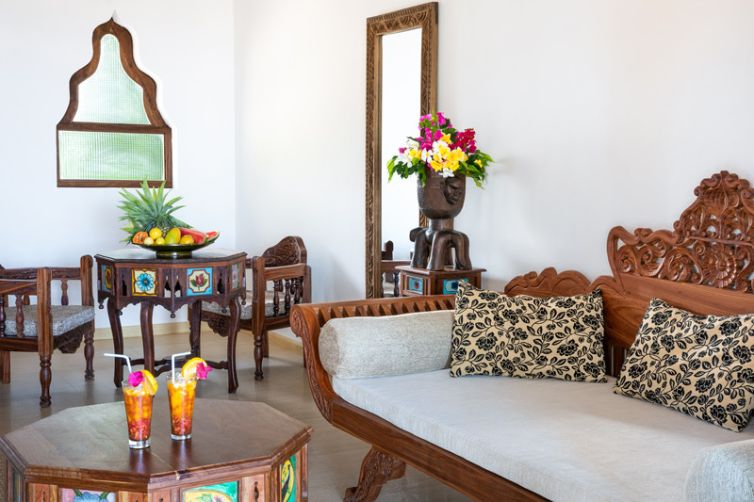
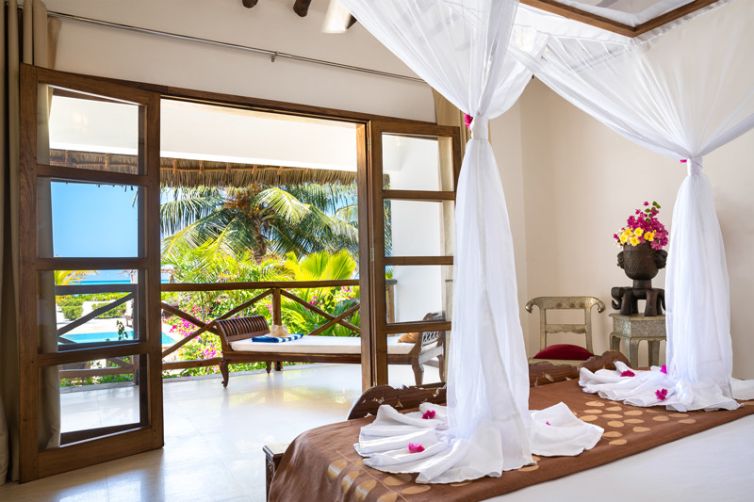
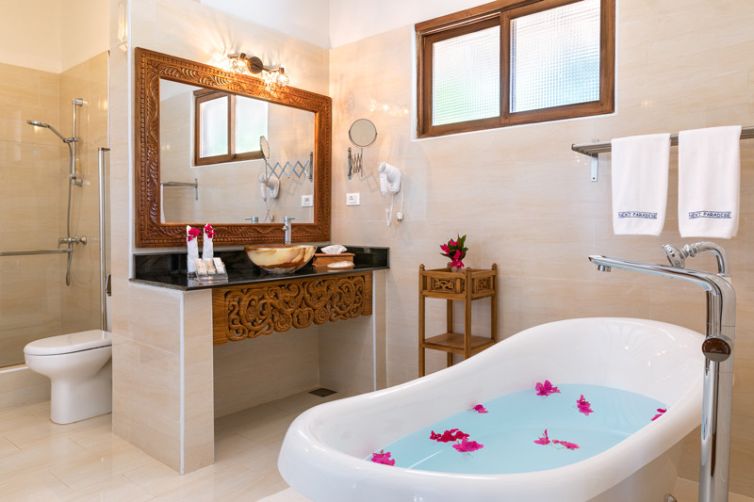
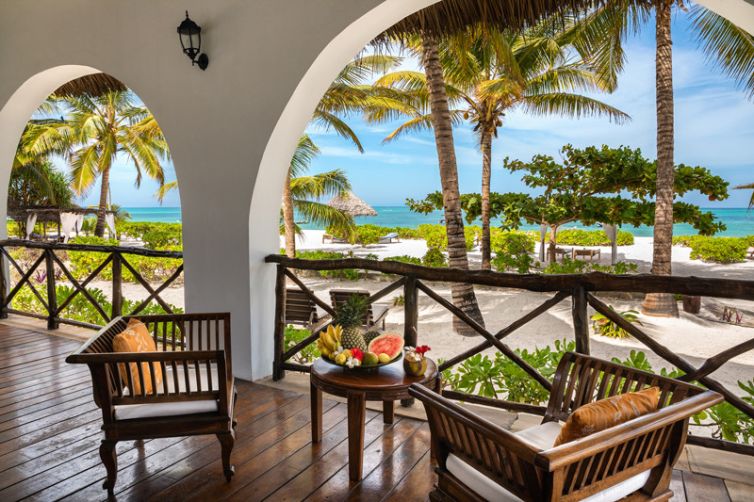
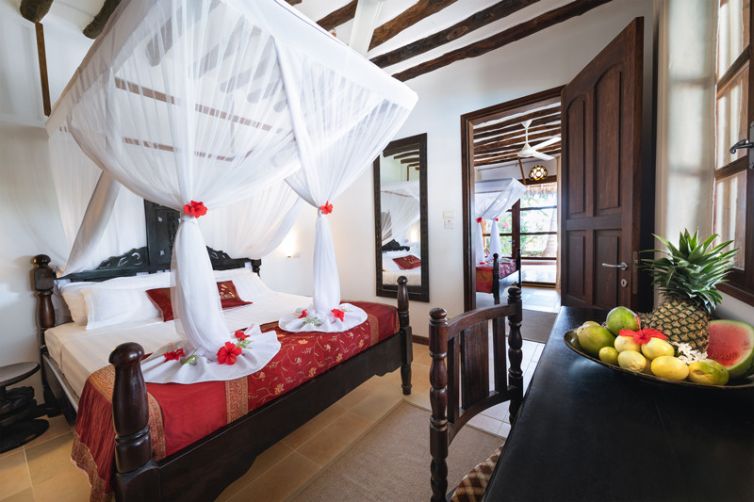
Next Paradise provides accommodation for around 65 guests in a variety of accommodation types overlooking either the pool, the gardens, or the beach, and all set in tropical gardens. Each of the rooms have air-conditioning and ceiling fans, satellite television, a mini bar, internal phone, and en suite facilities comprising of a flush toilet, plumbed basin and shower. Each room also has a spacious, furnished verandah. There are two garden family units which consist of a double and twin room sharing one bathroom and a beachfront family unit which is made up of a two rooms with a queen bed, also sharing one bathroom. The garden and standard rooms are set back from the beach whilst, as the name suggests, the beachfront, oceanfront and sea view accommodations are situated closer and offer more open views. Located nearer the central areas of the property are generally the standard and garden rooms with several oceanfront options also available. Three beachfront bungalows and one sea view bungalow are set slightly apart from the central areas and have their own shared swimming pool, and beyond these bungalows are the newest rooms – the honeymoon suite, the three-bedroom Villa Marina (both have their own plunge pools), and four further Oceanfront rooms.
Central Areas
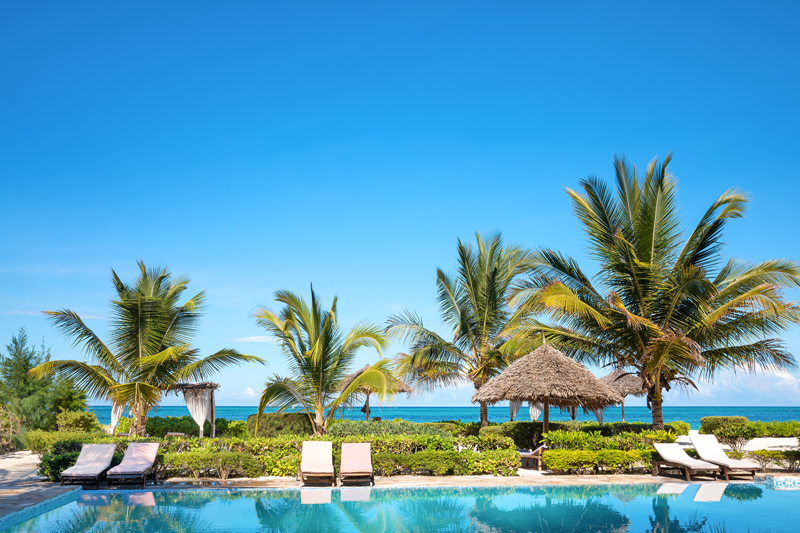
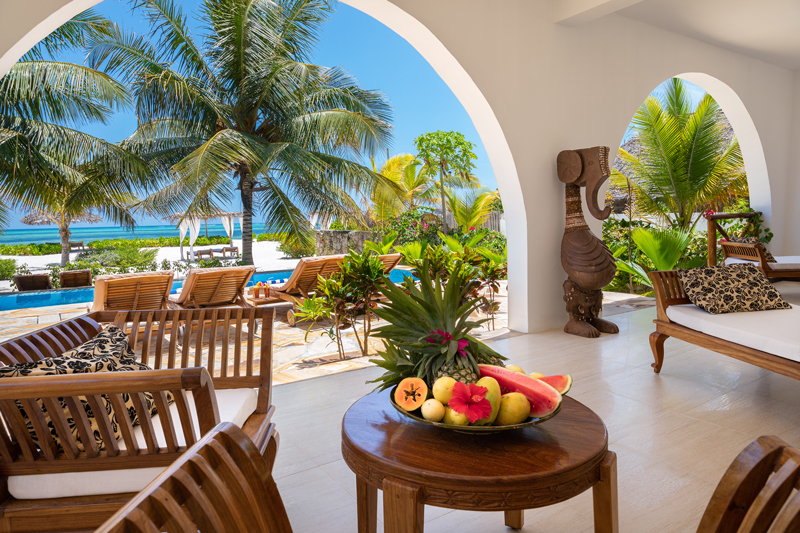
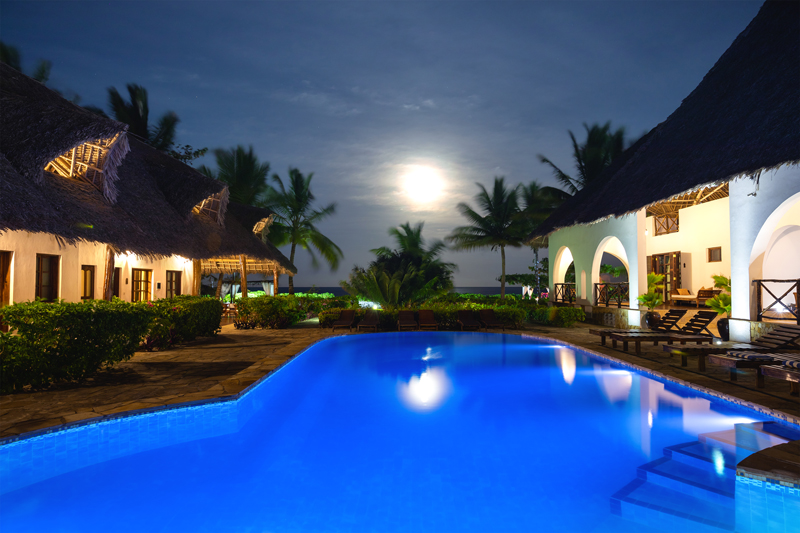
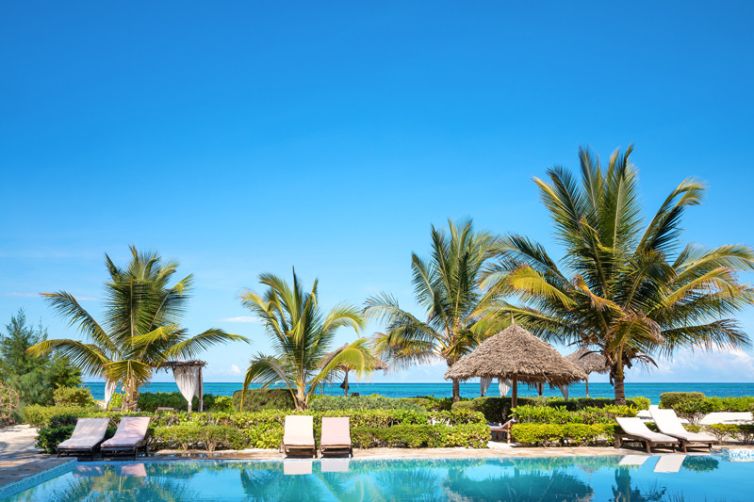
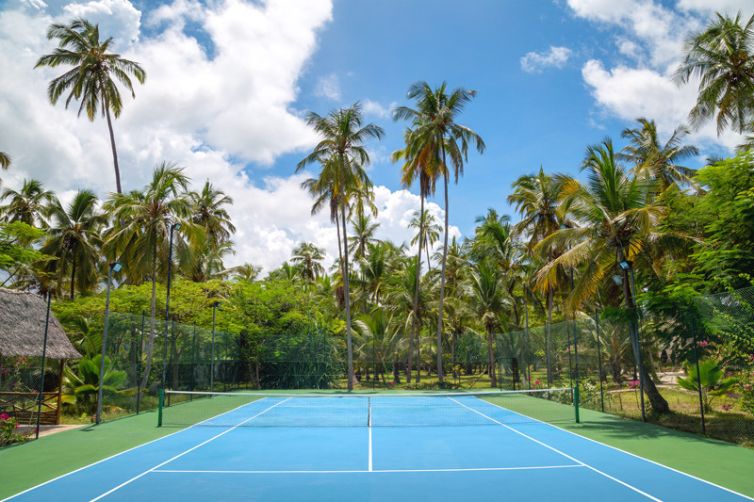
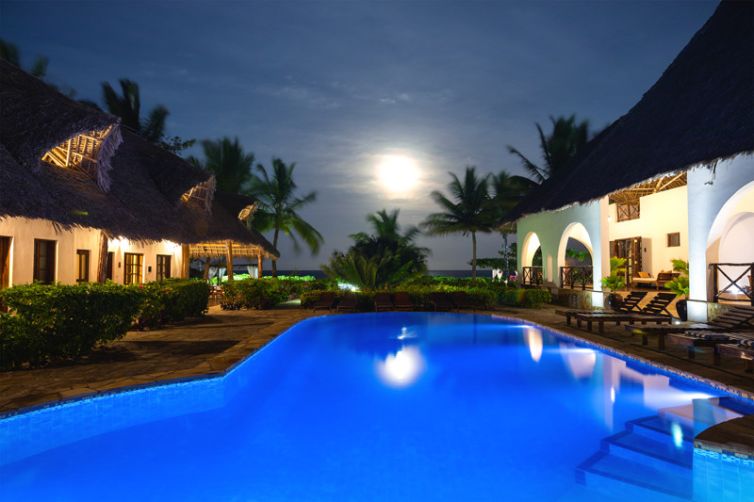
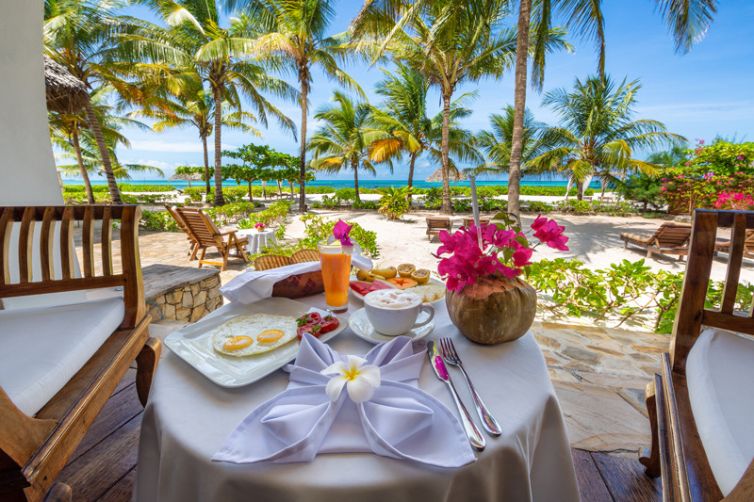
Meals are taken in the central bar and dining area which overlooks the lovely communal swimming pool and there is also a spa hut. There is a tennis court and table tennis with equipment provided.
Facilities
Wi-Fi – Yes
Power for Charging – Yes
Swimming Pool – Yes
Habitat & Wildlife
Zanzibar’s, or more correctly Unguja’s (Zanzibar is the name of the archipelago which includes both Pemba and Unguja islands), history dates back more than 2000 years when the islands traded with ships from Persia, Arabia and India. From about the 10th century, groups of immigrants from Shiraz (Persia) settled on the island and mixed with the local people. In the 16th century, the Portuguese established a trading station before being ousted by Omani Arabs a couple of centuries later. In 1840, the Sultan Said moved his capital from Muscat to Zanzibar with the Omani Arabs forming an elite group of landlords and rulers. Indian settlers formed a merchant class and the island became an important centre of regional politics and the focus of the slave trade.
In 1890, Zanzibar became a British protectorate before gaining independence in 1963. In 1964, the Sultan was overthrown and nearly all Arabs and Indians expelled. Later that year, Zanzibar and Tanganyika combined to form Tanzania. Since then, many of the expelled peoples have returned.
In Zanzibar’s Stone Town (the old quarter and a UNESCO World Heritage site), a fascinating maze of narrow streets and alleyways lead past numerous old houses, mosques, ornate palaces, shops and bazaars reflecting the various influences through the ages – Arab, Persian, Indian and European. Many of the buildings date back to the 19th century and depict the wealth of its builder. Arab houses have plain outer walls with large doors leading to an inner courtyard. Conversely, Indian houses have a more open facade and large balconies with railings and balustrades. Take the chance to savour the atmosphere by dining at one of the rooftop restaurants.
The area outside the Stone Town is called Michenzani (New City), a failed attempt at becoming a modern city.
Depending on where you are staying on the island, there are a number of interesting excursions to consider. Visit a Spice Plantation, take a trip to the Jozani Forest (southern part of the island) where the rare red colobus monkey is found or visit Chumbe Island Coral Park (either as a day trip from Stone Town or overnight). Sundowner trips by traditional sailing dhow are available out of Stone Town. Due to environmental concerns, we no longer recommend swimming with dolphins.
Please remember that Zanzibar, like much of the East African coastline, has a strong Islamic culture, and that you should dress appropriately when in public areas and the Stone Town. During the month of Ramadan, further courtesy should be shown to those observing their faith, particularly in respect to service which you may find slower than usual.
The best beaches on the island are those found on the north and east coasts. However, please note that there are large tidal movements and sea swimming from most beaches during low tide is difficult. The best snorkelling is found around the Mnemba and Chumbe islands.
Like most of East Africa, the islands are affected by the monsoon winds – the Kuzi (or sometimes Kisi) which blows from April to September/October is a south-easterly which brings choppy sea conditions and seaweed to the shorelines, whereas the Kaskasi blows from the north-east from October/November to March producing calmer seas and slightly higher temperatures.
Activities
Tennis, bicycles and massages are all available at the hotel, whilst snorkelling, scuba diving, kite surfing and other water sports can all be arranged at nearby resort hotels. Sight-seeing trips around Zanzibar can also be arranged if required.
Seasons
Next Paradise is open from June until mid-April each year.
There is no age restriction at Next Paradise. There are several two-bedroomed accommodation options for families as well as the three-bedroomed Villa Marina. Triple rooms are also possible. Next Paradise is suitable for families who do not need the buzz and on site activities of a large resort property.
Next Paradise Boutique Resort supports the local economy through its employment of local residents and offering internships enabling them to learn new skills and expand their career opportunities. They work very closely with the community and have helped with renovations to the school by donating materials and arranging the assistance of local craftsmen. They help with clean ups, provide tools and organise transport to take waste to landfill sites as well as building an area where villagers are able to take their own waste which will then be collected and removed. Next Paradise also source supplies from the local vendors where possible and all fish is purchased from local fisherman enabling them to support their families.