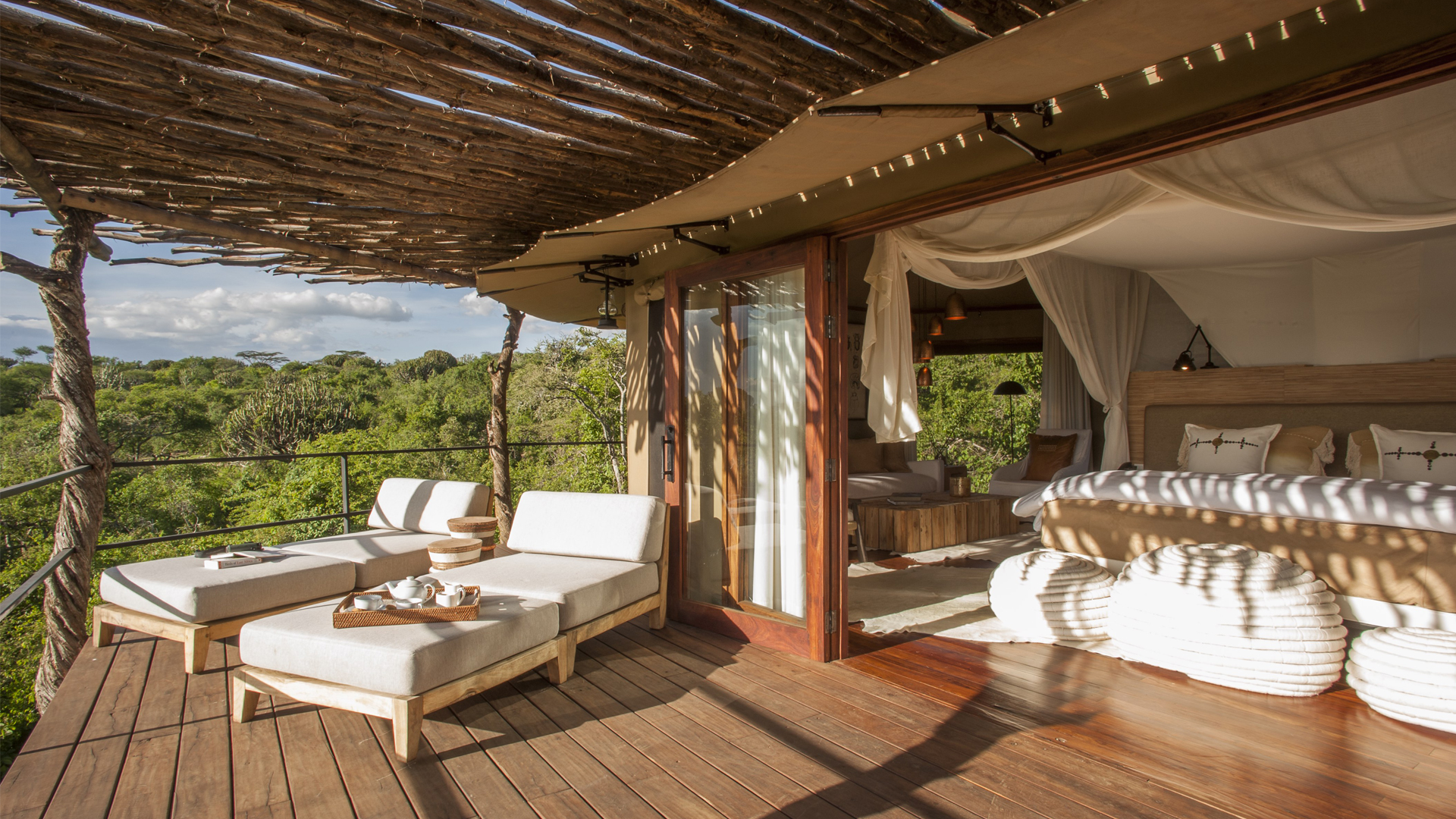
Ndutu Safari Lodge
Ndutu Safari Lodge Is Located In The Ngorongoro Conservation Area On The Edge Of The Southern-Most Serengeti Plains, Set In A Pocket Of Beautiful Acacia Woodland.
Ndutu Safari Lodge has a long history in the Serengeti, being Tanzania’s oldest safari lodge, and an established reputation for hosting researchers and photographers, including primatologist Jane Goodall, filmmaker Hugo van Lawick and archaeologist Mary Leakey. While the accommodation is comfortable, it is not luxurious and retains its original character. The main attraction of the lodge is its superb location for accessing the short grass plains favoured by the wildebeest during calving season. You’ll also find very warm hospitality here and drinks around the campfire at Ndutu Lodge are something of an institution! In addition to its prime location and friendly atmosphere, the lodge offers excellent value. Due to its popularity it can get booked up well in advance during the migration season so you will need to plan ahead.


Rooms
Rooms are contained in 34 stone and thatch cottages which fan out in each direction from the central area. Each room has en suite facilities (with plumbed sink and shower and flush toilet), 24 hour solar electricity, and a private verandah
Central Areas
The main areas are open-fronted stone under thatch, and include a comfortable sitting area, a bar and a dining area which overlook a grassy plain and forest glade leading down to Lake Ndutu itself. There is also a gym and a spa.
Facilities
Wi-Fi – Yes
Power for Charging – Yes
Swimming Pool – No
Habitat and Wildlife
With an area of some 14,000 sq. km, Serengeti is probably the best-known wildlife sanctuary in the world. The ecosystem includes the National Park itself, the Ngorongoro Conservation Area, Maswa Game Reserve and Kenya’s Masai Mara National Reserve, together forming one of the most complex and least disturbed ecosystems on earth. The landscape was originally formed by volcanic activity in the Ngorongoro highlands and it varies from the open short grass plains in the south, to savannah and scattered acacia woodlands in the centre, to extensive woodland and black clay plains in the west, to hilly wooded grassland in the north. Most of the permanent water is found towards the northern and western areas, the lack of permanent water and food in the south being the main reason for the annual migration.
The park is home to approaching 2,000,000 wildebeest, 500,000 Thomson’s gazelle and 250,000 zebra: the largest concentration of plains game in Africa. More than 30 species of herbivores are found here, as well as all the major predators and nearly 500 species of birds.
The southern reaches of the park consist of endless ‘short-grass’ open plains. In the heart of these plains on the border of the Serengeti National Park and the Ngorongoro Conservation Area is an area known as Ndutu, where a series of partial soda lakes and marsh areas are surrounded by woodland. Many of the camps and camp sites in the southern Serengeti are located in this area. To the west the open plains are bordered by the woodlands of the Maswa Game Reserve, and a secondary hub of camps can be found along the edge of woodland, known as the Kusini area. To the east the plains are endless, stretching south-east through the Ngorongoro Conservation Area and north-east towards the Loliondo Game Controlled Area which borders the eastern Serengeti.
The hundreds of thousands of wildebeest, gazelles and zebra congregate on these southern short grass plains from December to April, usually calving around the end of January when the nutritious grass is at its best. During this time the ‘migration’ is restricted to local movements according to rainfall and grazing, though even within the southern Serengeti region the distances are vast. This southern region is exceptional for lion, cheetah and spotted hyaena sightings, all of which thrive on the open plains, whilst leopard, serval, African wild cat, elephant, buffalo, giraffe, eland, topi, jackal, ostrich and impala can also be seen. Wild dogs are making a comeback in the region and are occasionally encountered to the south of Ndutu in the Ngorongoro Conservation Area.
Depending on grazing conditions and water supply, the start of the Serengeti annual migration begins at the end of this period, and the herds begin to march north/westwards, ‘lowing’ incessantly so that the air hums like a dynamo (zebra first, then the wildebeest and gazelles). Lion, cheetah, hyaena and wild dog follow, ensuring that only the fittest survive, while jackals trail behind and vultures circle overhead.
Activities
Ndutu Safari Lodge is normally visited on a drive-in basis so you will spend the days exploring this area of the Serengeti with your private guide and vehicle.
Seasons
Ndutu Safari Lodge is open year round. The migration season is between December and March and this includes the calving season (which can start anytime from mid January); but resident wildlife is excellent for year round game viewing. April and May receive the long rains in Tanzania.
Ndutu Safari Lodge accepts children of all ages and has specific family rooms. That being said, the lodge is in a prime wildlife area with animals free to wander through the grounds and so is not ideal for very young children. Activities here also focus on game drives, with little back at the lodge to occupy young children, so a stay here is better suited to families with older children.
By employing local staff, supporting the Kope Lion Initiative and working with the local Maasai communities, Ndutu Lodge aims to play its part in ensuring that wildlife and communities can live harmoniously together, one benefiting the other.
The Kope Lion Initiative works to find lasting solutions so that pastoralist communities and lions in the Ngorongoro Conservation Area (where Ndutu Lodge is located) can coexist and prosper together. Supporting better protection for both livestock and lions, reducing the conflicts, and providing tangible benefits from lion conservation are some of the ways that Kope Lion is increasing the tolerance that people have towards lions, reopening corridors of connectivity, and restoring a healthy landscape that sustains all forms of life. Solutions include employing former lion hunters, or Ilchokuti as they are known in the Maa language, to act as guardians to both livestock and lions.
Ndutu Safari Lodge also supports the Serengeti Cheetah Project and encourages guests to get involved. The Serengeti Cheetah Project is the world’s longest running scientific project on wild cheetah and has maintained a comprehensive database of all encounters of cheetah across a study area on the Serengeti plains since the 1975. This information has generated many scientific publications and underpins much of what is known about cheetahs in the wild today. Guests can send photographs of cheetah they’ve taken on game drives to the project which provides the researchers with valuable information. In return, if the cheetah is known to the project, guests will receive a short story with a history of the individual.
Over the years Ndutu Safari Lodge has supported many projects including Endulen hospital, Makao School and continuing to support the families of current and previous staff.