Lemala Kuria Hills Lodge
Lemala Kuria Hills Lodge Has A Beautiful Location Tucked Away In A Rocky Outcrop In The Kuria Hills In Northern Serengeti.
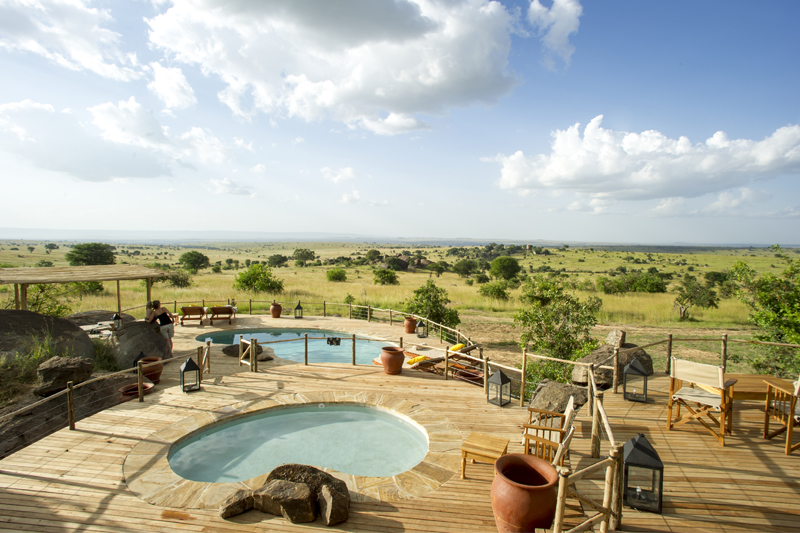
Lemala Kuria Hills Lodge offers a high level of accommodation at very good value, in a location that enjoys far reaching views with easy access to the migration between July and October. The luxurious suites, each with a private deck and plunge pool and lovely bush vistas, are sophisticated and hospitality is also very good. With 15 rooms, Kuria Hills is not the smallest of lodges, but each room is positioned privately amongst the kopjes. For anyone looking for a prime wildlife viewing base with an excellent level of accommodation, at a sensible price point, this lodge is definitely worth considering.


Rooms
Accommodation consists of 15 one bedroom and one two bedroom glass-fronted tented suites which are located to afford maximum privacy and to offer splendid views. The suites are all are furnished to a high standard with either twin or double beds, a comfortable lounge area, a vanity unit including a hairdryer, tea/coffee facilities and a minibar, plentiful luggage space and an oversized bathroom with a double vanity, toilet, bathtub and both indoor and outdoor showers. Sliding glass doors lead on to the generous deck area with tables and chairs, sun loungers and private plunge pool. Five of the rooms have a sofa bed and can accommodate an extra camp bed for families travelling with younger children. The two bedroom suite has a more contemporary design and includes two en suite bedrooms, a shared living space and a shared private plunge pool.
Central Areas
The central areas comprise of an elegant lounge, bar and dining area. There is a swimming pool with fantastic views and a small spa where treatments are available at an additional cost.
Facilities
Wi-Fi – Yes
Power for Charging – Yes
Swimming Pool – Yes
Habitat and Wildlife
With an area of some 14,000 sq. km, Serengeti is probably the best-known wildlife sanctuary in the world. The ecosystem includes the National Park itself, the Ngorongoro Conservation Area, Maswa Game Reserve and Kenya’s Masai Mara National Reserve, together forming one of the most complex and least disturbed ecosystems on earth. The landscape was originally formed by volcanic activity in the Ngorongoro highlands and it varies from the open short grass plains in the south, to savannah and scattered acacia woodlands in the centre, to extensive woodland and black clay plains in the west, to hilly wooded grassland in the north. Most of the permanent water is found towards the northern and western areas, the lack of permanent water and food in the south being the main reason for the annual migration.
The park is home to approaching 2,000,000 wildebeest, 500,000 Thomson’s gazelle and 250,000 zebra: the largest concentration of plains game in Africa. More than 30 species of herbivores are found here, as well as all the major predators and nearly 500 species of birds.
The northern part of Serengeti is a huge area of open plains, rolling hills and acacia woodland, intersected by numerous small streams which flow into the Mara River. The Mara River is a natural focal point, and most camps are located in the Kogatende region to the south of the river. To the north of the river is a section of the park known as Lamai, whilst to the south of Kogatende are the Wogakuria Hills where the rolling hills are interspersed with rocky granite outcrops. The plains stretch east and west to the boundaries of the park, and in the east continue into the Loliondo Game Controlled Area.
The northern Serengeti is exceptional for lion, cheetah and leopard sightings, whilst hyaena, serval, African wild cat, elephant, buffalo, hippo, crocodile, giraffe, eland, topi, jackal, ostrich and impala can also be seen. Wild dogs are making a comeback in the region and are very occasionally encountered, whilst black rhino can sometimes be seen in the north-eastern region around the Sand River.
Although this region offers a wonderful all year round safari experience, it is busiest from July to October when hundreds of thousands of wildebeest, gazelles and zebra congregate on these northern plains. The herds usually arrive in late June or early July, travelling up from the southern and western Serengeti on their annual migration. Many of the herbivores will cross into Kenya’s Masai Mara, but large numbers remain in the northern reaches of the Serengeti, where the Mara River provides permanent water. This movement of so many animals can be dramatic, especially when they cross the Mara River, which can happen at any time between July and early November. ‘River Crossings’ are a favoured highlight for wildlife enthusiasts and photographers, as hundreds of wildebeest stampede into the river whilst crocodiles lie in wait. Around October/November, as the rain clouds gather, the herds head south once more to calve on those nutritious short grass plains before starting the cycle again.
Activities
The camp can be visited on a drive-in basis with your own private guide and vehicle, or you can arrive on a fly-in basis whereby local guides will take you on shared game drives in open safari vehicles (by day only). Short guided nature walks are also possible on a game package basis (seasonal).
Seasons
Lemala Kuria Hills Lodge is open from June to February each year, with the migration season running from July to early November.
Lemala Kuria Hills Lodge welcomes children from the age of five years and accommodation is flexible enough to allow up to two children sharing with parents in a room. The two bedroom suite is ideal for those wanting a little more space. In the two bedroom suite, the bedrooms are situated at either side of the living space which is open-fronted and therefore the bedrooms do not connect internally which makes this suite is better suited to those travelling with older children.
Lemala is involved in a wide range of projects that support local communities and these include:
- Creating a successful program to make and donate reusable sanitary pads to young village girls in rural areas who would otherwise be absent from school each month.
- Sponsoring a women’s empowerment group in Mto wa Mbu that employs 32 stay-at-home moms to make their 100% biodegradable lunch boxes, used in all Lemala properties.
- Providing internships to young women and men from disadvantaged backgrounds with a promise of a full-time employment opportunity.
- Employing nine young men from a homeless shelter in Arusha, giving them a new and secure start in life.
Lemala are also supporters of The Serengeti De-snaring Program, a Program that plays a crucial role in safeguarding the Serengeti and its wildlife.
The company also operates 100% off the grid, using solar energy in all locations. They also play a part in removing plastic bottles from inside the national parks and conservation areas in which they operate, upcycling them into school desks and chairs which are then donated.