Kokoko Camp
Kokoko Camp Is A Seasonal, Exclusive-Use Camp Located In Ruaha National Park’s Prime Game Viewing Area.
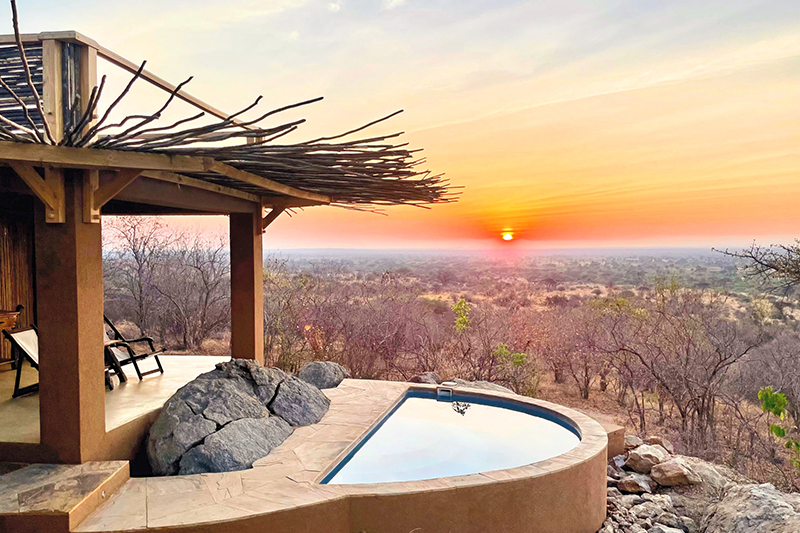
Kokoko Camp is an innovative little camp offering an intimate, pared back safari experience for small private groups of up to six guests. The camp, though simple and with a light footprint, is stylish and unique, including tents with a retractable roof for that sleeping under the stars feeling. Dining is very informal with meals cooked in expedition style over the open fire. Located on the banks of the Mwagusi River, the camp has access to the very best of Ruaha’s wildlife viewing areas which you can choose to explore by vehicle or on foot. Kokoko is perfect for anyone wanting an adventurous and exclusive safari experience, alongside superb game viewing.


Rooms
There are just three innovatively designed cube-shaped guest tents. The front, side and roof of each tent has large gauze panels which can be left uncovered to enhance the feeling of being close to nature and sleeping under the stars. In case of wet weather, or for guests who prefer to feel more enclosed, there are roll down canvas sides and a retractable hood which can be drawn at night, or to provide shade during the day. En suite facilities include an enclosed flush toilet and basin and an outdoor bucket shower. Each tent has a verandah with two safari chairs,
Central Areas
The central tented mess area provides a comfortable place to relax, set into the shade of fig, sausage, and Jackalberry trees. There is a bar and dining and sitting areas, although dining is open air whenever weather allows. The campfire is the focus for breakfast and pre-dinner drinks.
Facilities
Wi-Fi – Yes
Power for Charging – Yes
Swimming Pool – No
Habitat and Wildlife
Ruaha National Park was previously part of the huge Rungwa Game Reserve, with which it shares its north-western boundary. In 1964, it was gazetted as the National Park. The terrain within the park is well wooded and undulating. The Great Ruaha River gives the park a permanent supply of water, but there are also numerous sand rivers which become raging torrents during the rains (from December to April). In addition to the Great Ruaha River, there are also numerous waterholes, swamps and seepage areas which provide water throughout the year.
Generally speaking, the park is divided into four different habitats consisting not only of Miombo, but also of undulating hills dominated by baobabs, the albida woodland along the main river courses and areas of open ‘black cotton’ grassland. Mammal viewing is superb particularly in the dry season (June to October) when the animals are forced to congregate around water sources – elephant, buffalo, lion, leopard, cheetah, wild dog, impala, zebra, giraffe, hippo, waterbuck, roan and sable antelope, eland, greater and lesser kudu, and Grant’s gazelle are just some on the many species to be seen.
Local birdlife is exceptional as Ruaha lies in the convergence zone of species found both to the north and south of the region. Amongst the 570 or so species recorded in the park, you can expect to see bateleur and fish eagles; ostrich; spurwing and Egyptian geese; crowned cranes; guinea fowl; yellow-billed, saddle-billed, Abdim’s and open-billed storks; and numerous species of ibis, plover, kingfisher, bee-eater, parrot, duck, barbet, dove, francolin and roller. The local red-billed hornbill has recently been recognised as its own species.
Tsetse fly are present in Ruaha but more in some areas than others. The core game-viewing region around the Mwagusi River is not seriously affected by Tsetse.
Activities
Activities with your private guide include game drives by day and night and walking safaris. Hot air balloon flights can be booked at extra cost.
Seasons
Kokoko Camp is open from June to November with the best wildlife viewing between the dry season months of July and October (these are also the best months for walking). Rain can be experienced in November.
Children aged 12 years and above can stay at Kokoko Camp (with children between 12 and 16 years able to join walks at the discretion of the guide). The very adventurous nature of Kokoko Camp, and its big game location, will naturally suit families travelling with older teenagers who are comfortable staying in their own tent.
Staying at any of Asilia properties, owners of Kokoko, sees guests automatically contributing to community and conservation projects through their guest conservation charge. By staying at Kokoko guests are also supporting their in-house training schemes and responsible tourism efforts.
Asilia’s vision in East Africa is for both the local people and nature to benefit from crucial wilderness areas thriving. They work with local communities and offer primary, secondary and tertiary educational scholarships. Twende Porini, meaning ‘let’s go to the bush’, is a project which takes a group of children from their villages close to the areas in which Asilia operates, to one of their camps for several days. Whilst at the camp the children are mentored by Asilia guides and staff as well as local school teachers and engage in a range of activities from lectures to game drives in order to assist their understanding for the need for conservation in the wild areas close to their communities.
In Ruaha, Asilia supports the Ruaha Carnivore Project and STEP (Southern Tanzanian Elephant Program). The Ruaha Carnivore Project (RCP) works to develop conservation programmes for the large carnivores which inhabit Ruaha. They do this by showing films in the villages, collaring lions with GPS trackers which, given knowledge of their location, enables them to advise researchers of possible human conflict. They also assist in creating enclosures for the Maasai herdsman and support education through student scholarships. RCP work on initiatives which benefit local communities where wildlife is present, ensuring they are invested in predator conservation in the area. STEP focusses the long-term safety of elephants through aerial surveillance, technical training for rangers, research and monitoring of behaviour, campaigning and educating people on the importance of elephants as a keystone species in the Ruaha ecosystem.