Sarara Camp
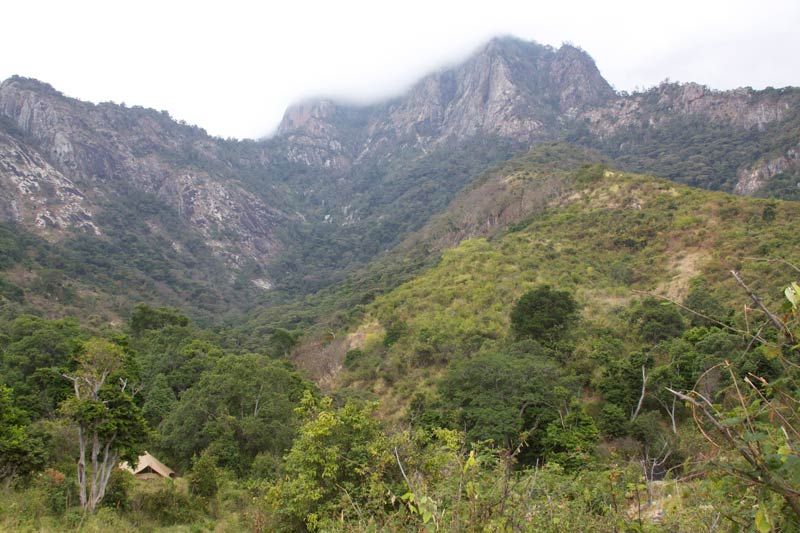
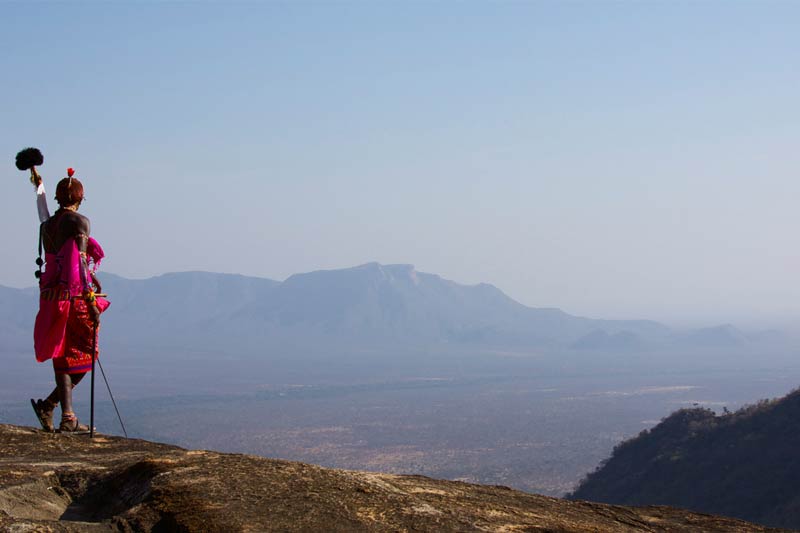
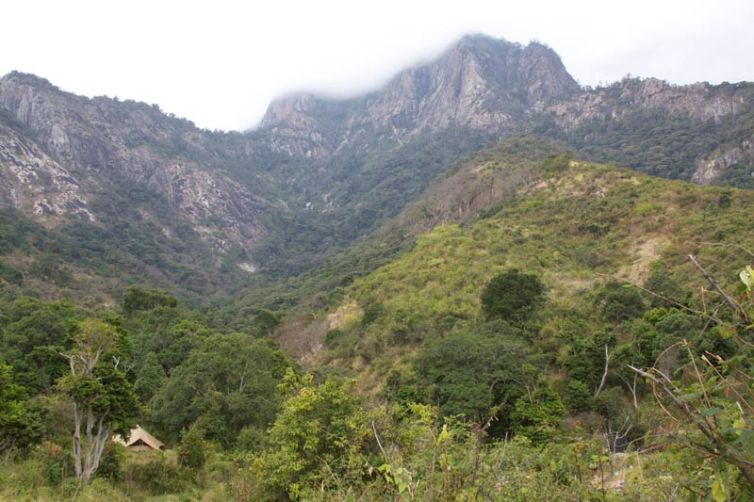
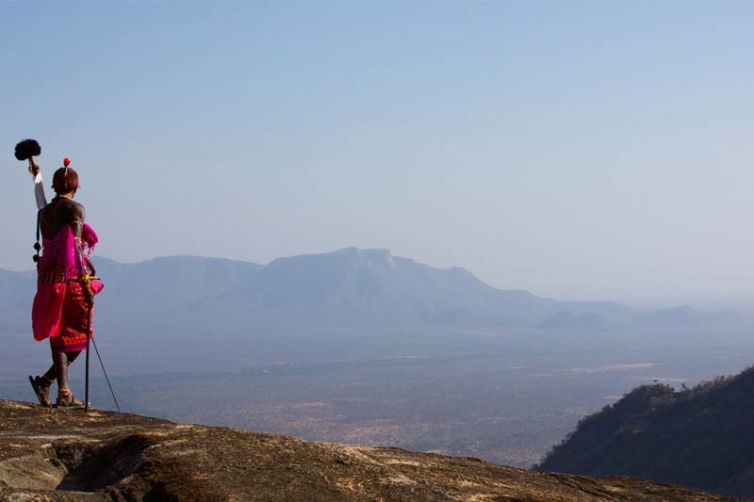
Sarara is a remote tented lodge built into the lower slopes of the southern tip of the beautiful Mathews Range in northern Kenya.
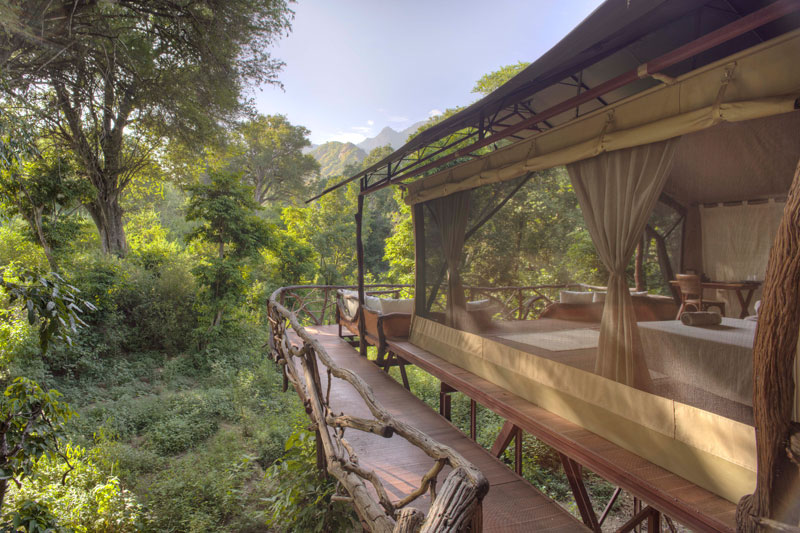
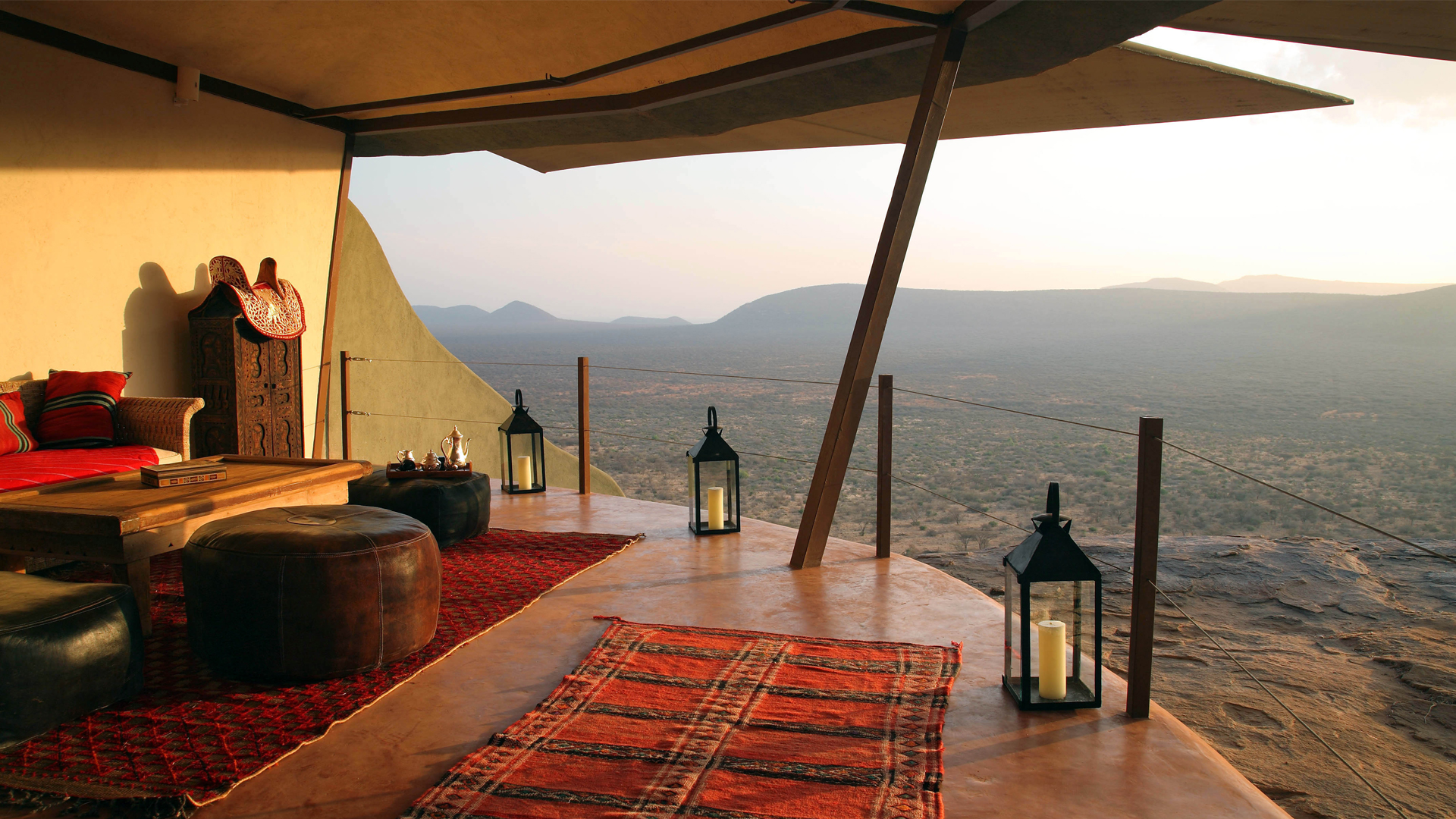
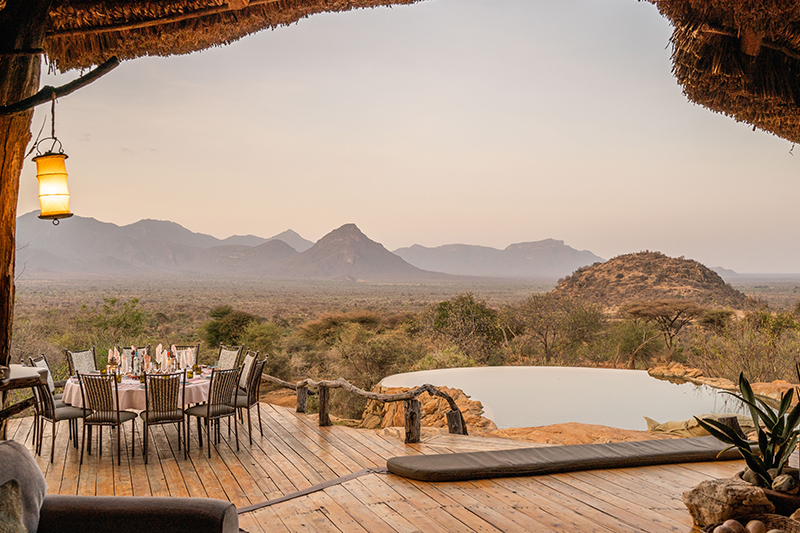
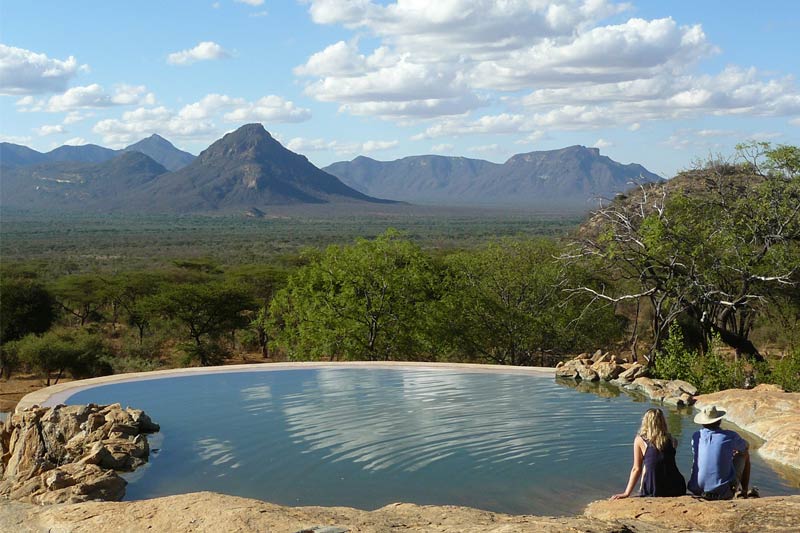
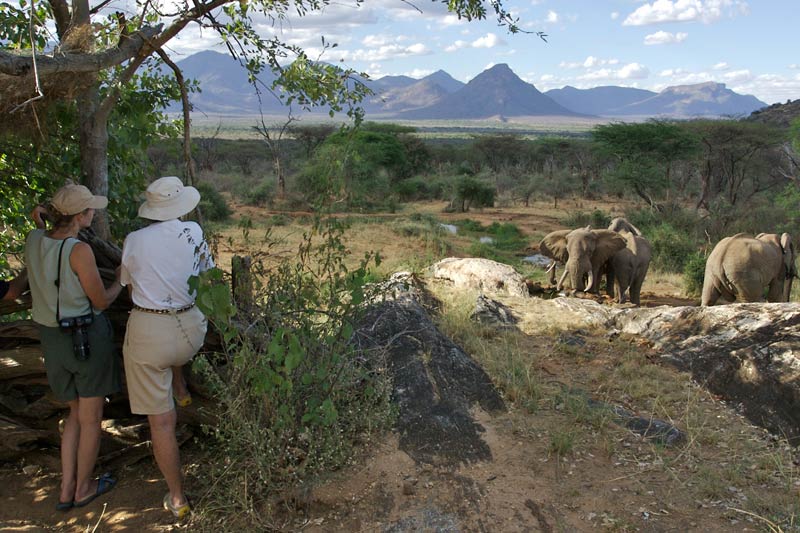
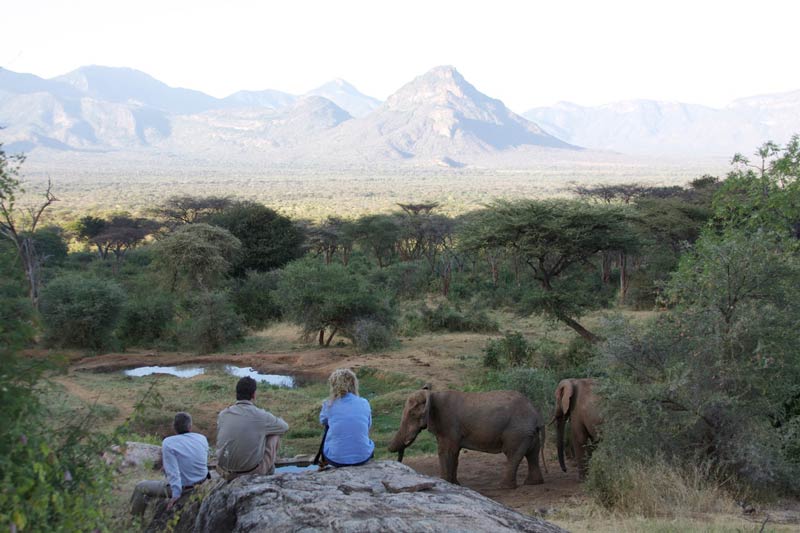
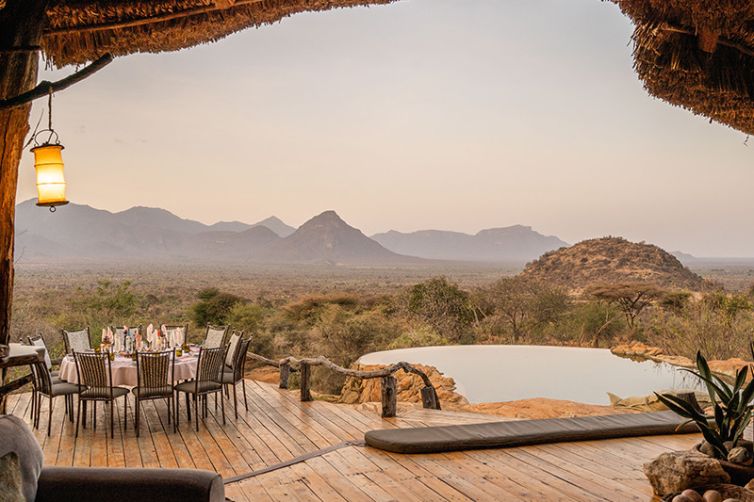
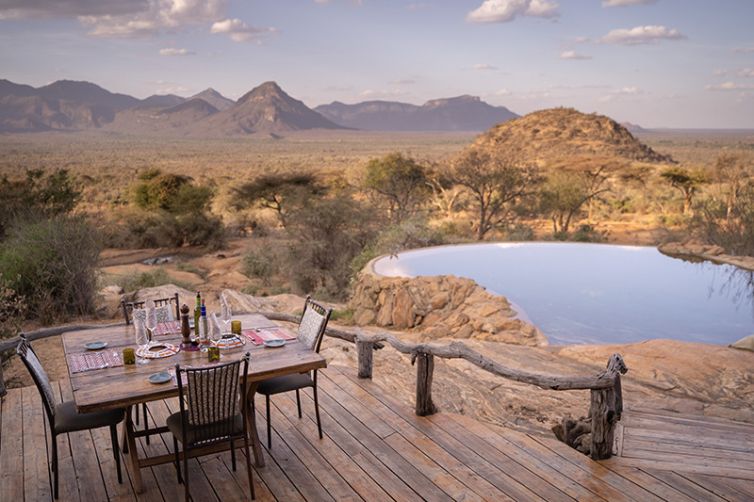
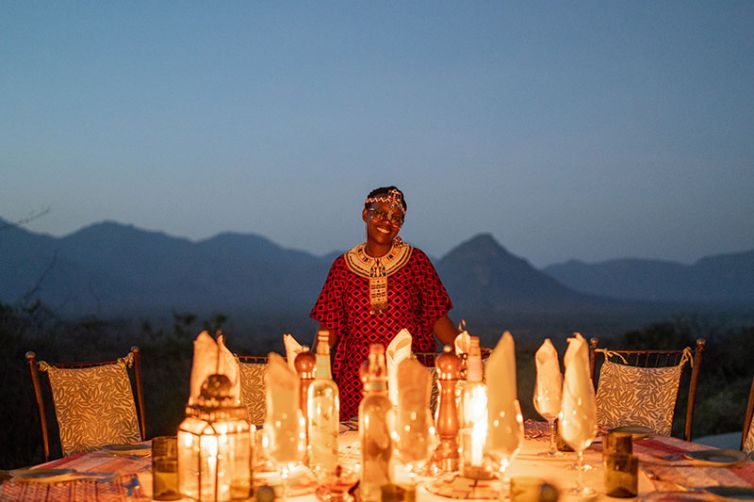
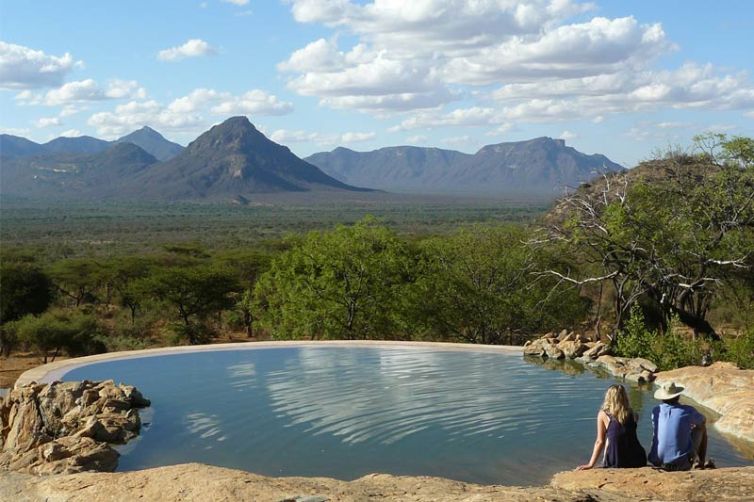
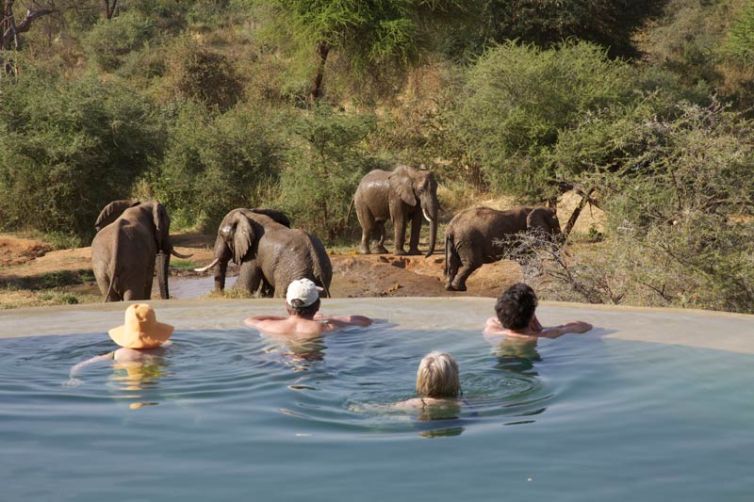
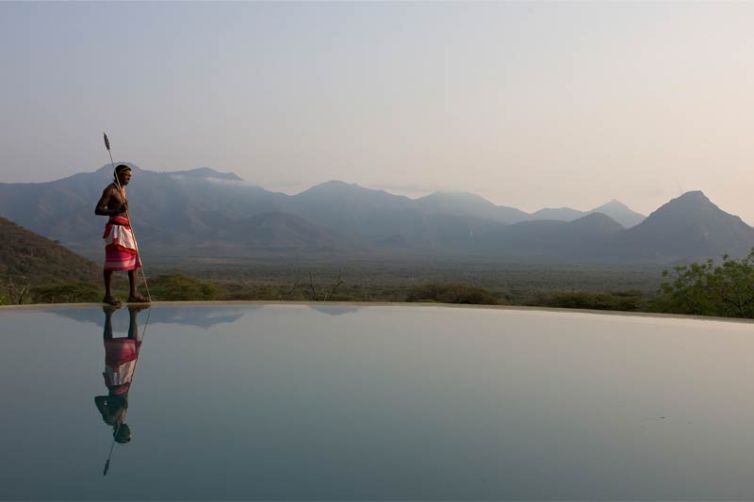
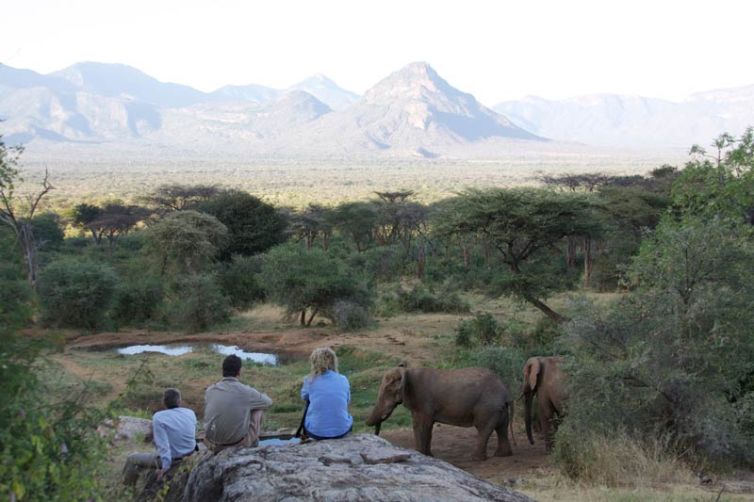
Sarara is a special place which offers the chance to explore both the montane forest habitat above camp and the arid bush landscape of Samburuland that stretches away to the east. The scenery is breath-taking and the views from the lodge are fantastic. The camp is highly exclusive but maintains an authentic safari atmosphere with tented rooms, personal hosting and communal dining. Relaxing in camp is definitely something that must be done at Sarara, either reading a book on your verandah and enjoying the birds flitting around the canopy or perhaps floating in their infinity rock swimming pool whilst watching the water hole below.
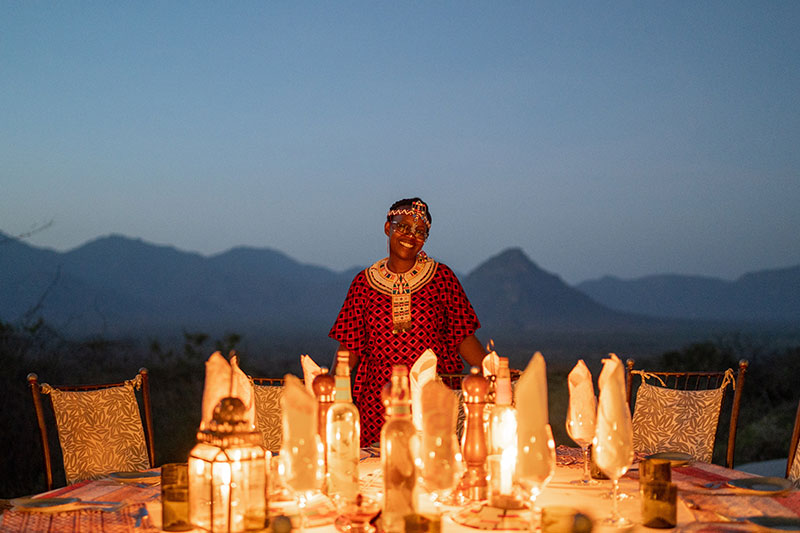
Whilst there are specialist species to be seen at Sarara, such as gerenuk and lesser kudu, and elephant and leopard viewing can often be very good too, your reason to come to Sarara really has little to do with traditional game drives. Sarara is all about escaping into the wilderness, birding, walking and learning about the local culture (the singing wells are a highlight). The camp is well run with management and staff offering a very warm welcome and personal service. Accommodation is comfortable and food is very good, but Sarara is not a five star operation. The camp is small and usually has a very social, communal atmosphere.
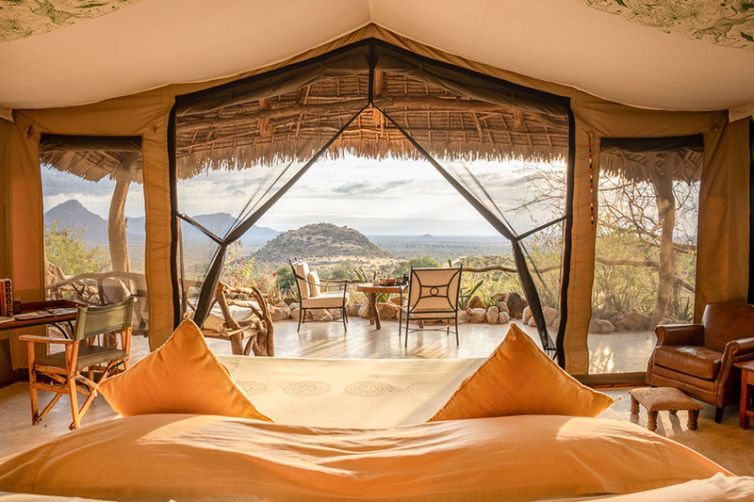
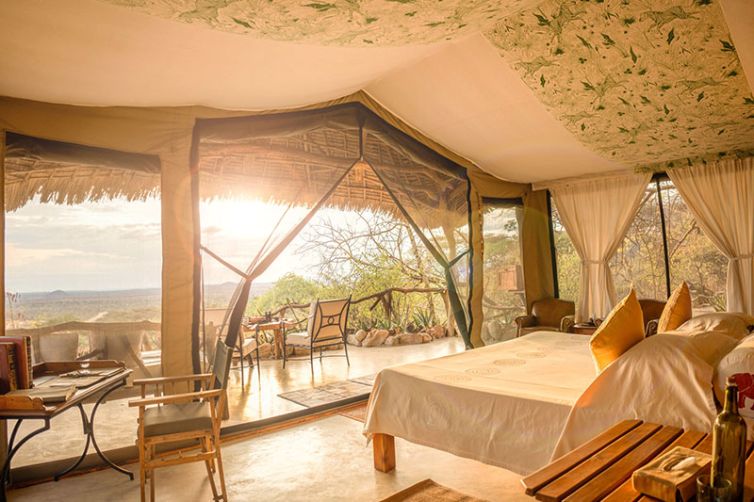
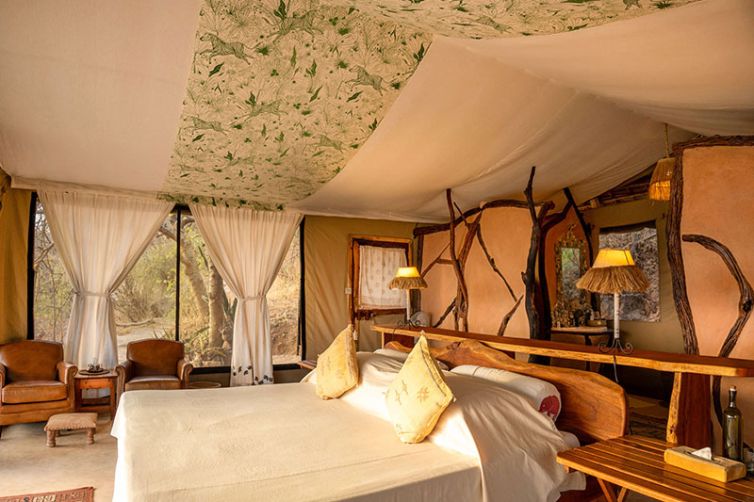
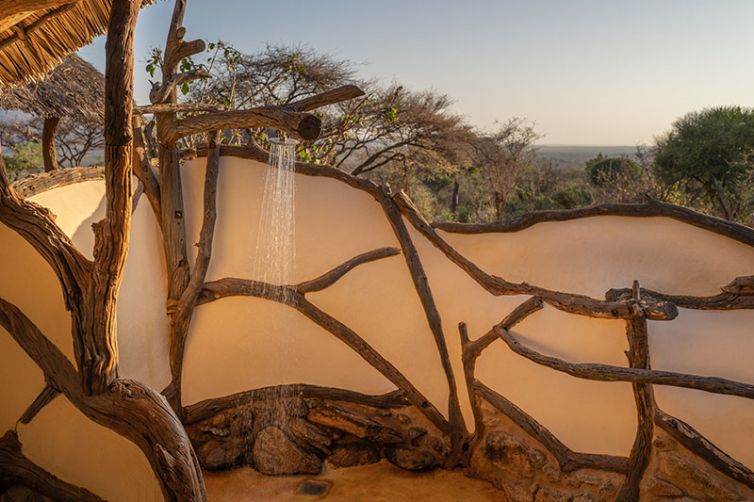
Rooms
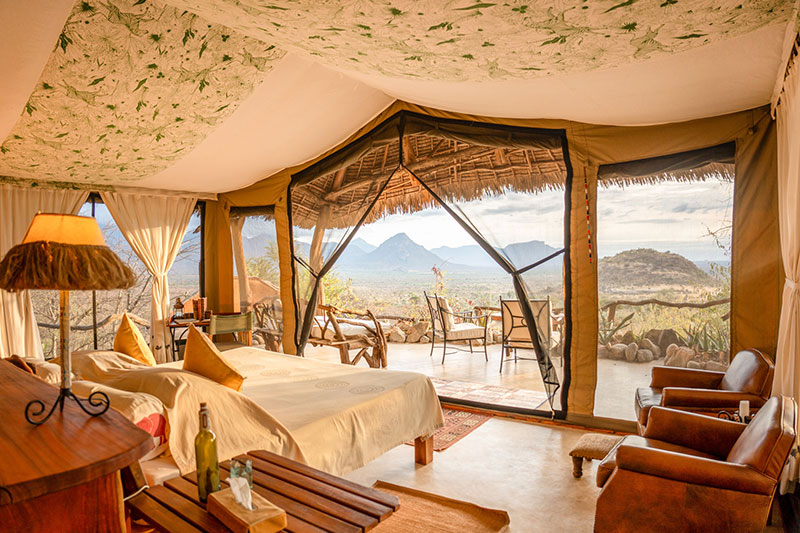
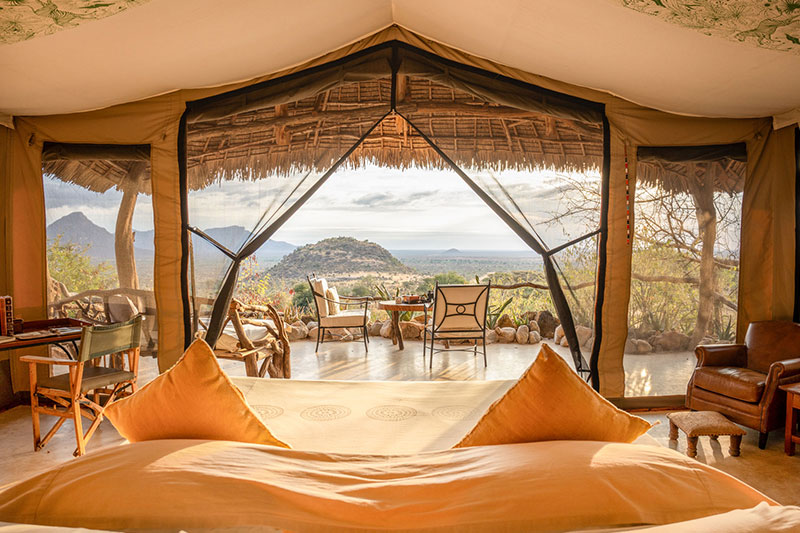
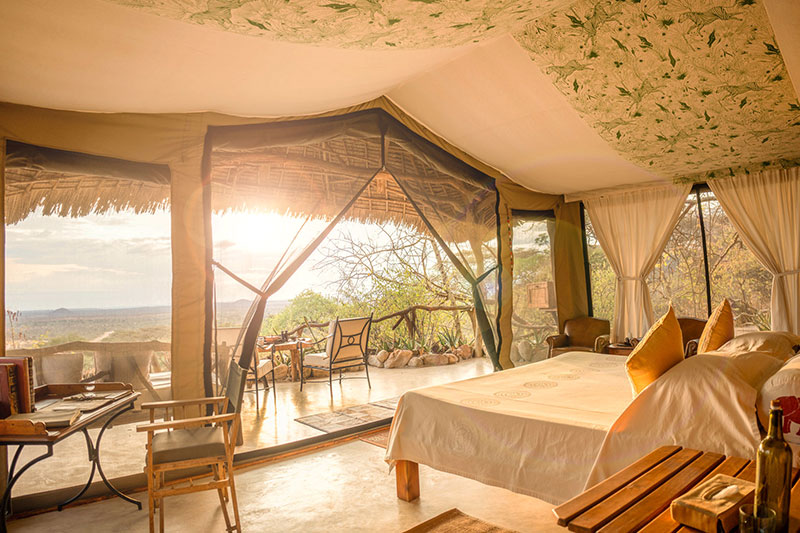
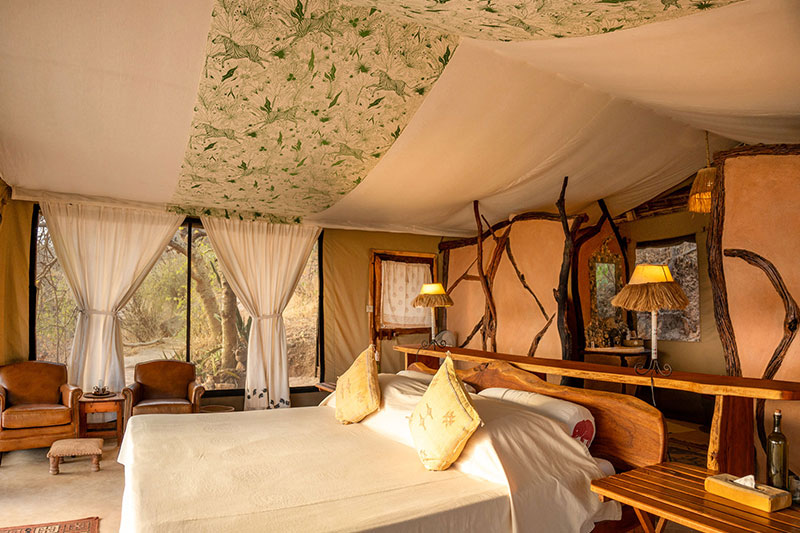
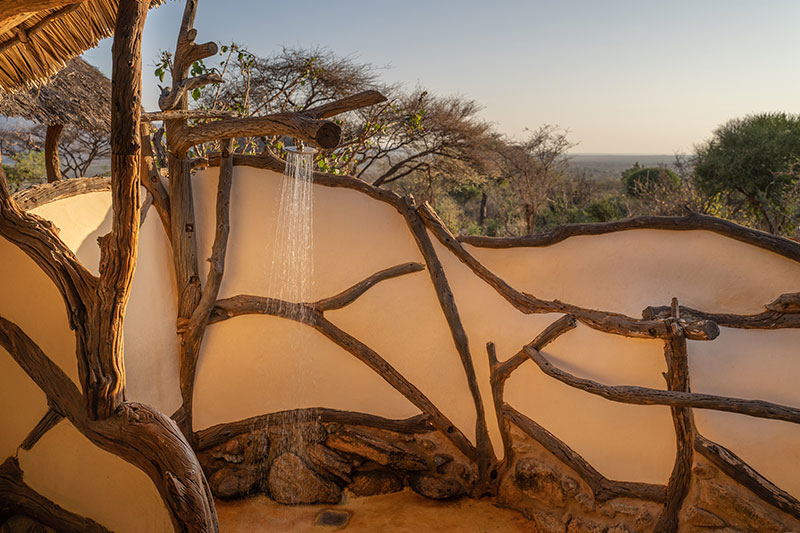
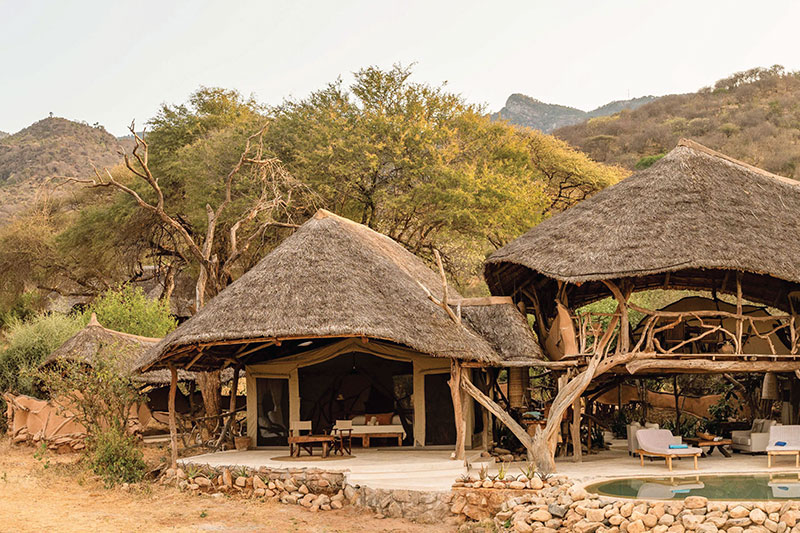
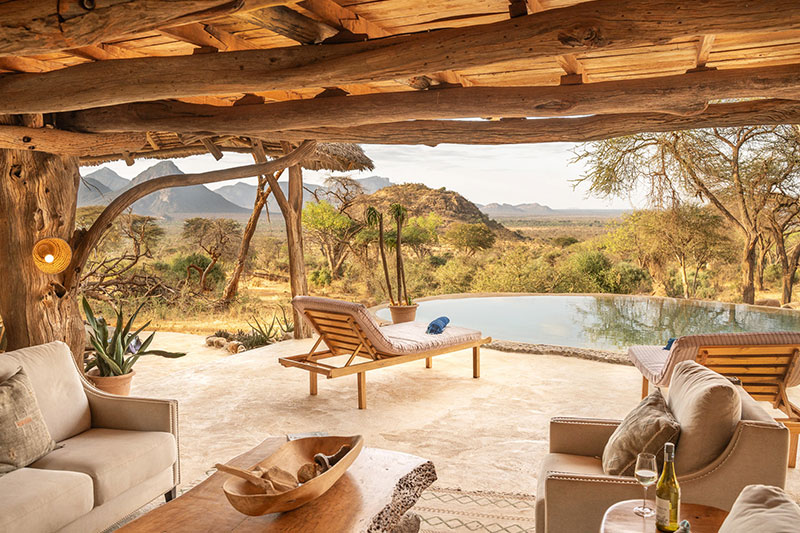
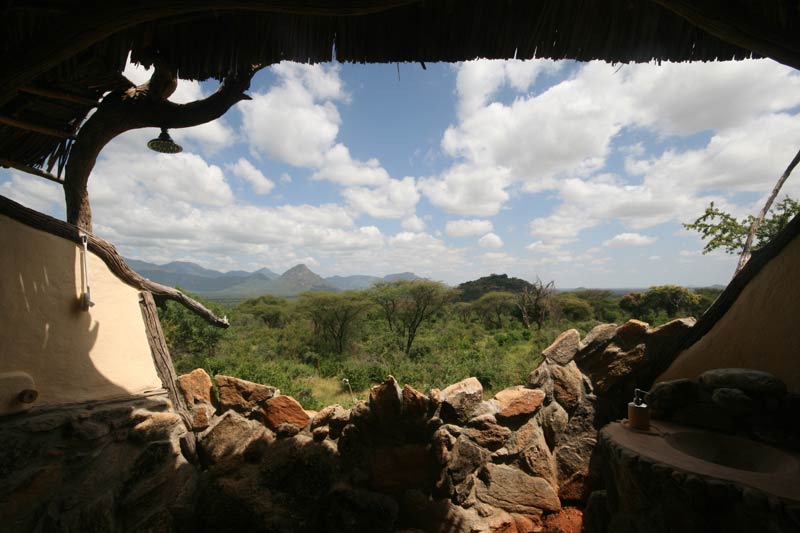
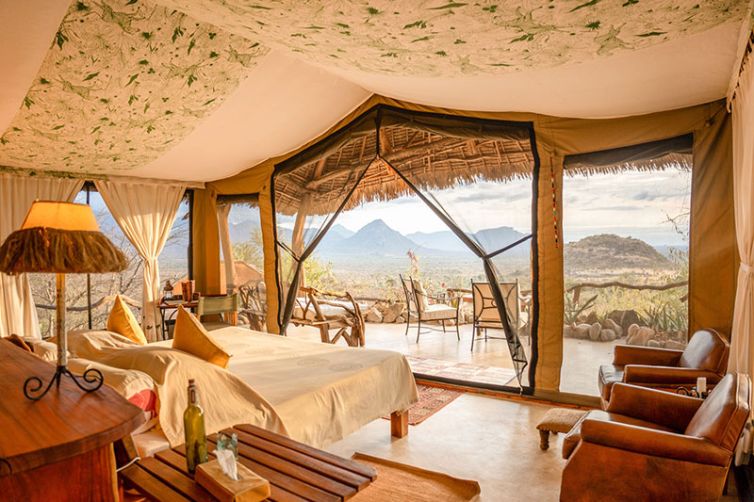
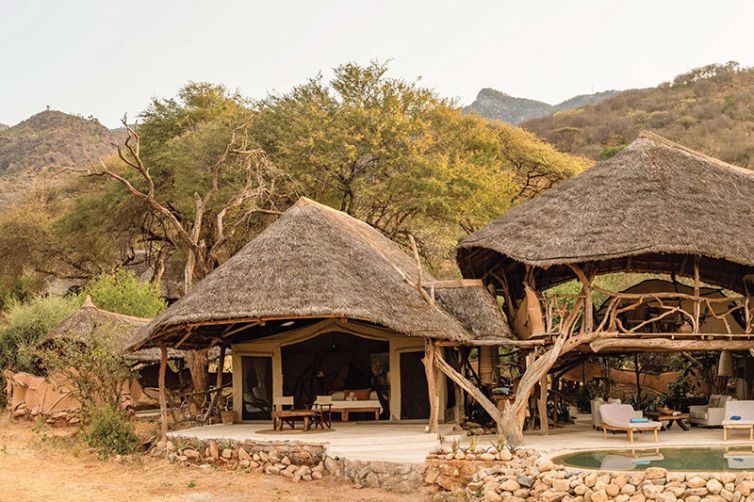
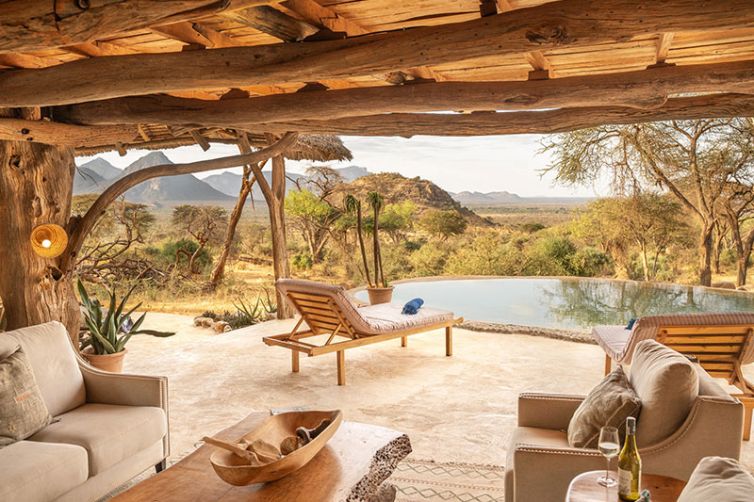
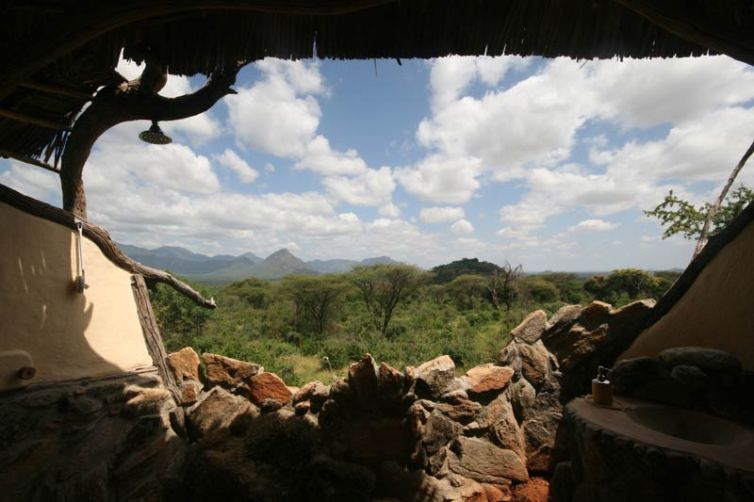
The tented camp caters for just 12 guests in six comfortable tented rooms, spread across the hillside, with impressive views over a chain of waterholes and the plains beyond, towards the jagged line of the Mathews Range. Two of the tents are suitable for families with teenage children (the tents are located close to one another). Each spacious tent is set under thatch and furnished with twin or double beds, a writing desk and a small seating area. Behind the sleeping area is a dressing area with en suite toilet and hand basin. A door leads to an outdoor bathroom with further toilet, hand basin, and a shower – all with a view! To the fore of each tent is a lovely furnished private verandah with views over the bush. The honeymoon tent has a small private ‘pool’ overlooking the waterhole. Situated a short distance away from the main lodge is Sarara House which is ideal for families with older children, or friends. The house comprises two tented en suite rooms (in the same style as the rest of the camp) which lead on to a shared verandah with private swimming pool. Between the two rooms is a two storey central thatched shared space with living area below and dining area above.
Central Areas
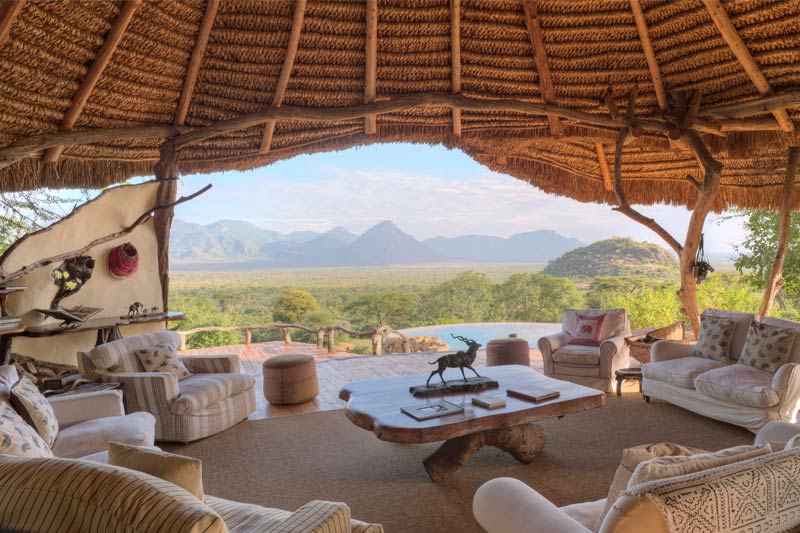
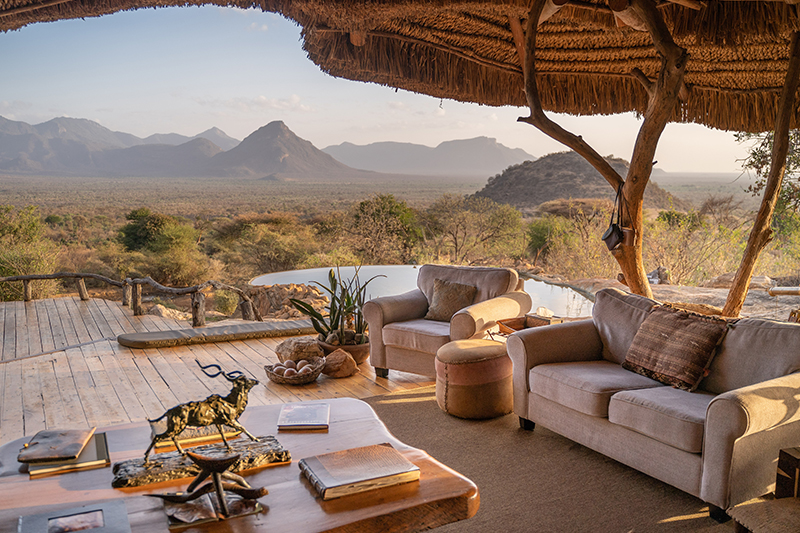
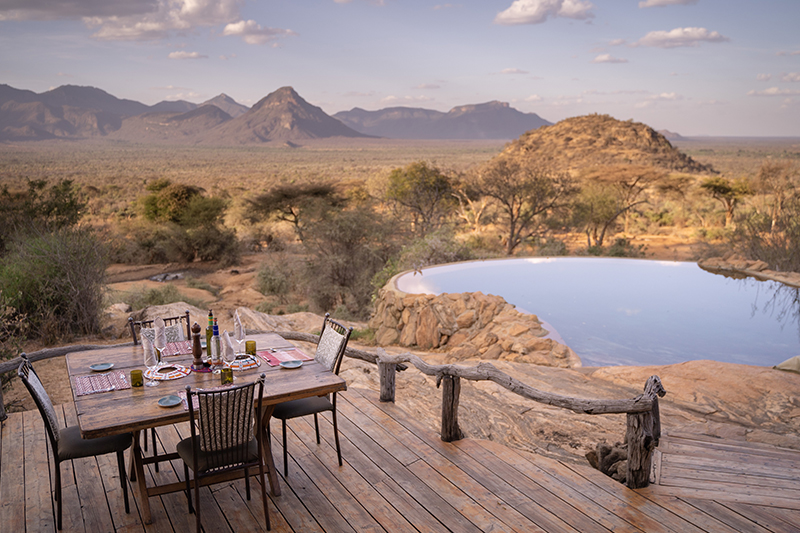
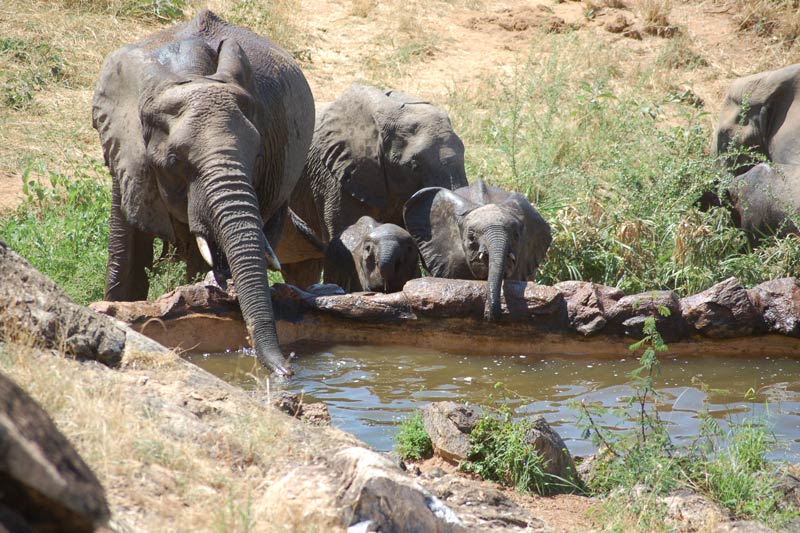
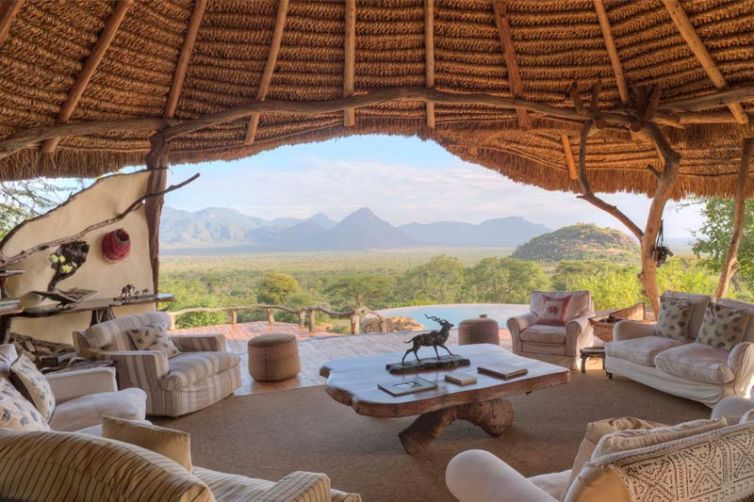
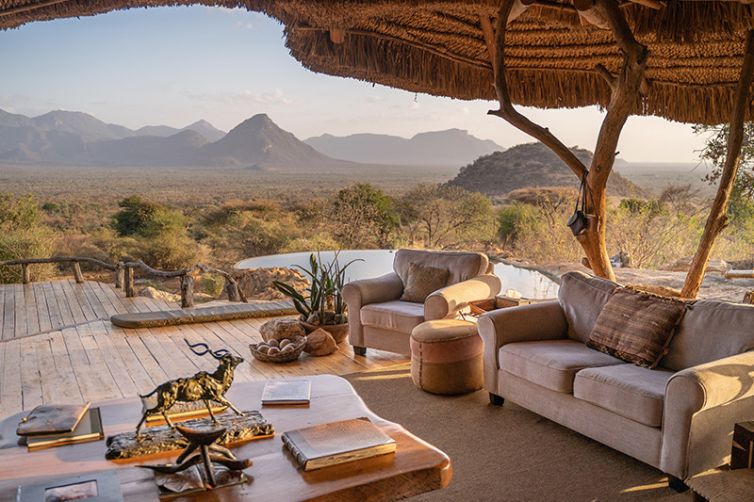
Central to the lodge is the main thatched, open sided, lounge and dining area, raised on a wooden deck with commanding views of the Northern Frontier. There is also a spa. A natural rock swimming pool overlooks a waterhole which is a major attraction to the local wildlife in this arid area.
Facilities
Wi-Fi – Yes
Power for Charging – Yes
Swimming Pool – Yes
Habitat & Wildlife
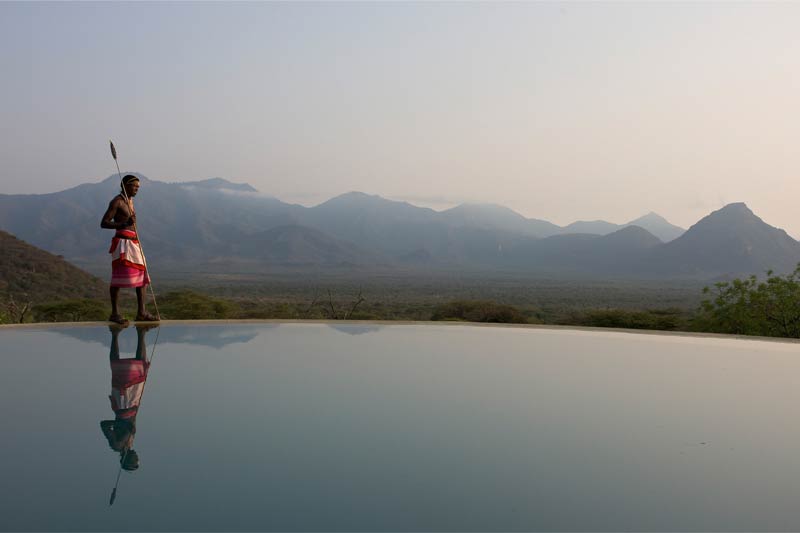
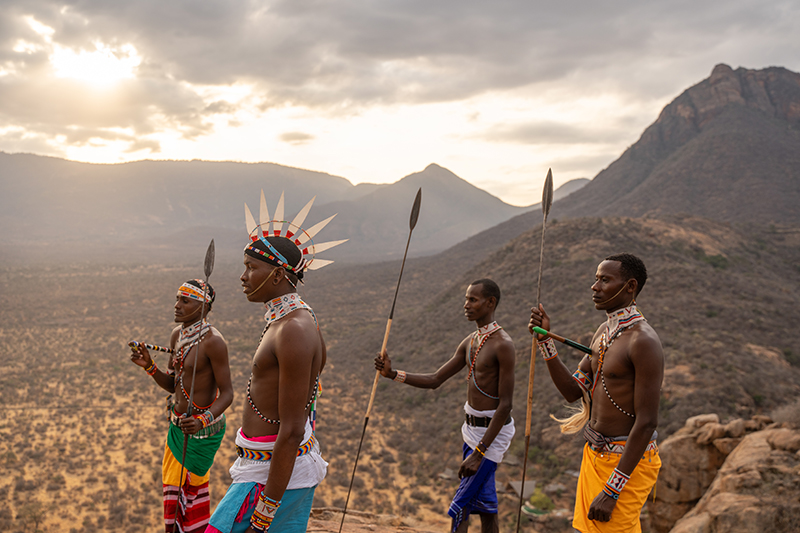
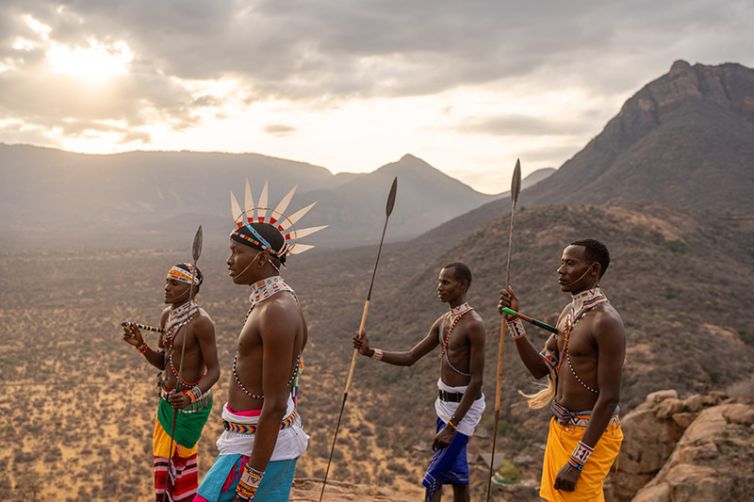
Sarara is located within the Namunyak Wildlife Conservation Trust, an area of approximately 850,000 acres, which lies folded around the south-east corner of the fabled Matthews Mountain range. The conservancy is home to the proud Samburu tribes people, a group of semi-nomadic pastoralists who have long shown tolerance for the wildlife that co-exists alongside their cattle. The Trust was set up in 1995 specifically to promote wildlife conservation and to assist the local community to benefit from tourism, in return for protecting the wildlife species living on their land.
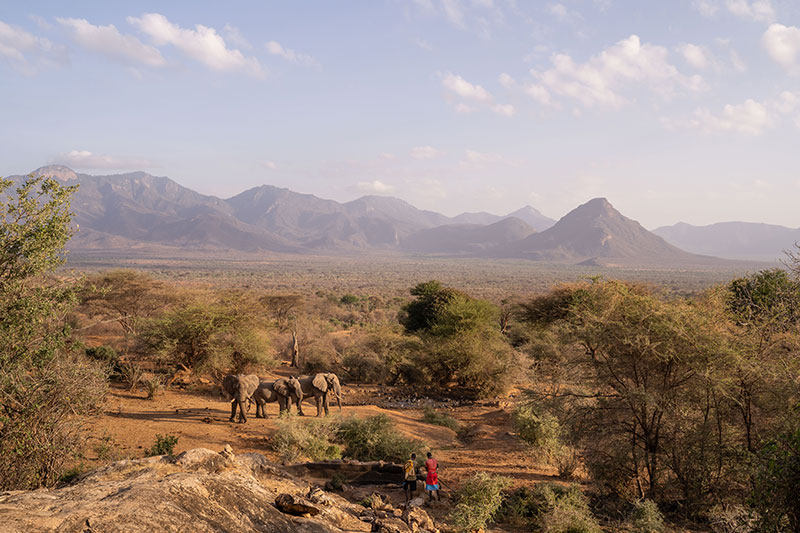
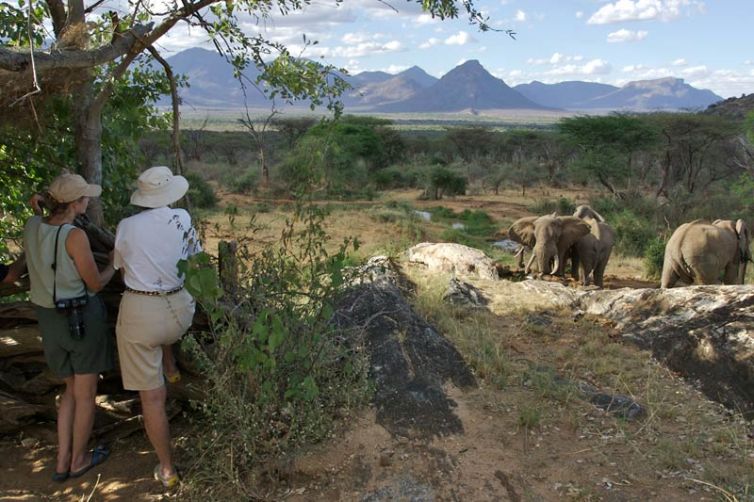
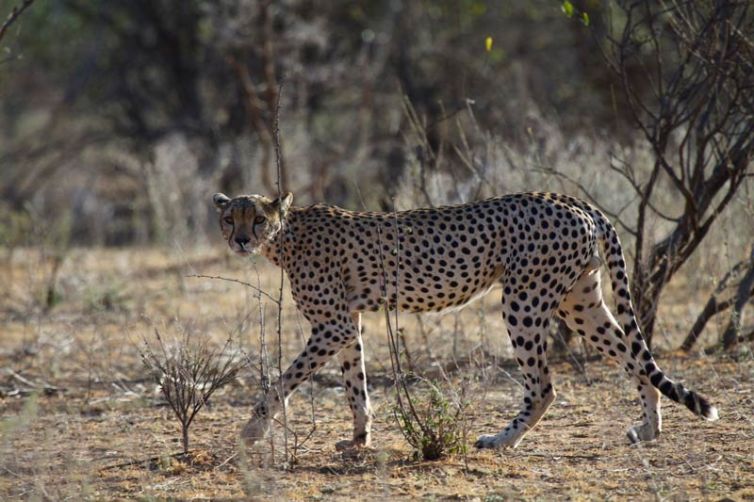
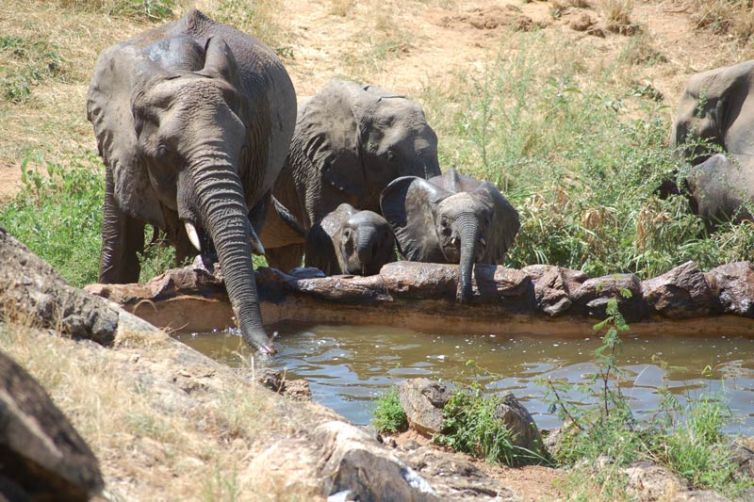
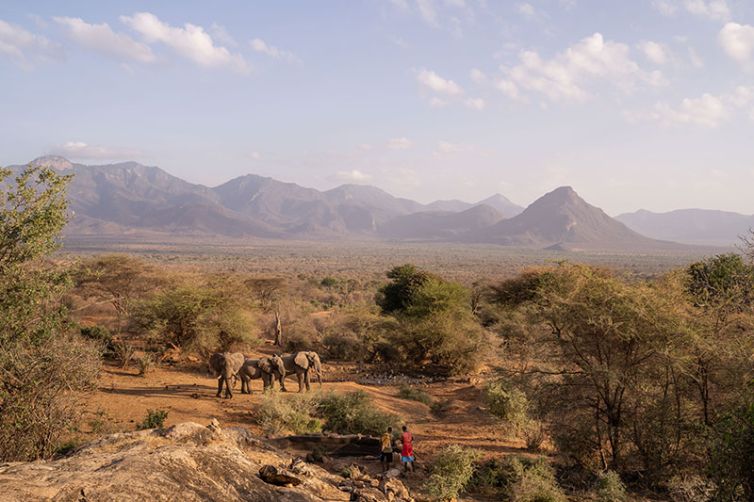
The conservation work carried out by the Namunyak Trust to date has been hugely successful. Several thousand elephant are recorded currently living and breeding peacefully in the southern Mathews area, together with a variety of other wildlife species such as buffalo, lion, leopard, cheetah, African wild dog, greater and lesser kudu, gerenuk, reticulated giraffe, impala and dik dik.
A key feature of the location of Sarara is the access it offers to two very contrasting habitats. Above camp, the slopes of the Mathews Range offer a montane forest environment which can only be explored on foot. Below camp the arid plains and scrub bush of Samburuland stretch away and offer a more traditional northern Kenya wilderness experience that can be explored on foot or by vehicle. Most game is seen on the plains, though there is plenty of movement of game into the hills too. The birdlife around Sarara is spectacular, including in and around camp.
Located in the heart of the northern frontier, approximately 200 kms. north of Isiolo, the Mathews is a lush, forested mountain range that stands in stark contrast to the surrounding desert habitat. Enclosed within the eastern boundary of the Namunyak Conservancy, this vitally important and fragile environment has been protected from human encroachment and development. Rivers and springs rising in the Mathews provide a vital source of water for both wildlife and the local Samburu people during the dry season. Elephant, buffalo, leopard and other animals can be found in the thick forest. Before the creation of the Namunyak Conservancy in 1995 elephants were rare, but they have now returned in their thousands, secure in the knowledge that they will be protected in the Conservancy and that they can find water all year. The birding is amongst some of the best in Kenya. The vegetation is interesting with a range of cycads (many of which are endemic to the region) and giant cedars found throughout the mountains.
Activities
Game drives are offered at Sarara, but usually involve relaxed afternoon drives followed by sunset drinks and more productive night drives – the leopard viewing at night can be very good! Longer morning drives are possible, but there are other activities which may be more worthwhile.
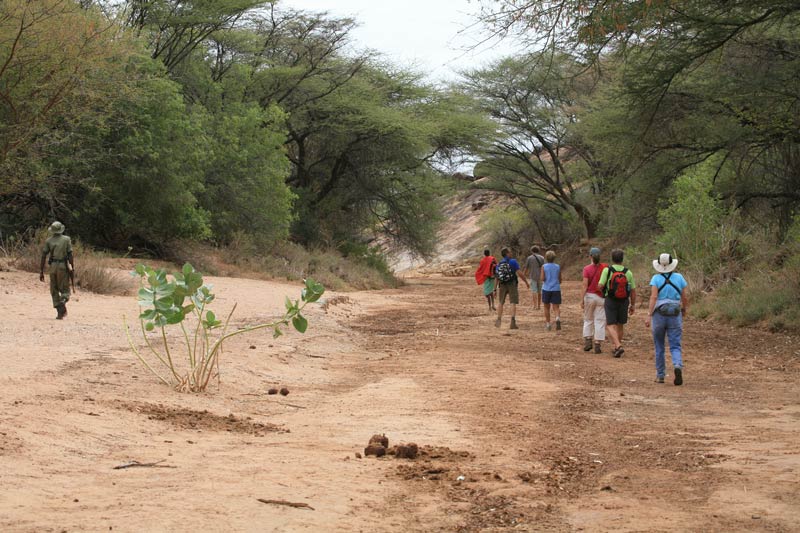
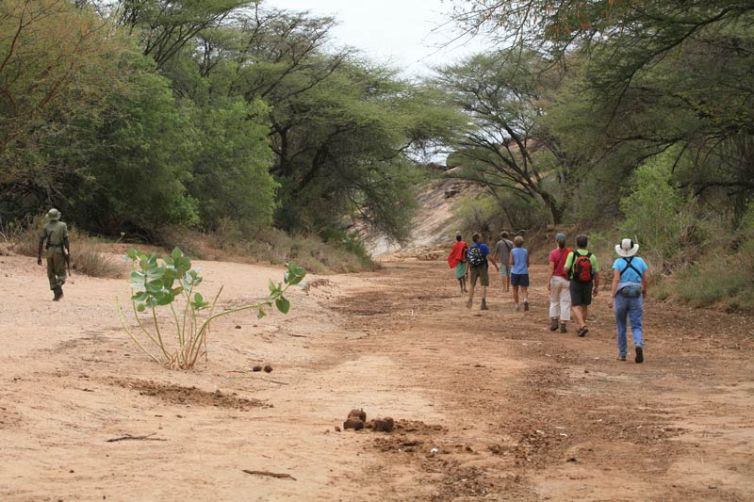
Sarara is a great place for walking, with walks of all durations possible. From gentle walks to waterfalls to longer hikes in the montane forests of the Mathews Range, most are accompanied by Samburu guides who will teach you about the land and the wildlife while you soak up the wonderful scenery. You can also take a full day’s excursion to Mount Ololokwe for one of Namunyak’s most picturesque guided hikes and spectacular views from the top.
Sarara is also one of the best places to witness genuine culture. One of the highlights of the Namunyak area must be a visit to the famous ‘Singing Wells’. The local Samburu bring their cattle to these watering holes on a daily basis during the dry season (usually July to October and January to March, but please note that unseasonal rain can mean the wells are not used regularly). Some of the wells are up to 10 metres deep. The warriors strip off, descend to form a human chain and chant traditional Samburu songs as they pass water up by hand for the cattle. This mind-blowing ritual goes on for several hours a day. The local community have agreed to allow Sarara’s guests to witness this amazing ritual, but please note that photography is not allowed.
There are also Samburu villages which may be visited, and it is common to see Samburu herdsman and children moving their goats and cattle through the conservancy. Guests can also get involved with local artisans – spend a morning or afternoon joining a circle of Samburu ladies while they are beading, learning about the cultural importance of their vivid jewellery; or spend time with the area’s blacksmith whose skill has been passed down through generations of his family.
Another highlight is visiting the wonderful Reteti Elephant Sanctuary which is located in the Namanyuk Conservancy and owned and operated by the community. The sanctuary was established to rescue orphaned elephants with the aim of releasing them back into the wild. Sarara guests are able to visit the sanctuary at exclusive visiting times for the early morning feed and evening feed.
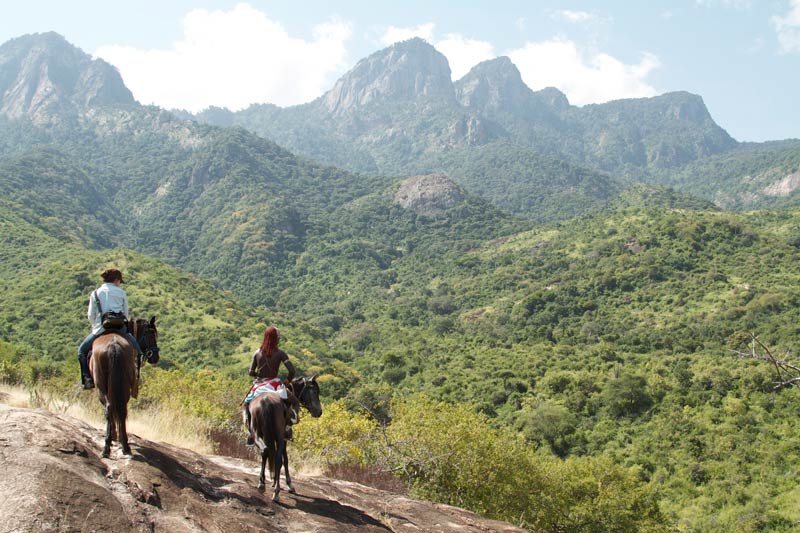
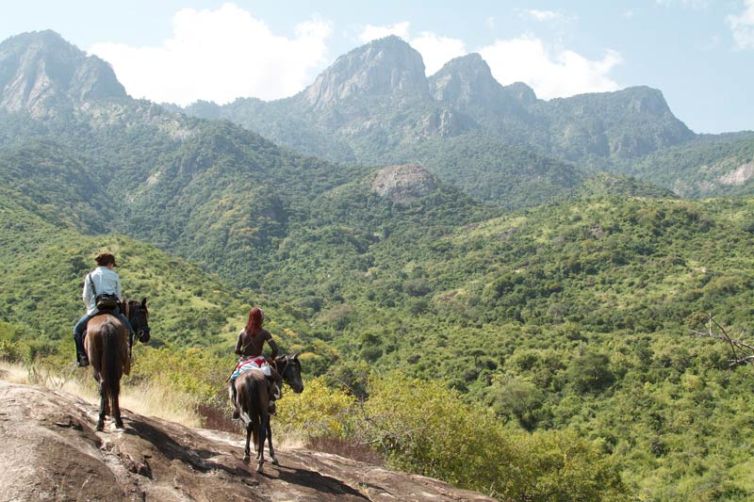
Horse-riding trails are also possible on bush ponies travelling up into the hills or across the plains of the Conservancy, led by a Samburu guide.
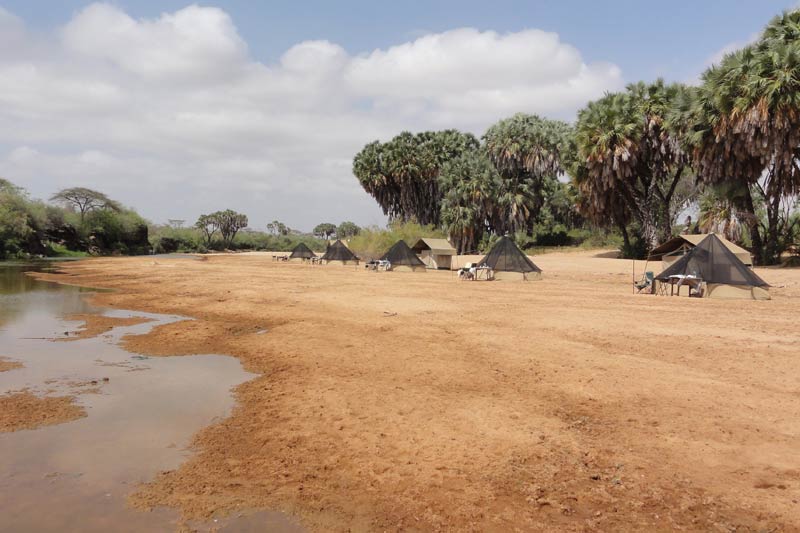
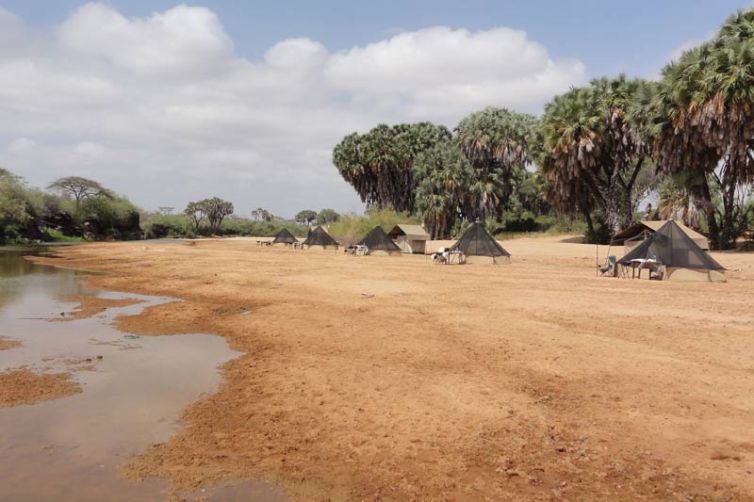
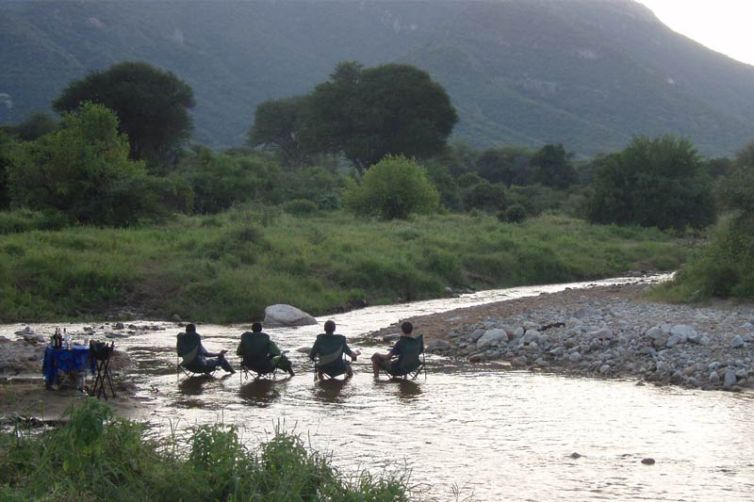
For longer stays, a night’s fly-camping is a magical, if slightly more adventurous, experience. Either drive or walk from Sarara to where you’ll find your wild camp set up in a nearby dry riverbed. Enjoy sundowners followed by dinner in the bush. As an extra option it’s possible to organise a Ngoma – an authentic performance by local Samburu dancers.
Seasons
Sarara is open from mid-December until mid-October. The singing wells will tend to be most active during drier periods, and whilst this cannot be guaranteed, July to early October is usually best.
Sarara caters for children of all ages but is most suitable for families with older children, where the aim is to enjoy walking in the wilderness and cultural interaction. Sarara is also a camp that is suitable for travellers looking to relax and escape, not something that is a natural fit with younger children. However, for older teenagers that appreciate the wilderness, are happy walking and would also enjoy the cultural aspects of the experience, Sarara can offer an amazing family adventure. Sarara House is very exclusive and is most suitable for adventurous families with older teenage kids, or adult groups.
The Mathews Range is home to the indigenous Samburu tribes people, a group of semi-nomadic pastoralists who have long shown tolerance for the wildlife that co-exists alongside their cattle. The Namunyak Wildlife Conservation Trust was set up in 1995 specifically to promote wildlife conservation and to assist the local community to benefit from tourism, in return for protecting the wildlife species living on their land. Following the ivory poaching crisis of the mid 1970s and early 1980s, elephant numbers were decimated in the Mathews Range, leading to complete loss of biodiversity and loss of productive land for the Samburu. The conservation work carried out by the Namunyak Conservancy (now under the title of the Sarara Foundation) to date has been hugely successful. Today Namunyak is home to several thousand elephant, together with a variety of other wildlife species such as reticulated giraffe, Grevy zebra, hyena, lesser kudu, wild dog, lion and leopard. The area is also home to Africa’s first community-owned elephant sanctuary, the Reteti Elephant Sanctuary. All three of Sarara’s properties are wholly owned by the community. The Sarara Foundation also offers support with health, education and enterprise development. The Foundation’s Nomadic Healthcare Programme delivers paediatric and maternal health care to remote communities in the area; while the Nomadic Education Programme has involved the opening of the first nomadic Montessori schools that are specifically designed to cater to the lifestyle of the Samburu. Through building self-sustainability and economic empowerment the Samburu can safeguard their cultural heritage, their land and the biodiversity which they share it with.
Sarara’s camps are off the grid, providing 24-hour solar powered electricity, and all water in camp is from the mountain spring. Sarara has eliminated all single-use plastic from their camps.Fresh produce comes from small scale farmers in Kenya, supporting the local economy, and honey is sourced from the Samburu honey gatherers who live in the Matthews Range.