Buhoma Lodge
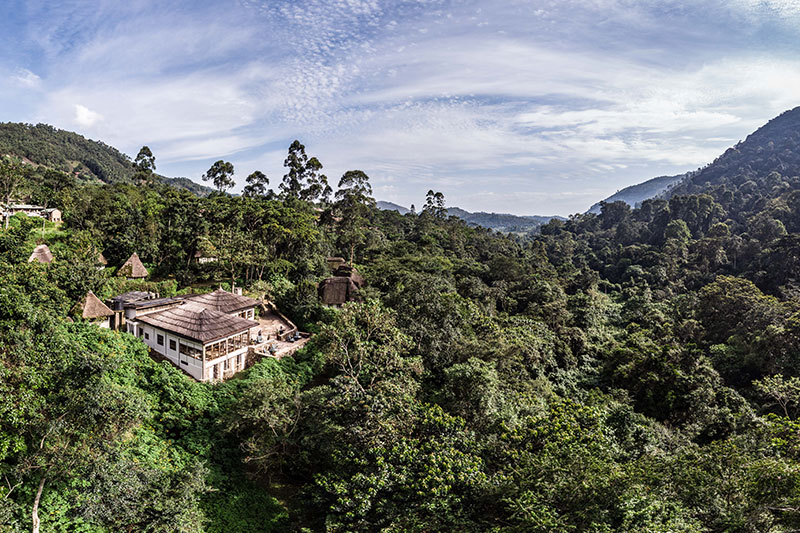
Buhoma Lodge Is A Comfortable Tented Lodge Perched On A Hillside On The Edge Of Bwindi Impenetrable Forest
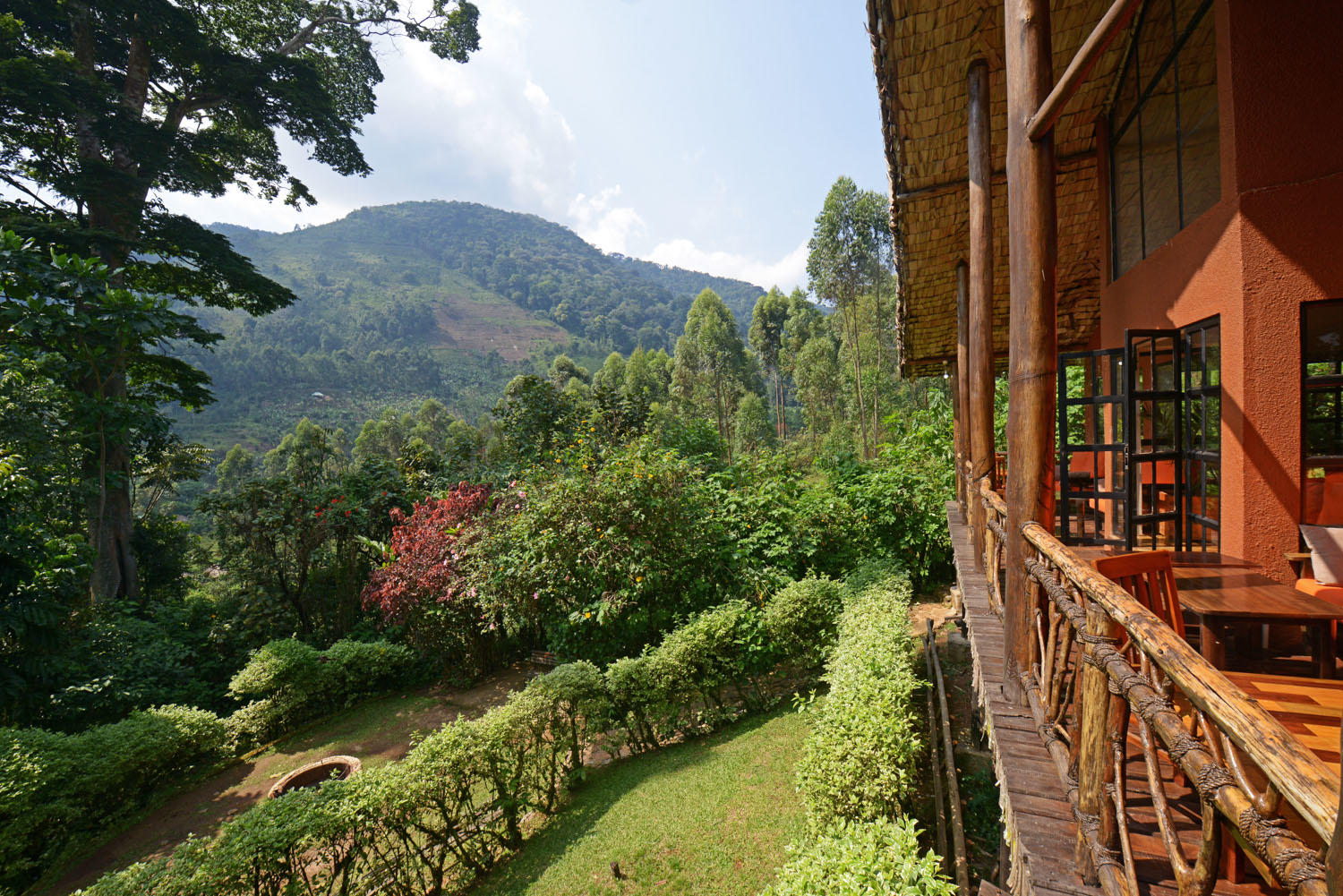
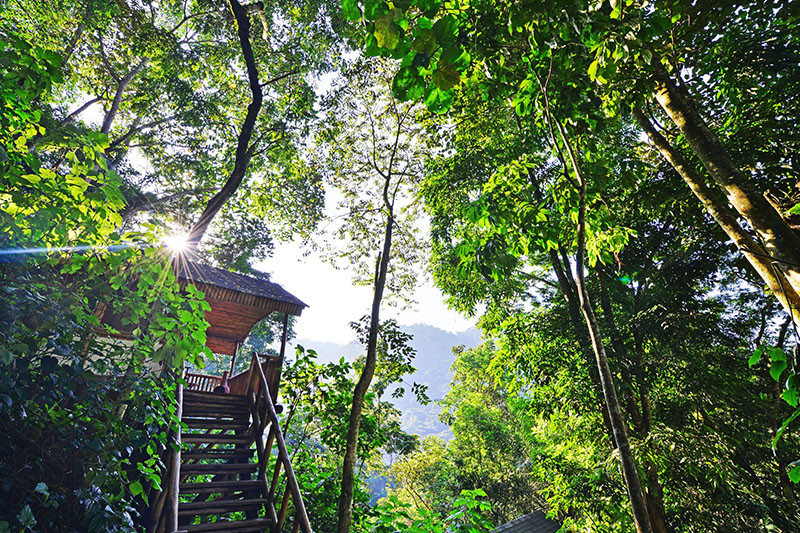
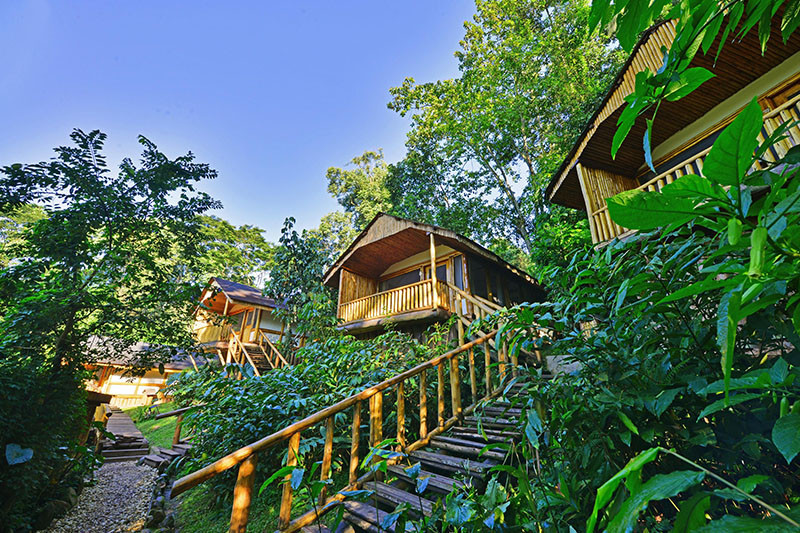
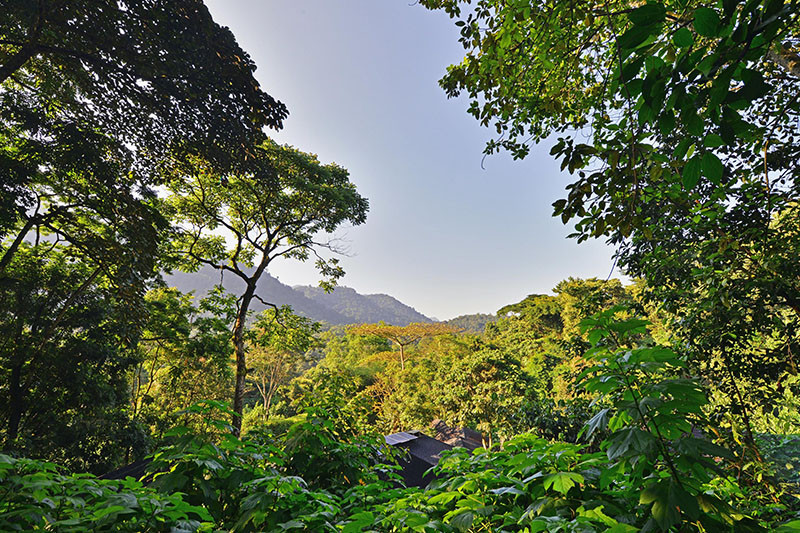
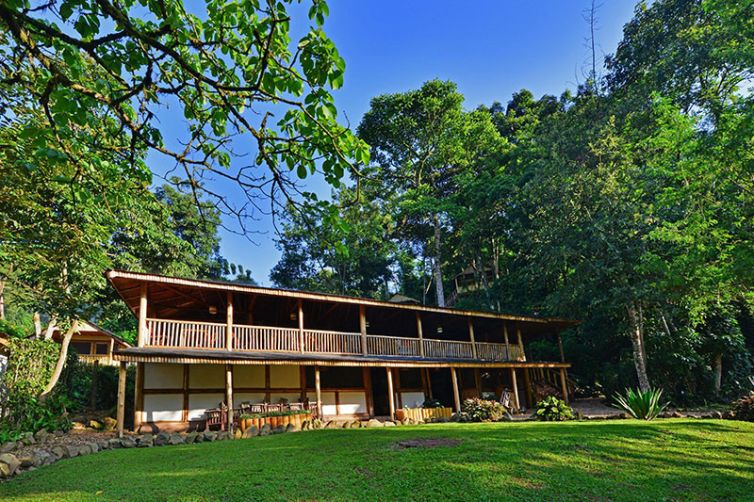
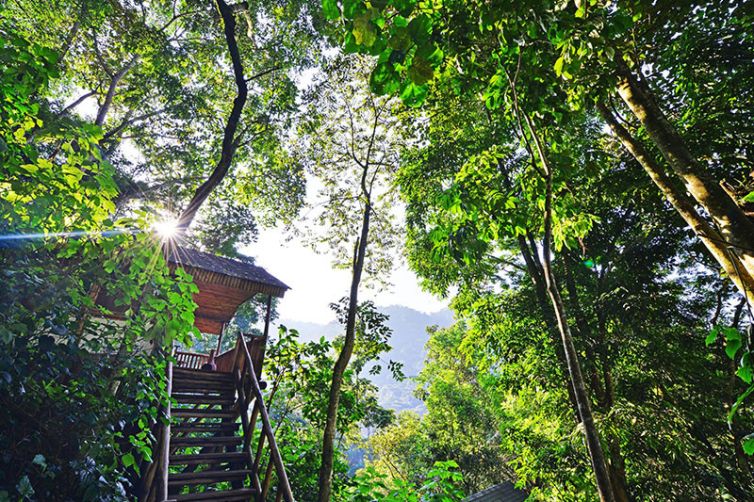
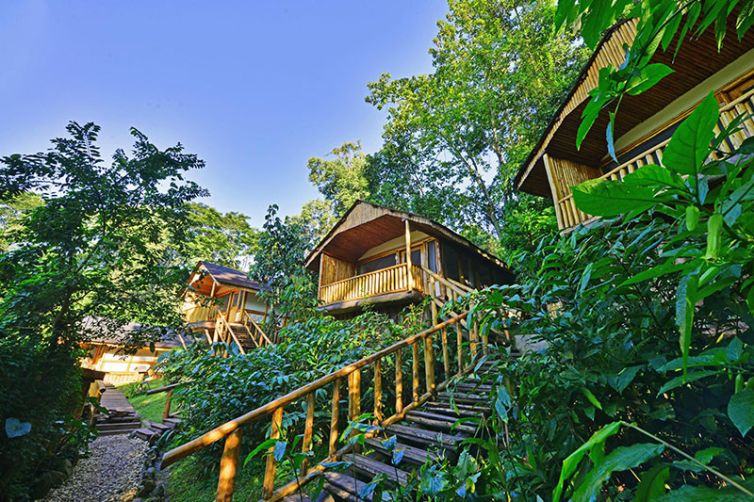
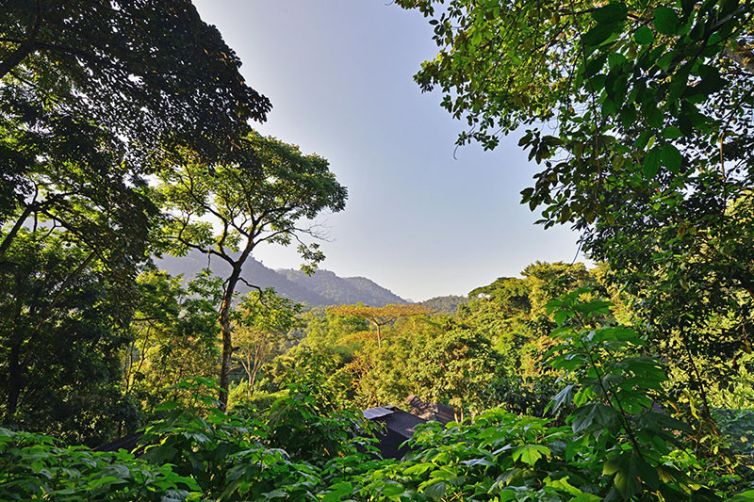
Buhoma Lodge is a very comfortable base from which to access the mountain gorillas of Bwindi Impentrable Forest. Nestled into the forested hillside close to the park headquarters, the comfortable en suite accommodation tents are linked by a series of steps and pathways, with most having views out over the treetops to the dense forest beyond. Accommodation, food and service is all of a good standard, aimed at a four-star market.
Rooms
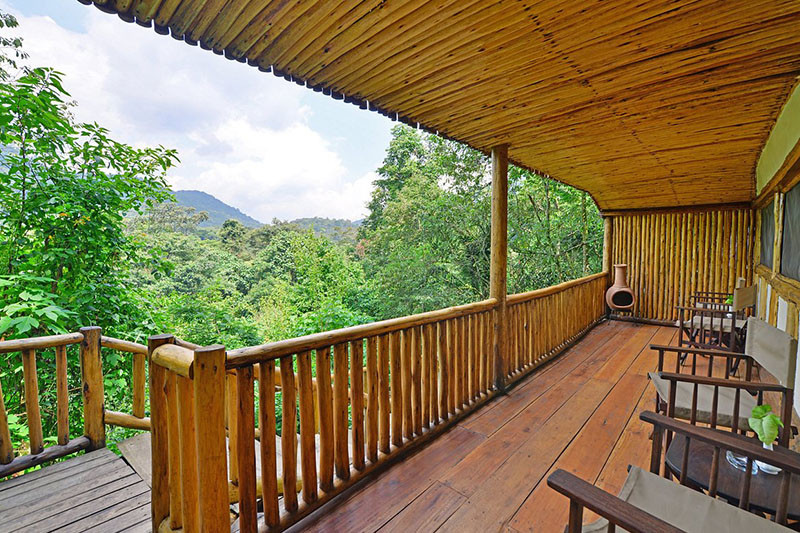
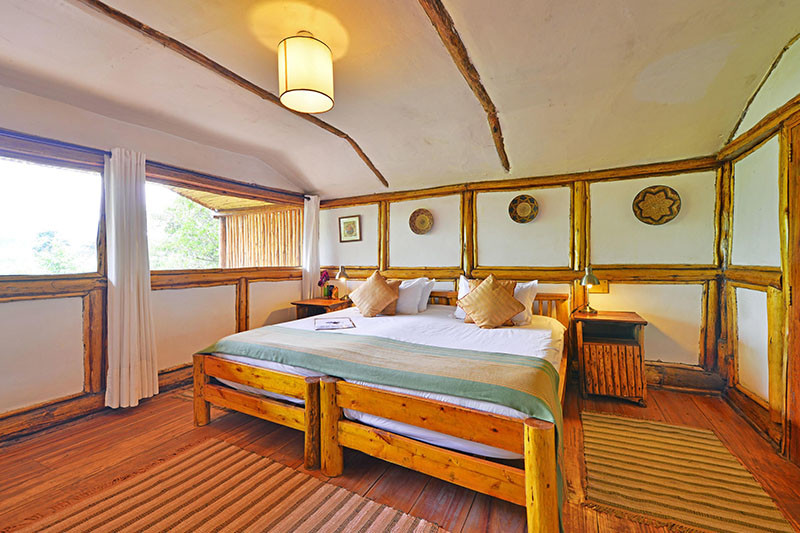
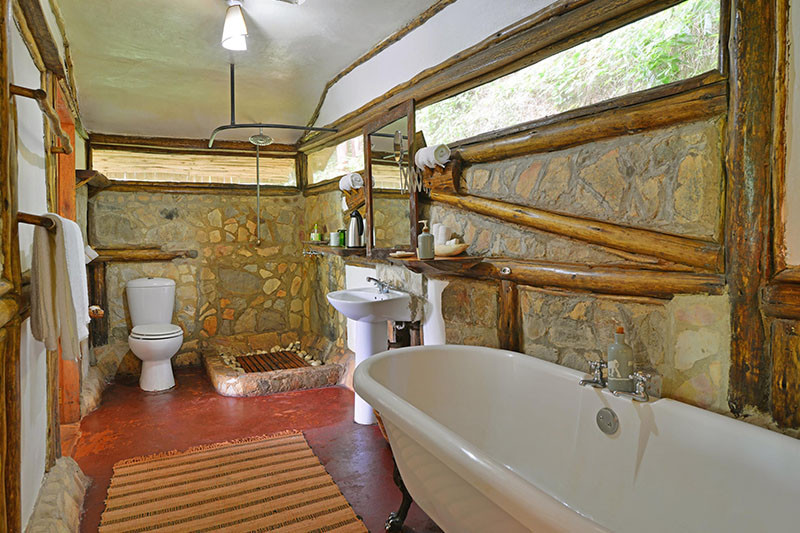
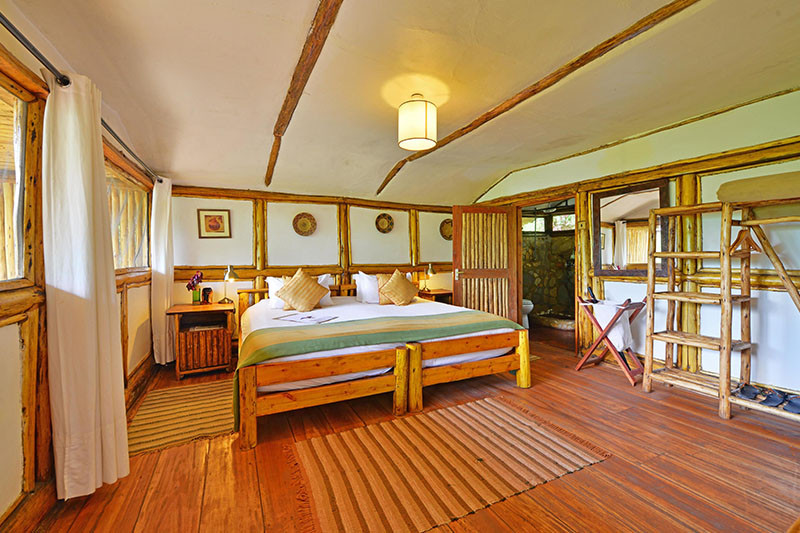
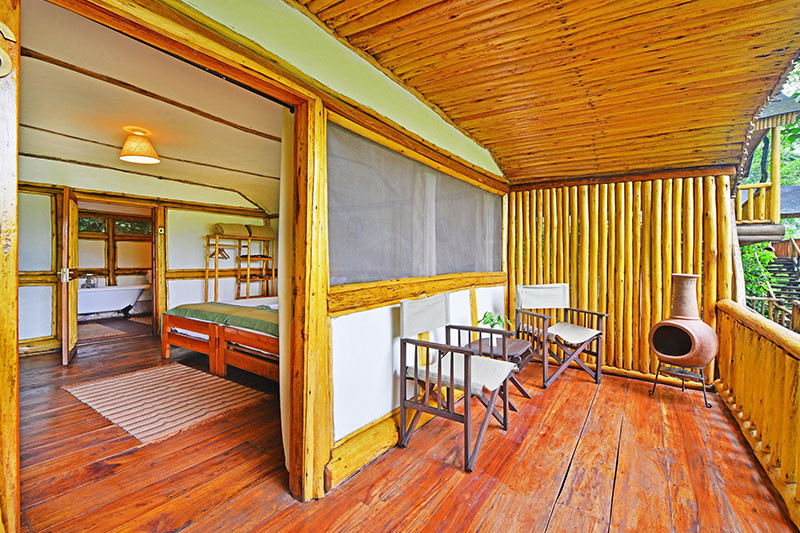
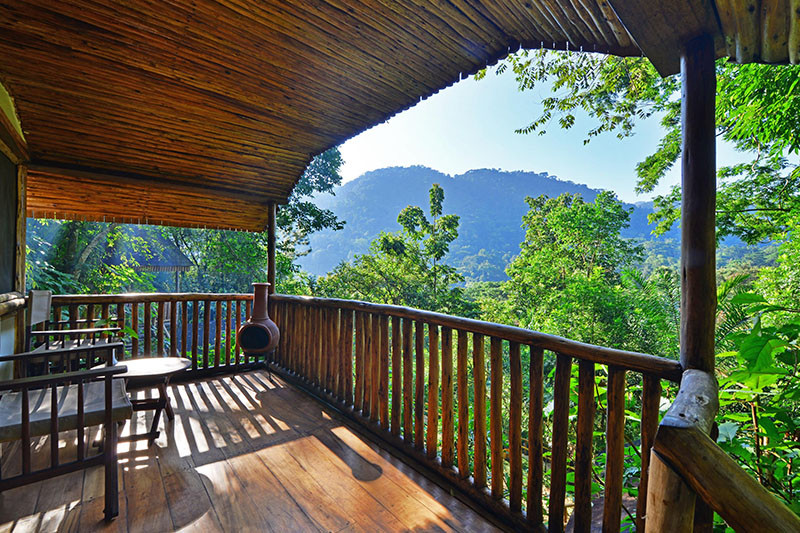
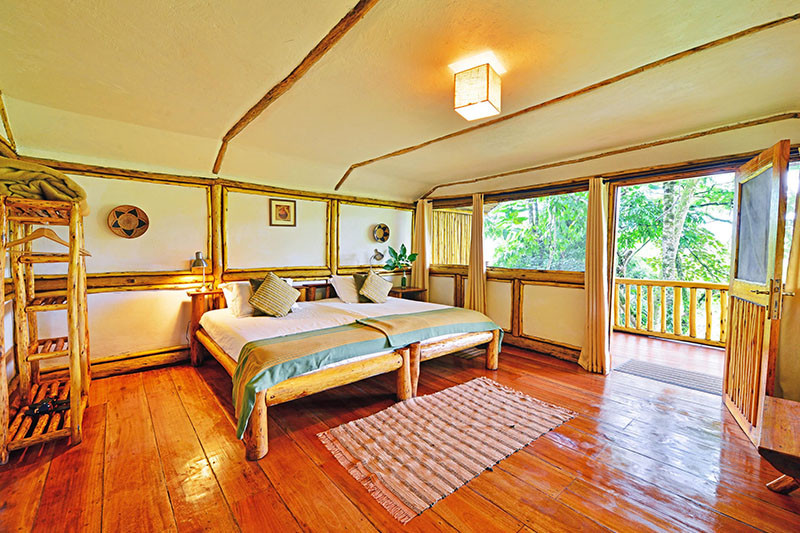
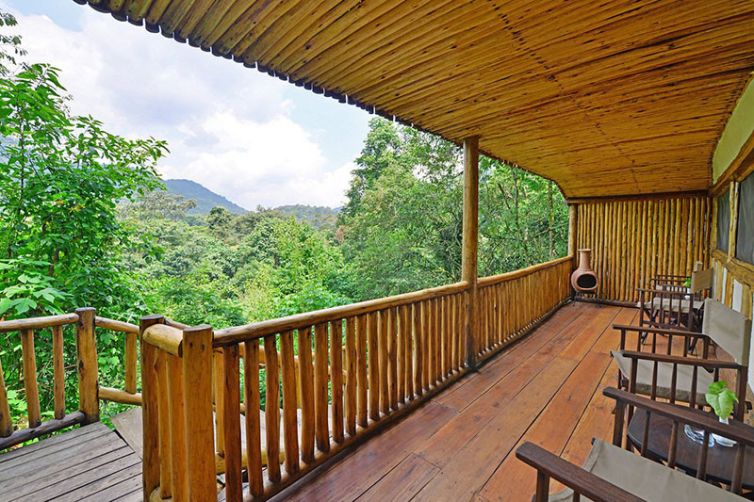
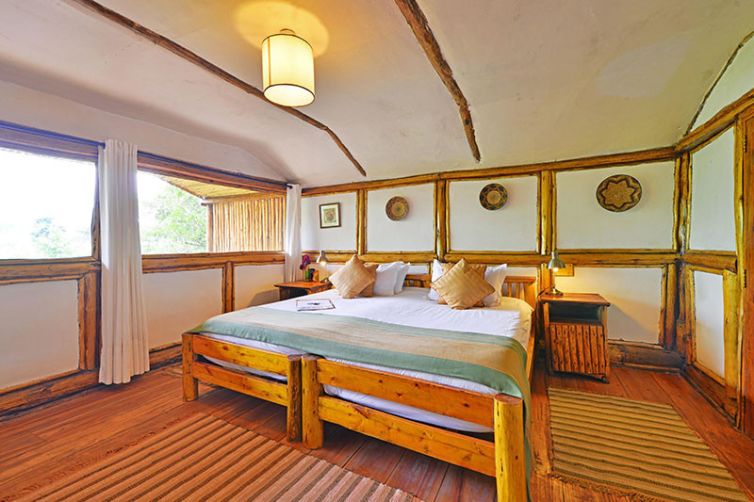
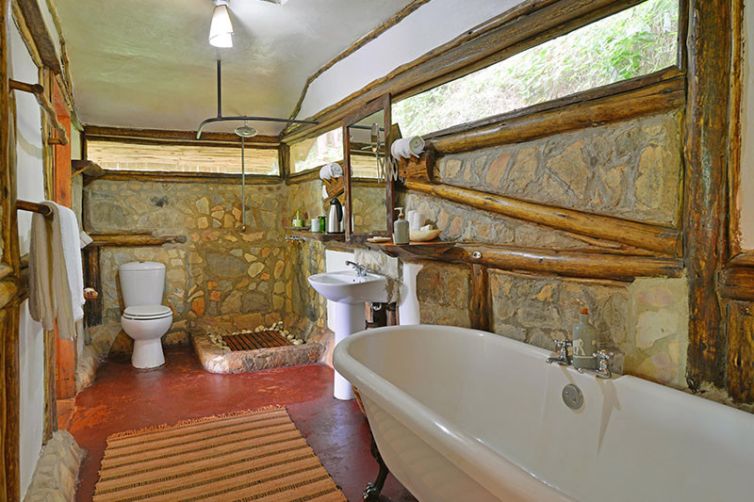
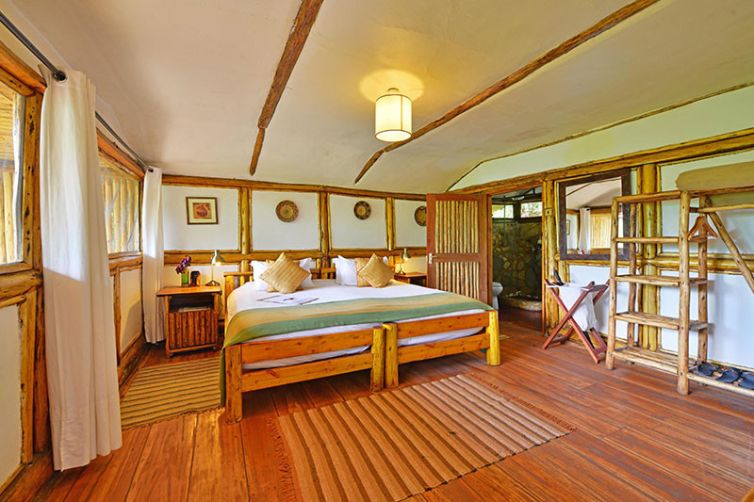
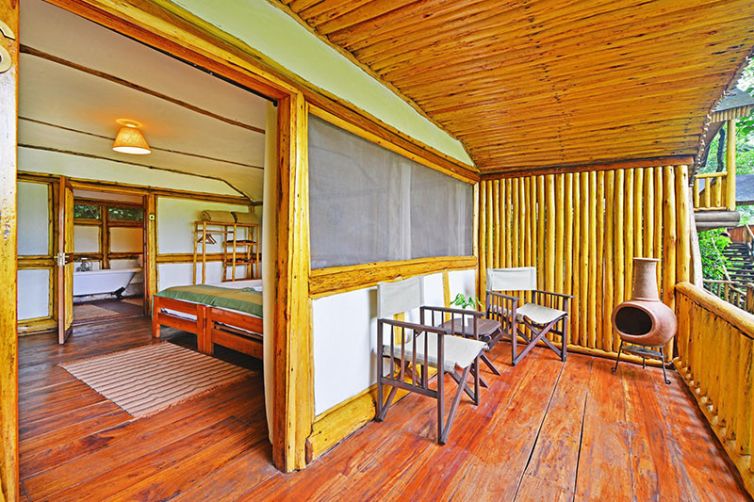
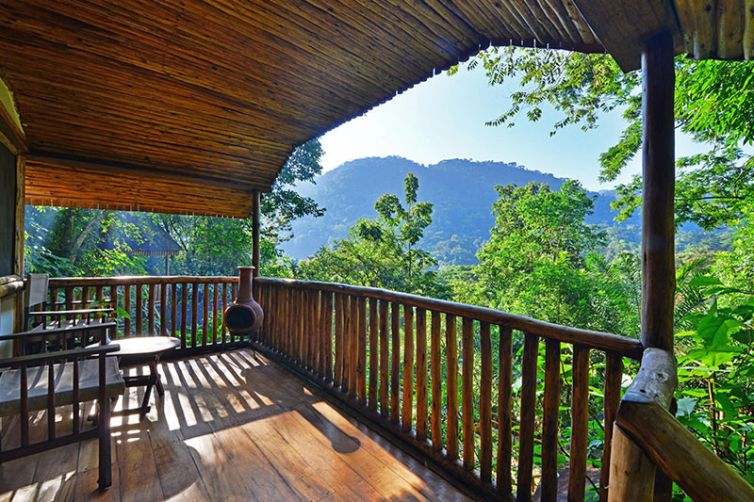
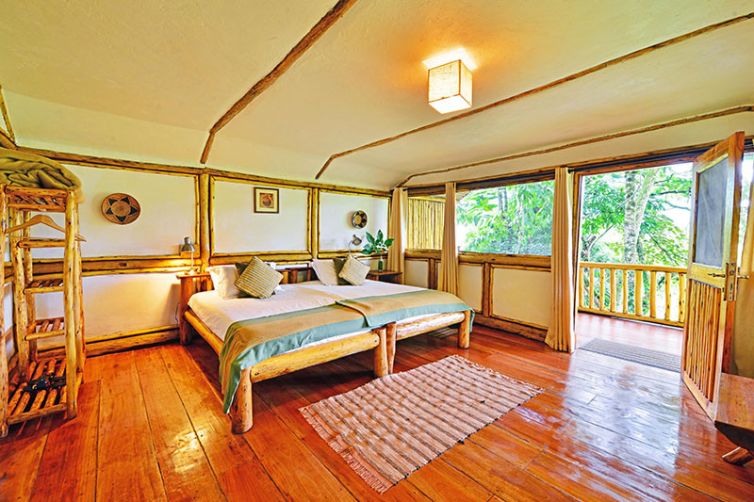
Each of the 10 cottages are made from timber with gauze windows and thatched roofs. They are comfortably furnished and have en suite facilities with hot/cold running water, shower (some chalets also have a bath tub) and flush loos. They also have a private verandah with views over the forest. Lighting and power is provided by solar. One of the cottages is a family room with an extra sitting area which can be used for extra beds.
Central Areas
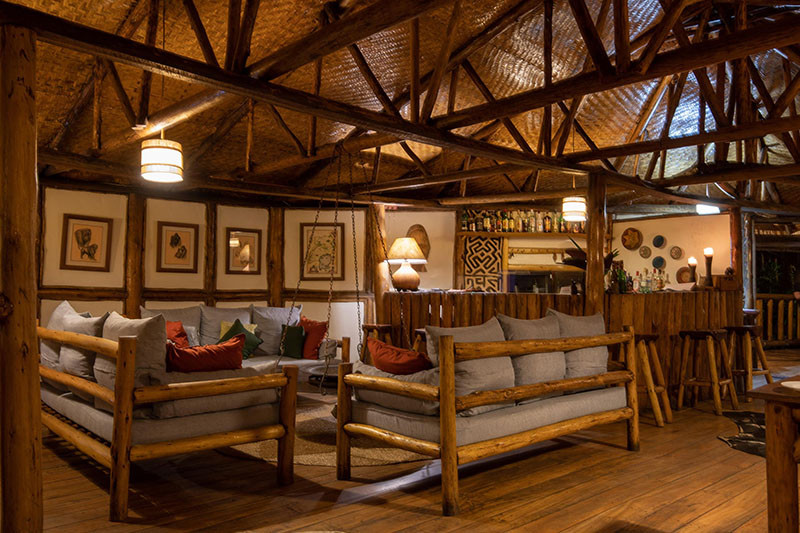
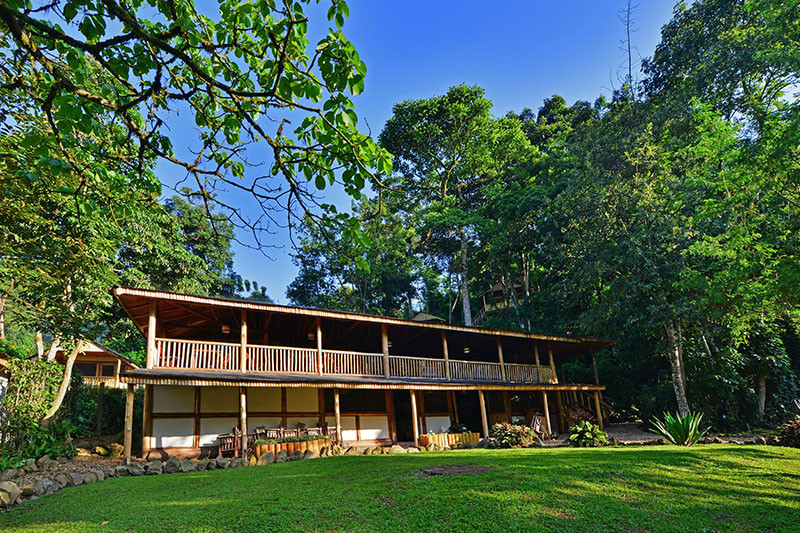
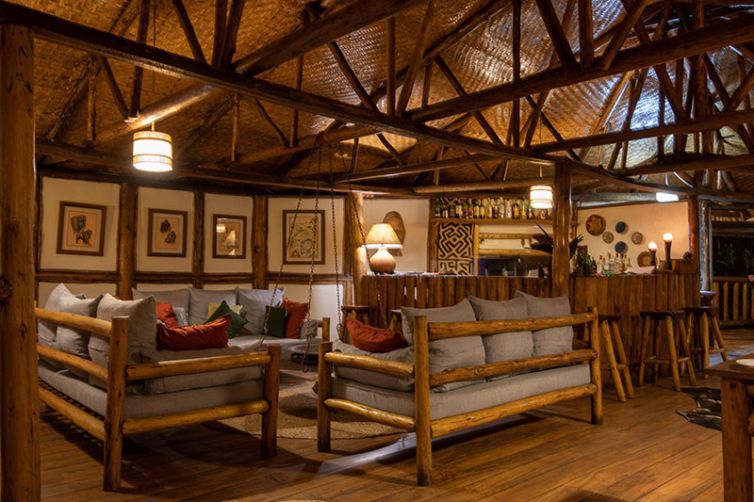
The central building is raised off the ground and open fronted with views towards the forest and includes a cosy lounge with fire place, and a bar/dining room where meals are taken and hot drinks are available all day. There is also a small spa where they offer a complimentary massage.
Facilities
Wi-Fi – Yes
Power for Charging – Yes
Swimming – No
Habitat & Wildlife
Bwindi Impenetrable Forest covers an area of around 32,000 hectares and is located in the south-west of the country, part of the eastern ridge of the Albertine Rift Valley. The rainforest, known as one of the most ecologically diverse in Africa, is spread over a series of steep ridges and valleys which vary in altitude from around 1,160m to over 2,600m. In the south-east sector of the park lies the Mubwindi Swamp, after which the forest was named.
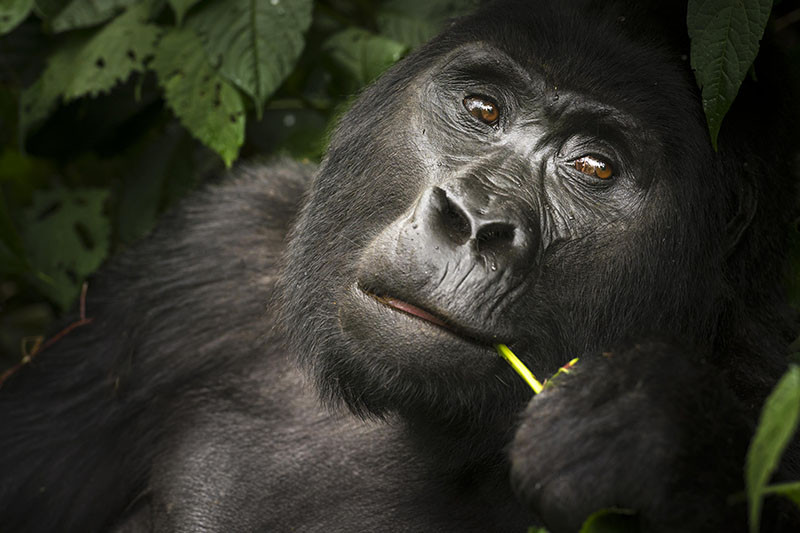
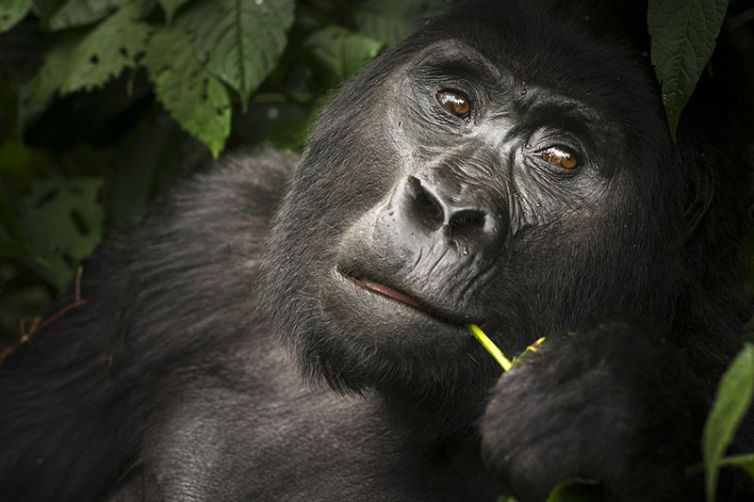
Bwindi is home to the endangered mountain gorilla, as well as a further 11 species of primates, including chimpanzee, red-tailed monkeys, black and white colobus and the ground-dwelling L’Hoests monkey. It actually harbours more species of mammal than any other park in Uganda, although most of them are rarely seen. The birdlife is superb with over 350 species recorded, including the 23 species endemic to the Albertine Rift Valley and a further number found nowhere else in the country including specials such as the African green broadbill and white-tailed blue flycatcher. The butterfly count is equally spectacular.
Activities
The main activity in Bwindi is gorilla trekking, and there are currently 17 habituated groups which can be visited in various areas of the park. However, please bear in mind that the high rainfall and terrain make trekking very difficult and you need to be well prepared. To trek for gorillas, a good level of fitness is required as the terrain over which tracking takes place is extremely difficult. Treks can last anything from roughly two to six hours, often traversing steep-sided mountains and ravines, and regularly clambering over ground vegetation. Temperatures can range from being very warm and humid to being very cold, and rain can fall at any time. Permits must be purchased in advance. Children under 15 years of age are not allowed to trek.
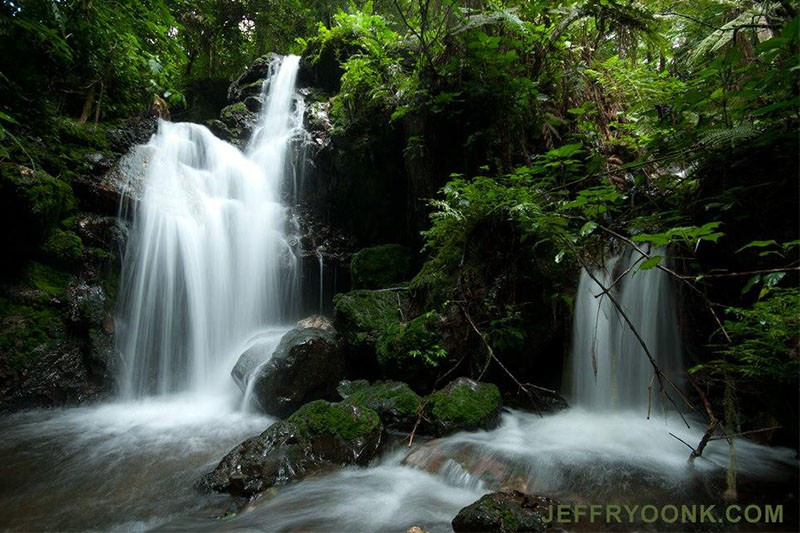
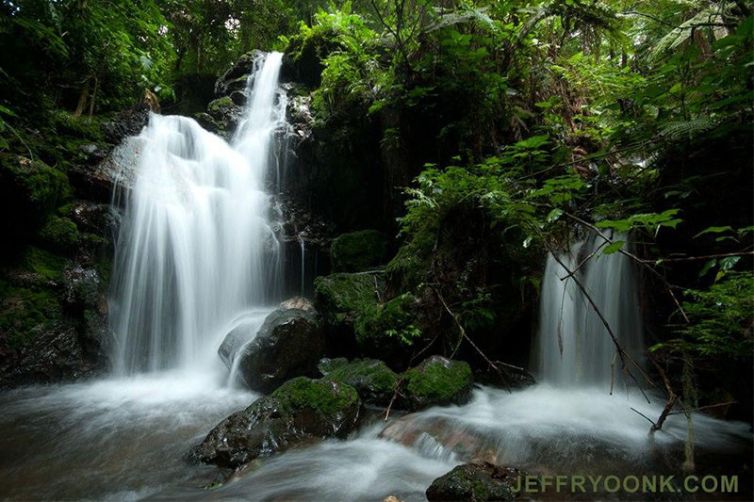
Outside of gorilla trekking, and depending where you stay, it is possible to undertake day exploration walks and shorter birding walks in the forest, explore local villages and cultural experiences, walk to waterfalls or tour a local tea plantation.
Seasons
Buhoma Lodge is open year round, though late September through to early December tends to be the wettest period of the year, along with March, April and early May.
Children of all ages are welcome at Buhoma Lodge and there is a family chalet which caters for younger children to share a room with their parents. However, the minimum age for gorilla trekking is 15 years and so the destination is unlikely to appeal to families with younger children. For older teens, they would need to be comfortable with the strenuous nature of gorilla trekking to fully enjoy a holiday in this destination.
Buhoma Lodge is operated by Wild Frontiers who believe in low impact tourism to conserve Uganda’s wildlife and heritage for future generations to enjoy. They have an active Responsible Tourism Policy which is supported by their Future Generations Trust.
The aim of the trust is to assist communities to develop in a sustainable and environmentally-conscious manner, whilst simultaneously protecting and conserving the wildlife within tourism areas of Uganda. The trust’s work includes: finding community-centred solutions to human-wildlife conflict; promoting and supporting sustainable economic growth in the surrounding communities; encouraging staff volunteer programs to assist community projects; and ensuring all operations are ethical, environmentally friendly and sustainable. Each guest directly contributes to the funding of the trust through their bednight rate.
Projects include the Ride 4 a Woman initiative which is a charitable organisation set up to support and empower women struggling with poverty, HIV and domestic violence in Buhoma. The Trust provides ongoing support by buying, using and selling their locally made products and taking clients to visit their projects.
The trust also supports the Batwa Empowerment Village – a local project that protects the culture of the last remaining indigenous Batwa people who were removed from the forest in an effort to protect the Mountain Gorillas. Guests staying at the lodge can visit the village to learn about the former way of life of the Batwa and their donation goes directly to supporting the Batwa people with new skills training, enterprise development and education.
Other projects supported include supporting the local hospital with annual donations, the Uganda Conservation Foundation, The Wildlife Clubs of Uganda (through initiating three new Clubs in communities adjacent to vital wilderness areas), and the Large Carnivore Monitoring Project.
Furthermore, operations in camps include a comprehensive waste management plan, keeping lodge sizes small, employ and procure locally, and using efficient energy sources.