Wilderness Damaraland Camp
Wilderness Damaraland Camp Is An Exclusive Lodge On The Edge Of The Stunning Huab Valley.
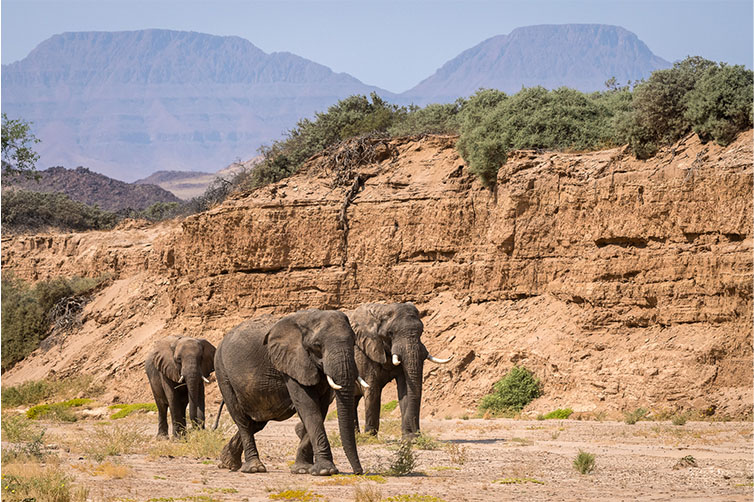
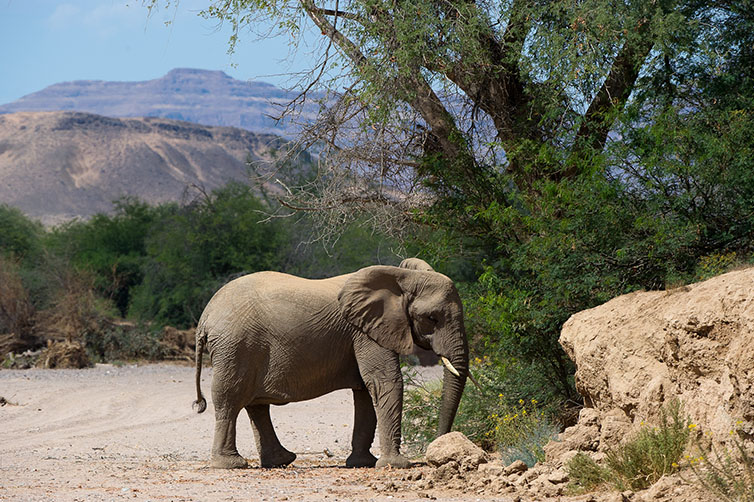
Wilderness Damaraland Camp is a very comfortable and long-established lodge on a private concession in the heart of Damaraland. The concession covers a wide section of the Huab Valley, which is not only an incredible stretch of raw desert landscape but is also home to desert elephants and a range of other wildlife. Accommodation is very comfortable and the lodge has an exclusive feel, with many guests flying in rather than self-driving. The desert elephants are definitely the main wildlife attraction, though exploring the Huab Valley is wonderful just for the scenery and wilderness feel.
Rooms
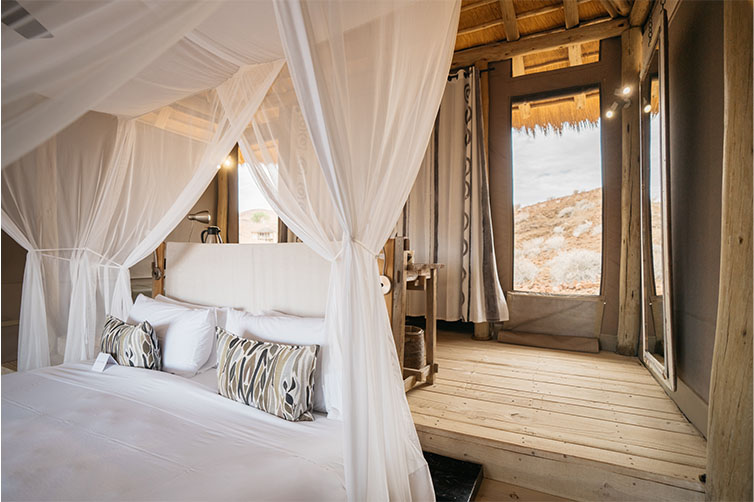
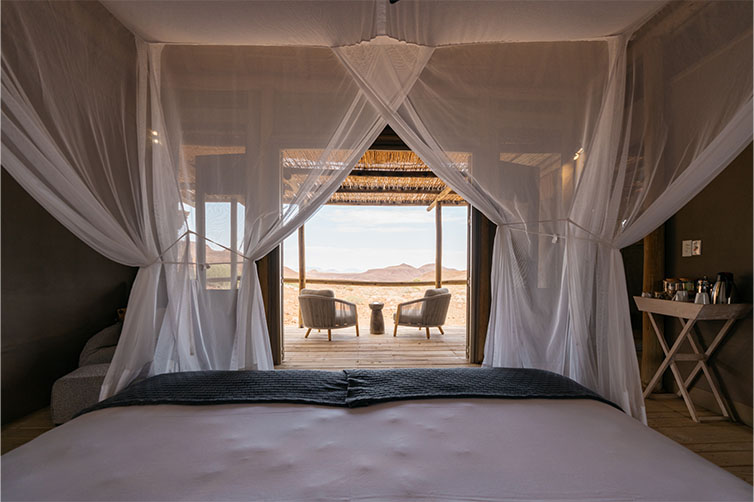
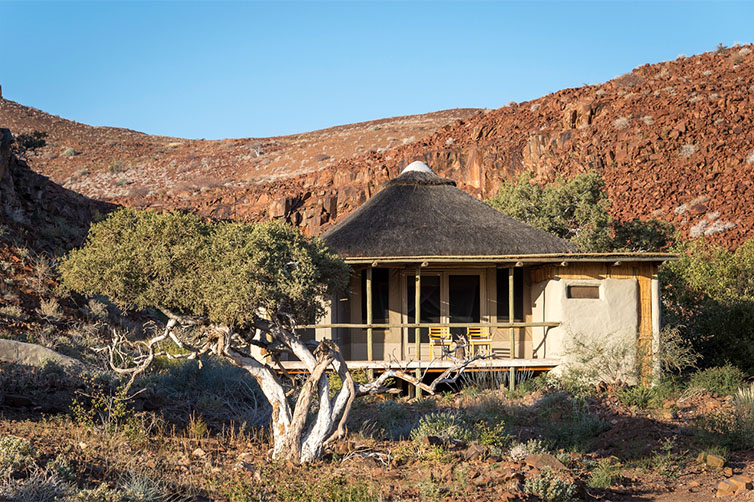
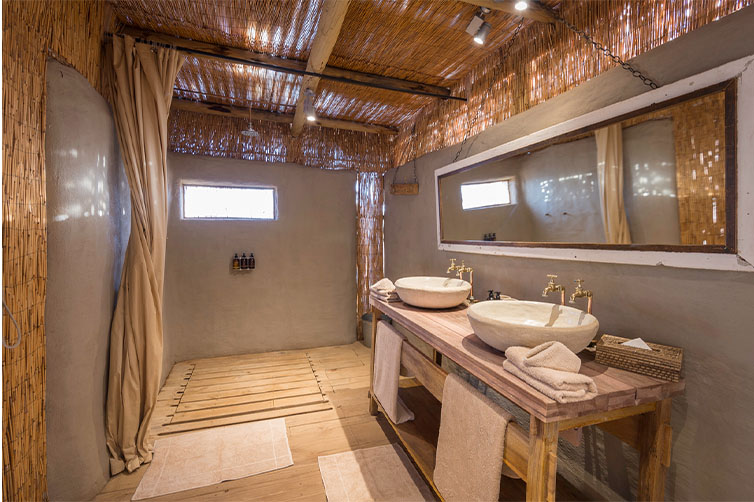
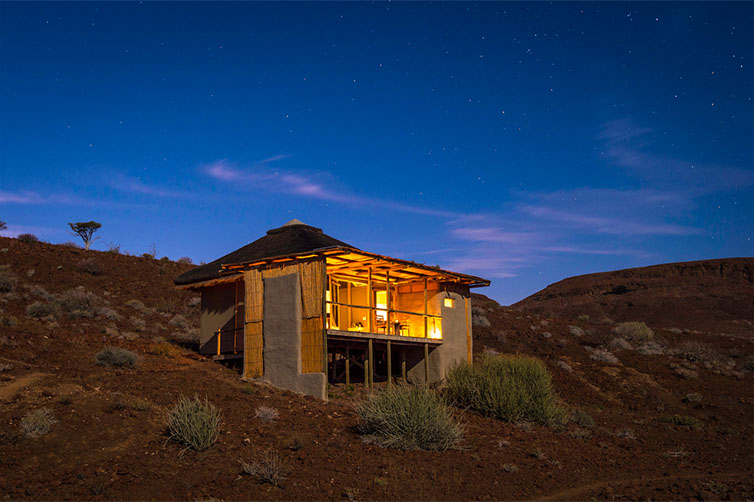
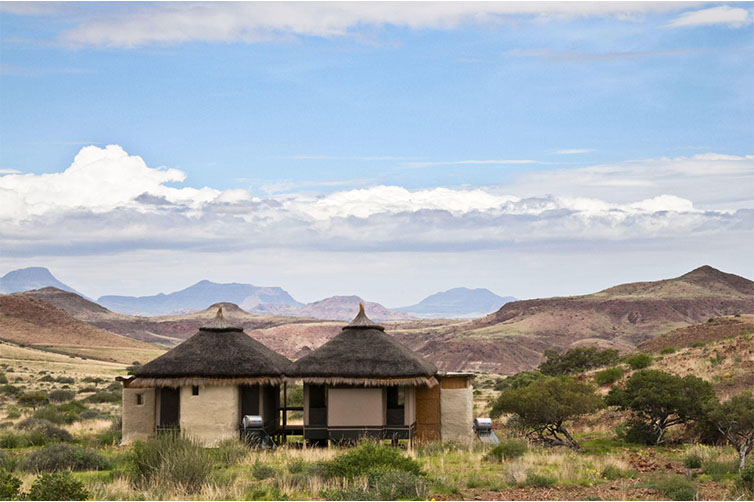
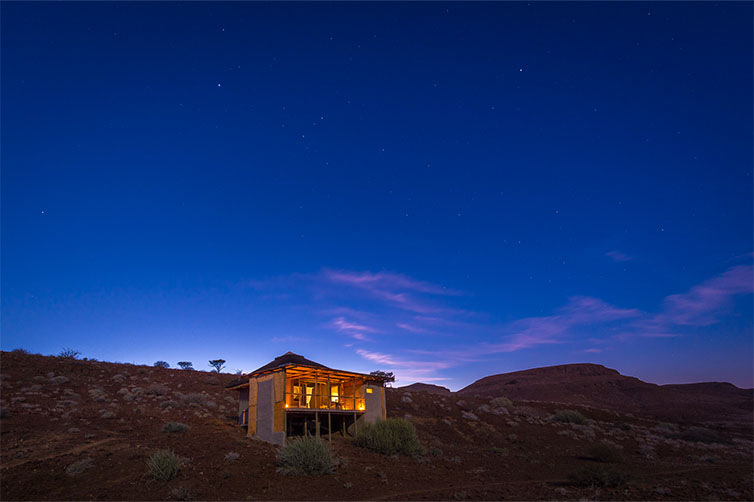
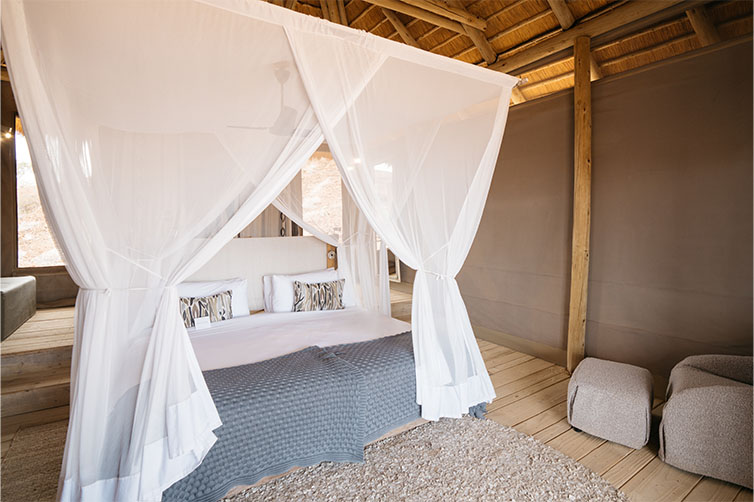
Accommodation is provided for around 22 guests in 10 adobe-styled, thatch and canvas tents each raised on individual wooden decking – part of which extends out to form a large viewing deck with fantastic views. One of the rooms is a family unit which has a standard en suite room and second slightly smaller en suite room sharing a deck (bedrooms connect externally via the deck therefore the unit is more suitable for families with older children). Each room has a bed with mosquito net, comfortable armchair and a writing desk, and spacious en suite bathroom with plumbed facilities including double vanity, shower and toilet. Rooms are also equipped with a ceiling fan, tea and coffee making facilities and a room safe, as well as exercise equipment including yoga mat and hand weights.
Central Areas
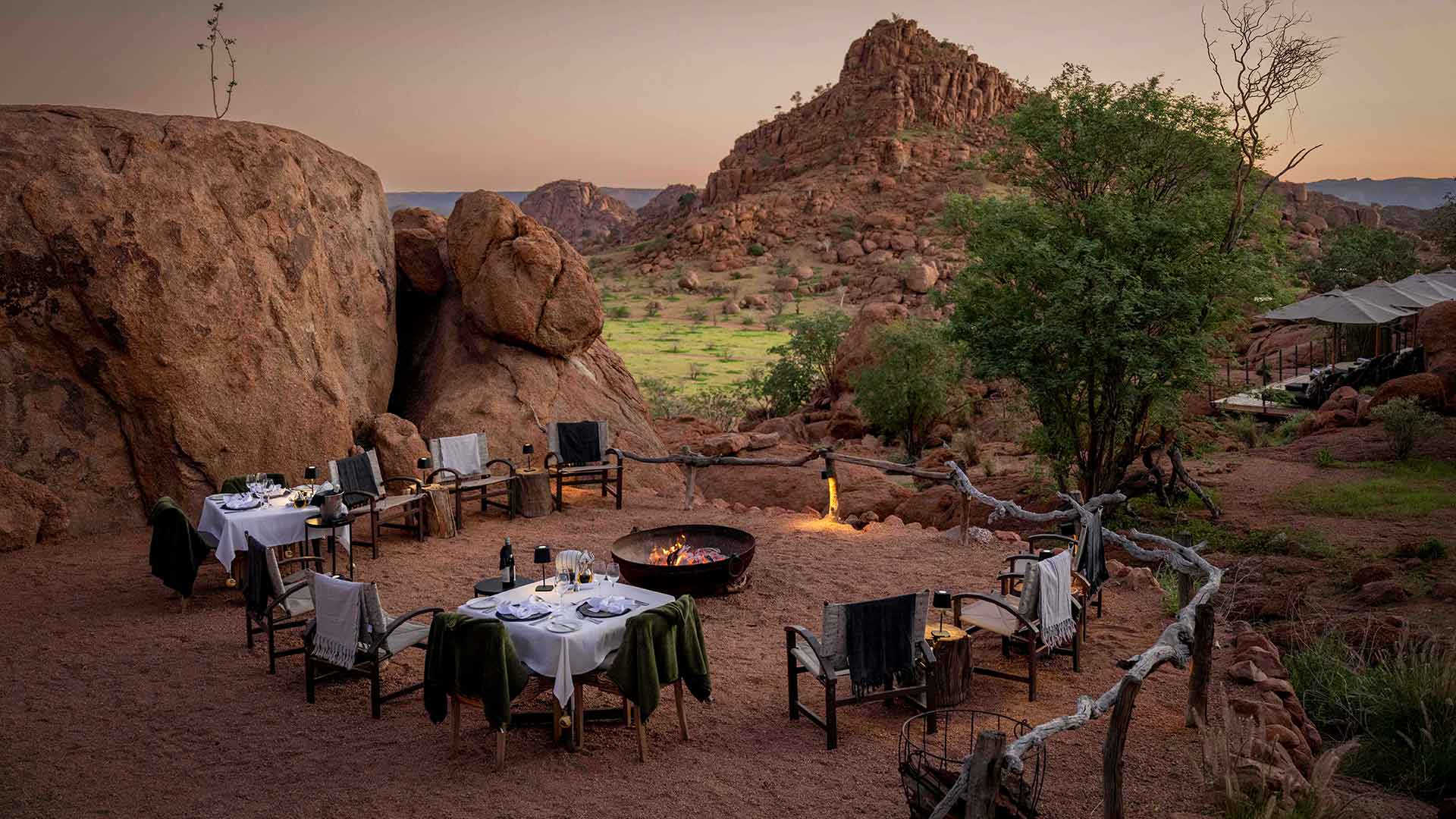
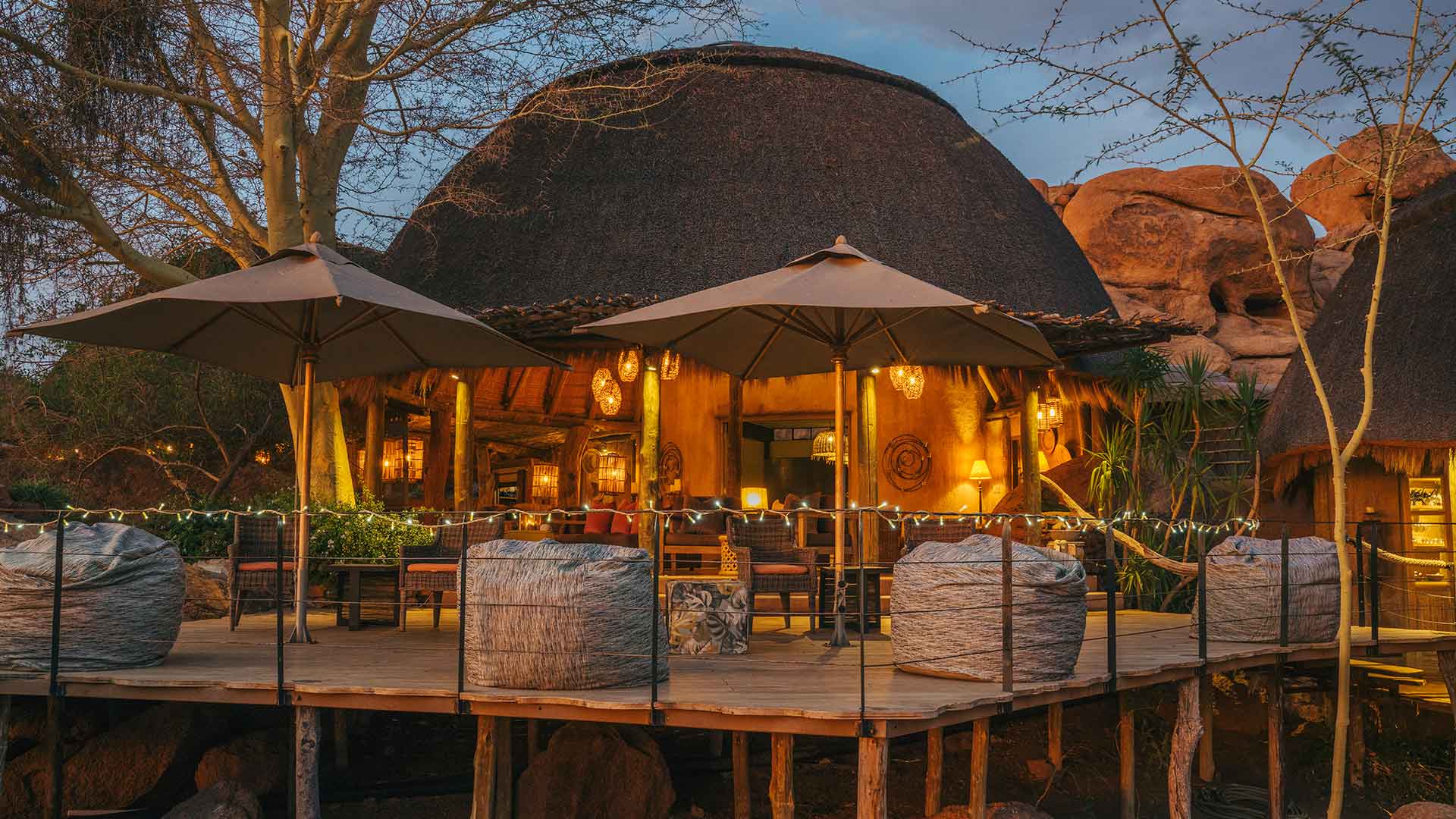
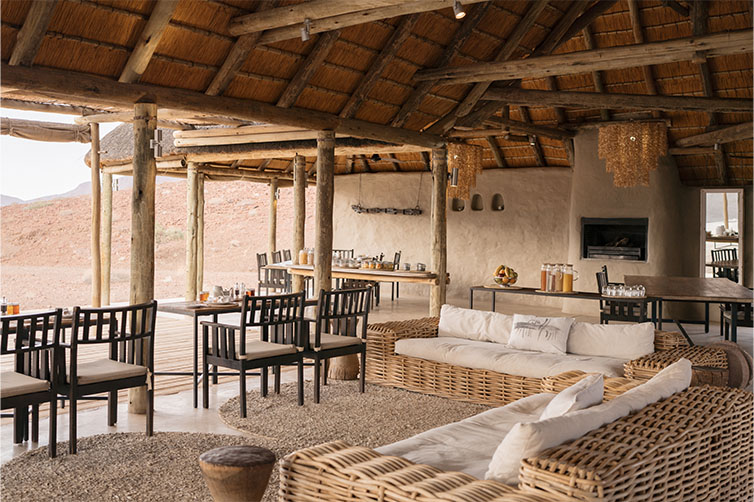
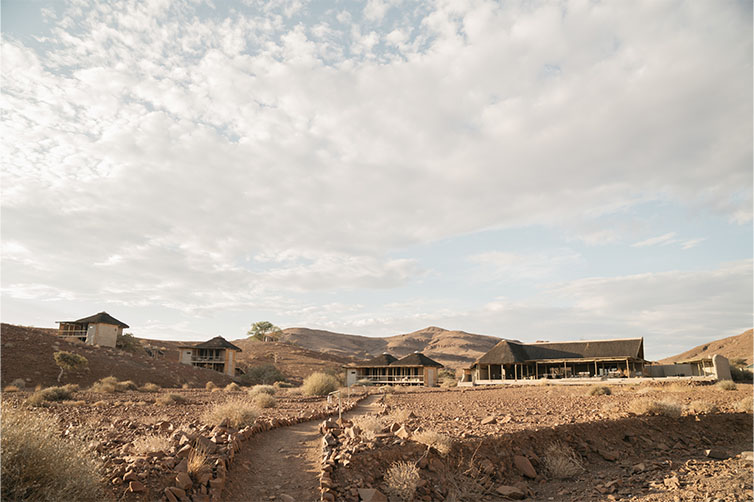
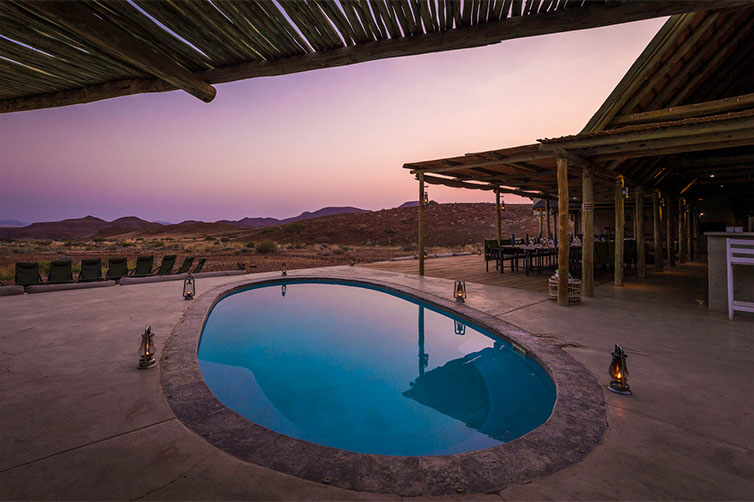
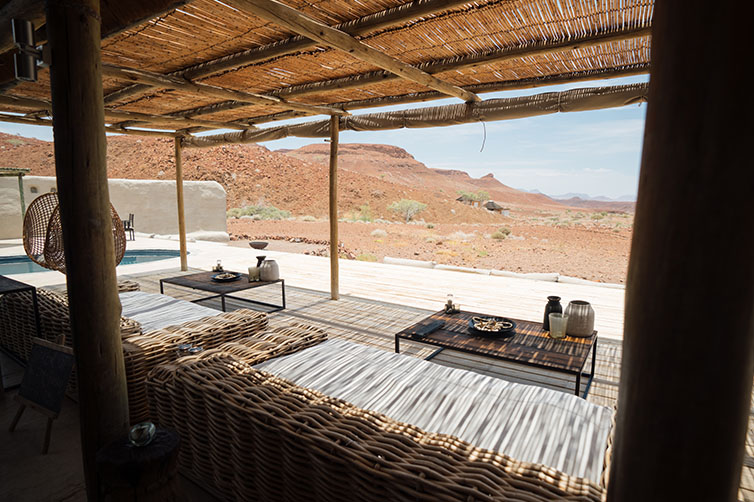
The thatched, open fronted main area includes relaxing seating areas and space for dining. To the side is a swimming pool with shaded sun deck. There is also an open camp fire. The camp is situated at the head of a valley with long views over the impressive and rugged scenery.
Facilities
Wi-Fi – Yes
Power for Charging – Yes
Swimming – Yes
Habitat & Wildlife
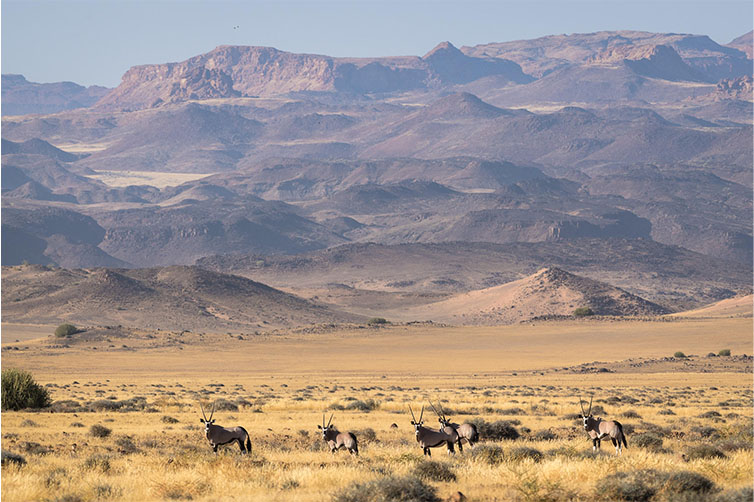
Damaraland is one of Namibia’s most compelling wilderness regions, characterized by ancient geology and dramatic landscapes. Located in the north-west of the country, the region offers a mix of rugged mountain ranges, wide gravel plains and ephemeral river systems such as the Ugab, Huab and Hoanib, which only flow after rare seasonal rains. Basalt outcrops, flat-topped mesas, deep gorges, and broad sandy river valleys create a strikingly varied terrain, with colours shifting from pale desert sands to red ochres and dark volcanic stone.
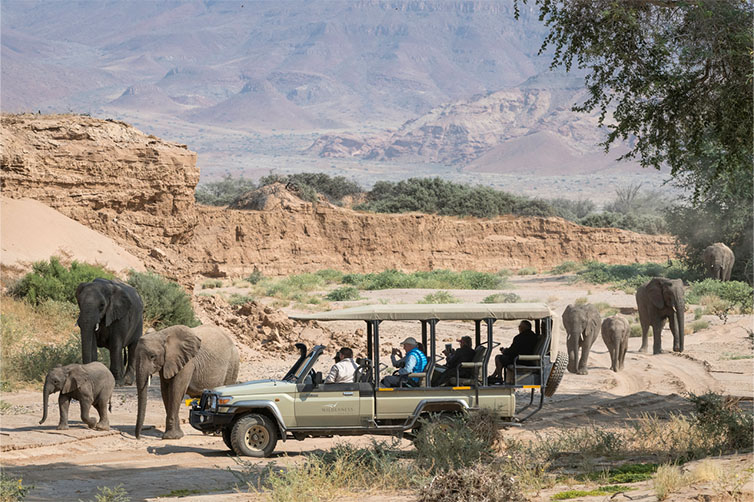
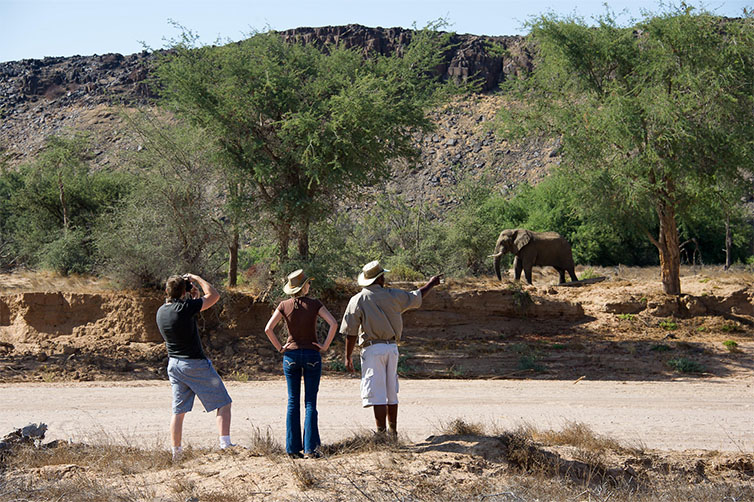
Despite its arid conditions, the Huab Valley supports an impressive range of desert-adapted wildlife. Desert elephants are one of the region’s most iconic species, uniquely adapted to survive in extreme heat with scarce water. They travel long distances along the dry riverbed, feeding on riverine vegetation and relying on an intimate knowledge of seasonal water sources. Other wildlife includes Hartmann’s mountain zebra, giraffe, oryx, springbok, klipspringer and a rich variety of birdlife.
Activities
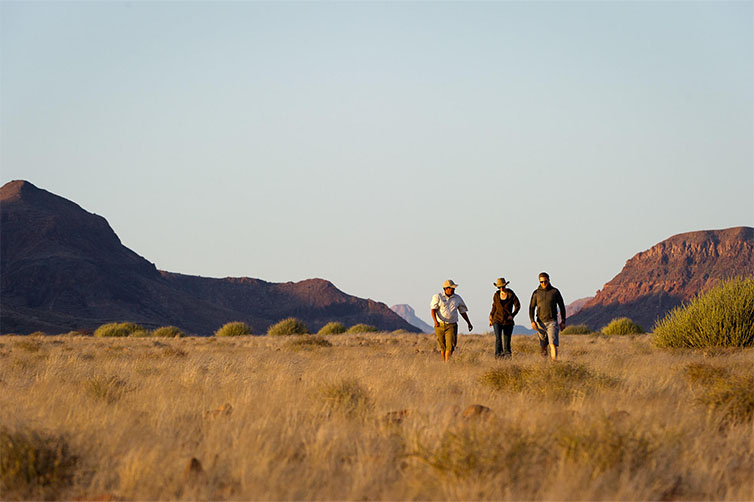
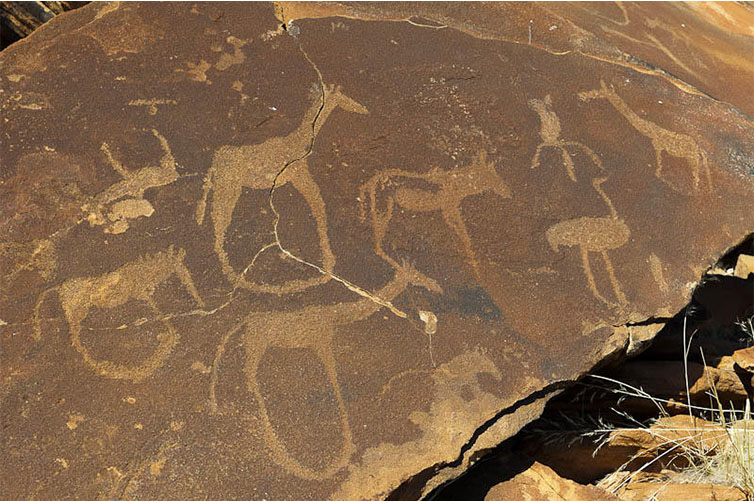
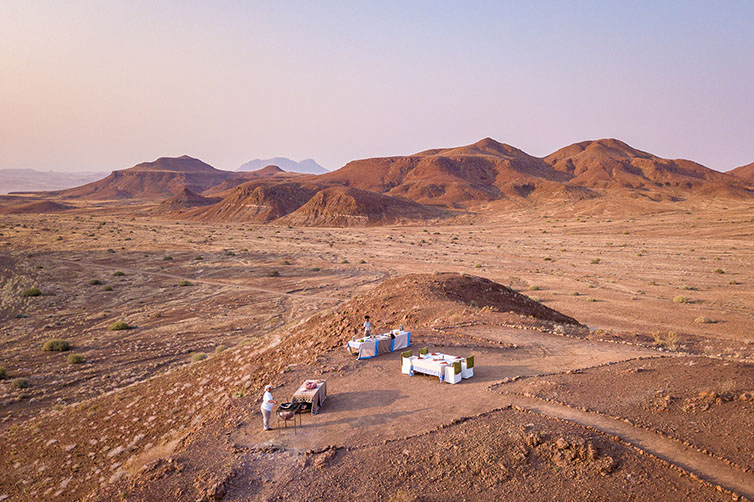
Activities include morning and afternoon nature drives in the beautiful Huab River Valley, which is home to a variety of wildlife including desert elephants. Guided walks in the hills close to camp are also possible (sunset drinks from a nearby hill is a lovely experience). For guests staying for three nights, an excursion to Twyfelfontein is included.
Seasons
Wilderness Damaraland Camp is open all year. The best times to visit are late April to early November.
Children from six years of age are welcome but with externally connecting bedrooms in the family unit, the camp is better suited to those travelling with older children.
Wilderness Safaris has established two non-profit organisations to achieve their mission of protecting and expanding Africa’s wilderness through conservation and community empowerment.
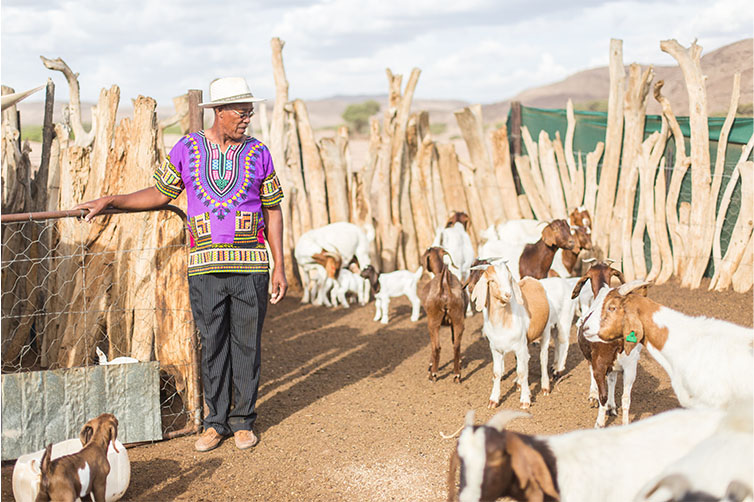
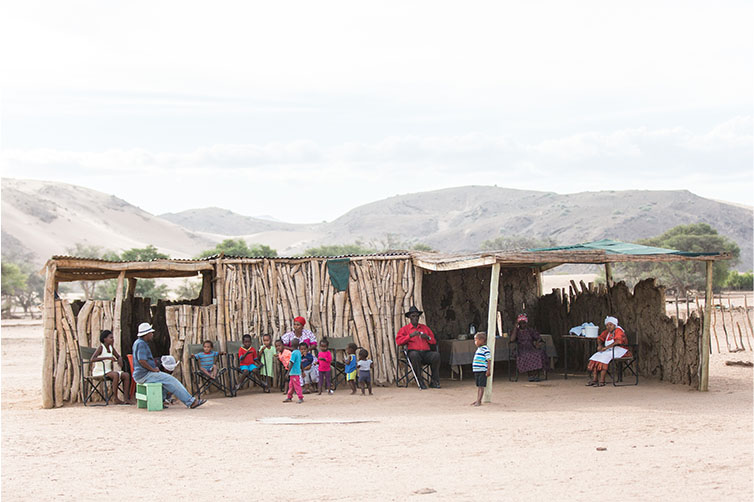
The Wilderness Wildlife Trust is involved in research and conservation, anti-poaching and community empowerment and education initiatives. The Trust has many projects throughout Namibia. Damaraland Camp is located on the Torra Conservancy, which is operated in partnership with the local Torra community. Returning to their homeland after displacement in the early twentieth century, the Torra community struggled to survive in this remote area. Wildlife such as elephants and other larger mammals were perceived as a threat, competing for precious resources, and the potential for tourism in the area was not something that had been considered. There was no formal conservation protection and wildlife numbers were quickly dwindling. To add to this, unemployment was close to 100%. In 1996 with the successful partnership of the community and Wilderness Safaris, a viable ecotourism model was created in the form of Damaraland Camp. The area has seen the change from from human-wildlife conflict to co-existence and conservation. Guests can visit the community to lean how eco-tourism is bringing benefit to both wildlife and people in this remote region.
Children in the Wilderness (CITW) is dedicated to youth empowerment and education, empowering the future leaders of Africa to become the protectors and custodians of their natural heritage. Areas of focus are eco-training for mentors, eco-clubs in schools, an annual camp for children hosted in one of the Wilderness camps, the Youth Environmental Stewardship programme which focuses on children identified in eco-clubs as having potential to progress further in environmental education, and school and tertiary scholarships. Children in the Wilderness Namibia works with 13 schools across Namibia, with 400 children taking part in our Eco-Clubs. A number of children are sponsored through our Scholarship Programme.