Karisia Walking Safaris
Karisia Safaris offer various levels of walking safaris through the wilderness of Laikipia, supported by camels and outfitted from their base camp, Tumaren.
Karisia is owner run by Kerry and James Christian and this immediately gives the whole experience a personal and exclusive feel. Fundamentally specialising in walking adventures, Karisia is ideal if you wish to escape into the bush and enjoy a private walking expedition which can include game viewing, but is also often orientated towards birding, wilderness and cultural experiences.
How much game you see depends on the focus of the trip – some areas are very good for game viewing, especially close to Tumaren Camp; their home and base camp, whilst in the community areas of Laikipia the game concentrations are much less. The walking can blend from tracking big game to climbing mountains and exploring forests. Different price options and levels of comfort offer good flexibility, and guiding, food and service is always of a good standard. All in all, a great option for exploring the exclusive wilderness on foot.


Rooms
Karisia offers both mobile and non-mobile walking safaris and the accommodations vary depending on the level of camp you choose. The options are the mobile walking safari camps, Tumaren Camp and Dusty Eland.
The mobile walking safaris are operated from two different levels of camp: ‘Classic’, and ‘Air B+C’ (meaning Bed and Camel!).
The Classic camp option has simple A-frame tents with standing room and a small veranda at the front with a camp table and chairs, a mirror and hand basin that gets filled with fresh water as needed. Comfy mattresses are on the floor with a duvet, two feather pillows, dressing gowns, hot water bottles and towels. On request you may have a camp bed instead but this does take up more room in your tent. There are solar lights for the tents and a long drop toilet tent for each tent and shared bucket shower tents (one between two tents).
The AirBnC camp option uses large dome tents with two doors, whilst the bedding consists of sheets and blankets, and the camp shares toilets and showers.
In both cases, a central mess area (canvas awning) is provided with table and chairs for dining. Either safari style can be led and guided by Jamie or Kerry (supplement applicable), or by one of their excellent local Samburu guides. When Kerry and Jamie lead a trip, they are always accompanied by a Samburu guide so you never miss out on the specialist local knowledge.
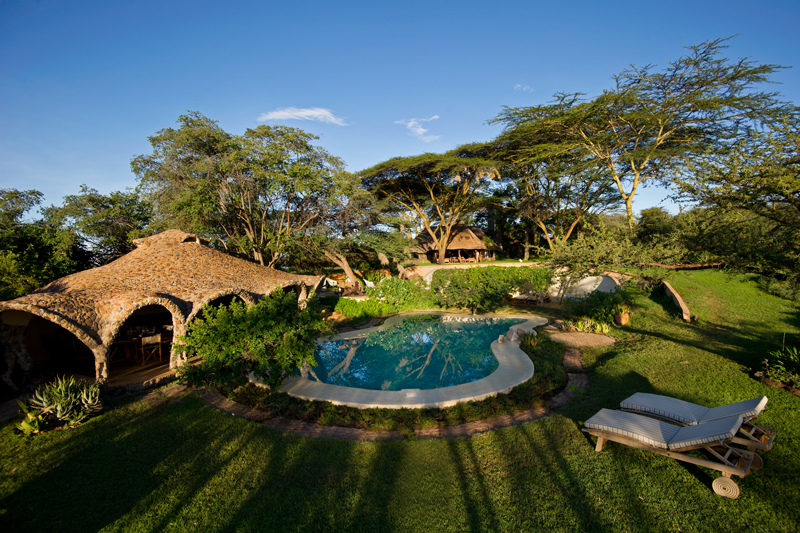
Tumaren Camp is the most comfortable base and offers non-mobile safaris. Tumaren Camp may also be used at the beginning or end of a mobile safari. Tumaren Camp, originally Kerry and James’s home, is a relaxed base, offering tented accommodation for up to 20 guests in seven large spacious tents all overlooking an open plain and waterhole. While all of the tents are large enough to sleep a family of four or five guests, four of the tents specifically have a divider separating the tent into two bedroom areas with a double bed and two single beds in each area. One tent also has two extra single beds, but no divider separating them. Each tent is comfortably furnished with sofas and armchairs, 24 hour lighting and en suite bathroom facilities including plumbed shower, basin and flush toilet. The main areas consist of a lounge and two dining tents, also overlooking the plain in front of camp. At one end of the camp is a beautiful swimming pool and thatched mess area with lounge, bar and dining space. The camp can be booked on an exclusive use basis, or on a shared, individual basis.
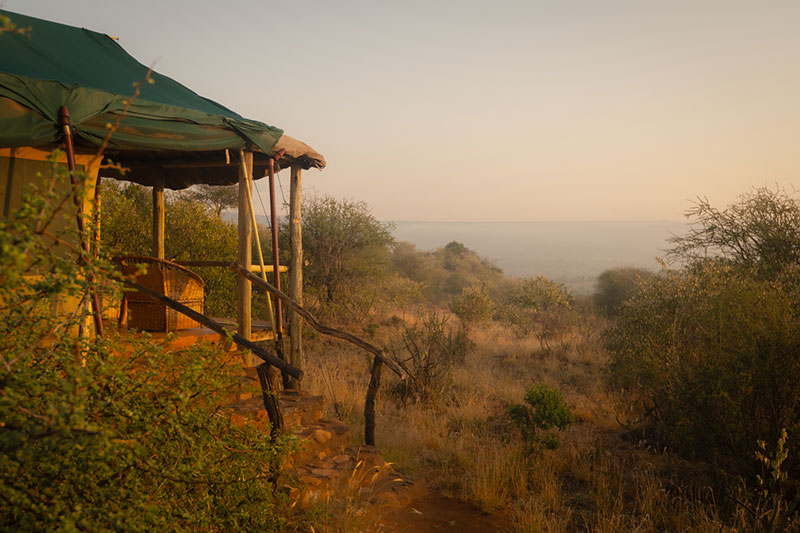
Finally, Dusty Eland camp strikes a balance between the homestead comforts of Tumaren and the more intrepid walking safaris, offering a comfortable non-mobile tented base. This permanent tented camp accommodates guests in six comfortable tents, set on low plinths with a shaded veranda with safari chairs and a washstand to the front. The tented sleeping area contains king or twin beds, and to the rear is a bathroom with flush loo, basin (the water for which comes from a canister behind). The bathroom then leads to an outdoor bucket shower area which has reed walls and shade.
Facilities
Wi-Fi – Yes
Power for Charging – Yes (Tumaren Camp only)
Swimming Pool – Yes (Tumaren Camp only)
Habitat & Wildlife
Laikipia covers a significant portion of dramatic countryside in northern Kenya, sandwiched between Samburu and Mount Kenya in the east and the Aberdare Mountains and Great Rift Valley in the west. The central section of the area is covered by a lava plateau which creates a series of rocky escarpments offering epic views, whilst a series of rocky outcrops and hills dot the landscape revealing the landscapes much more ancient history (some of these rocks are thought to be around 80 million years old). The region is divided into a number of private ranches, conservancies and community lands with farming (cattle mainly), wildlife conservation and local populations all existing in relative harmony. As the region is increasingly closely managed, and the local communities are made more aware of their role in conserving wildlife and benefiting from this, there has been an increase in properties dedicated solely to wildlife, and in these areas the wildlife populations are growing steadily. Some private ranches have been concentrating on wildlife conservation for many years and offer superb game viewing experiences, though in general the Laikipia region is better known for its wilderness, scenery and the wide variety of activities on offer.
The terrain and habitat is varied with two main rivers dissecting the region – the Ewaso Nyiro and Ewaso Narok. These rivers are fed from Mount Kenya and the Aberdare Mountains respectively, and provide year round water through what can otherwise be described as a dry and harsh environment. Around 250 species of birds have been recorded and the mammal list includes greater kudu, gerenuk, wild dog, elephant, buffalo, cheetah, leopard, lion, Grevy’s zebra, reticulated giraffe, Thompson and Grants gazelle, eland, Beisa oryx, defassa waterbuck, striped hyaena, spotted hyaena, baboon, vervet monkey, jackal, warthog and many smaller species such as caracal, African wild cat, serval, genet, civet, porcupine, aardvark, aardwolf and rock hyrax.
Activities
Walking is always the main activity with Karisia (including with camels), but from Tumaren it is also possible to undertake game drives (both day and night). Swimming in the Ewaso Nyiro River, picnic lunches on mountain tops and spontaneous cultural experiences make the whole experience very flexible and rewarding, whilst you can also expect to see a large amount of game and learn a significant amount of bush skills along the way. For those looking for something a little different, Karisia have trained guides for rock climbing (prior notice must be given) and there is also a via ferrata which offers a secure and more accessible ridge walk. It is also possible to visit a local school, a Manyatta (Samburu homestead) and markets. Stays are always tailored and flexible to suit guests’ interests with plenty of options for families.
Seasons
Karisia Camps are open all year round, though rain is more likely in November, April and May.
Karisia are extremely family friendly both at Tumaren and on mobile walking safaris, offering family tents at Tumaren and inter-connecting tents on mobile safaris. Kerry and James have their own children and understand the needs and interests of kids with many fun and engaging activities on offer such as Samburu games and football. We would however suggest that mobile walking safaris are best suited to children old enough to enjoy the walking, which often means 12 years and older.
Each guest who embarks on safari with Karisia pays a conservation and community fee. This not only provides a revenue to the local community but goes directly towards the conservation of wildlife in the area, not only on Tumaren Ranch, but on the neighbouring community and private lands which walking safaris cross. Conservation fees go towards funding Tumaren’s 16 security rangers who patrol 13,000 acres, protecting wildlife, preventing poaching and engaging local communities.
The majority of Karisia’s staff come from neighbouring communities – this not only directly benefits local communities with employment opportunities, but also ensure communities are actively engaged in conservation while also allowing guests to be part of the story through interaction with the team. Other conservation efforts include participation in wildlife surveys, land restoration, and the management of invasive species to protect indigenous flora and fauna.
On the community side of things, Karisia supports and works closely with three schools in their local area – Il Motiok and Kimanjo Primary Schools and Kimancho Secondary School. Support and financial assistance includes providing school lunches and a morning porridge for 1,100 children, funding pupils whose parents cannot afford the fees, donating books and other supplies, sponsoring teachers and guiding local children from Conservation Clubs on day safaris and rock-climbing days.